
How can chlorinator water treatment support address an identified compliance gap?
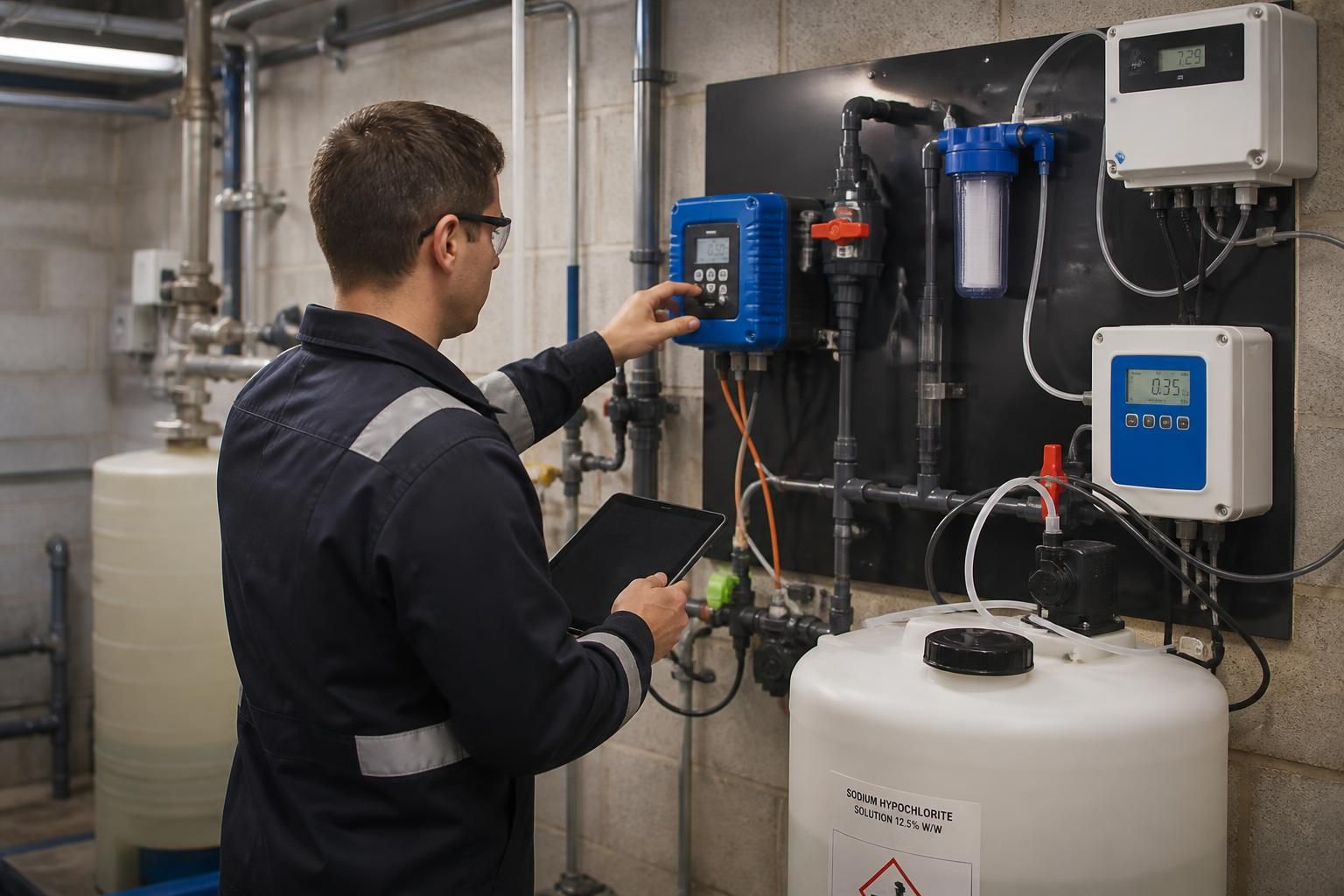
Chlorinator water treatment support can close an identified compliance gap by linking the required control to a correctly designed, operated and documented disinfection process. The key is to establish precisely what is deficient, determine whether chlorination is an appropriate control, and then demonstrate that the revised arrangement is consistently managed within the site’s water safety framework.
An identified gap may relate to several aspects of a chlorinated water system, including:
- inadequate or inconsistent disinfectant residuals at relevant outlets;
- unclear dosing arrangements or unsuitable injection points;
- inaccurate, poorly maintained or unverified monitoring equipment;
- insufficient sampling coverage or unsuitable sampling locations;
- missing alarm settings, escalation procedures or operating instructions;
- incomplete maintenance records; or
- unclear ownership of routine checks and corrective actions.
The response should begin with a defined compliance statement rather than a general instruction to improve the system. For example, the gap may be that residual disinfectant is not being measured at representative sentinel outlets, that the dosing arrangement is not supported by maintenance evidence, or that alarm events are recorded without a documented response. A precise statement makes it easier to select a proportionate remedy and prevents unrelated works from being treated as evidence of compliance.
A technical review can then consider how the chlorinator interacts with the wider water system. This includes the condition and capacity of the dosing equipment, chemical storage, injection and mixing arrangements, flow patterns, contact time, pipework configuration and the position of monitoring points. Water demand, stagnation, temperature, storage and outlet use can all affect the resulting control. A dosing adjustment may therefore be unsuitable if the underlying issue is caused by dead legs, poor circulation, contaminated tanks, restricted flow or defective pipework.
Where chlorination is appropriate, the remedial arrangement should specify the operating parameters that matter for that system. These may include the disinfectant used, target residual range, sampling points, monitoring frequency, alarm thresholds, dosing controls and the action required when readings fall outside the accepted range. Instructions should distinguish between a routine operational adjustment and an event that requires escalation, investigation or specialist intervention.
Equipment-related deficiencies should be dealt with separately from procedural deficiencies. A faulty probe, blocked injection point, empty chemical container or failed dosing pump requires a physical correction. By contrast, a missed inspection, incomplete log or unclear handover requires a change to the management process. Treating both as the same type of problem can leave a system technically capable of operating while the compliance gap remains in practice.
Any change should be integrated into the site’s written water safety arrangements. The documentation should identify:
- the part of the system covered by the chlorination control;
- the person or role responsible for daily, weekly and periodic tasks;
- the method used to take and record readings;
- the limits that trigger action;
- the route for reporting faults and abnormal results;
- the maintenance and calibration requirements; and
- the evidence that must be retained for review.
This allocation is particularly important where a building owner, managing agent, facilities team, water treatment contractor and laboratory each perform different tasks. A contract may state that monitoring is provided, but it should also make clear who takes the reading, who checks it, who investigates an exception and who authorises remedial work. Without that distinction, a gap can recur even after the equipment has been serviced.
Validation should examine more than whether the chlorinator is switched on. Results should be considered in relation to the system’s risk assessment, outlet locations, water use and recent maintenance history. Trends can reveal intermittent loss of control that a single acceptable reading would not show. Where sampling is required, the sampling plan should be suitable for the risk and should use competent personnel and appropriate analytical arrangements.
Chlorination also has limits. It does not automatically resolve deficiencies in temperature control, poor system design, inadequate cleaning, unsafe storage conditions or weak management arrangements. Excessive dosing can create its own operational and water quality concerns, so increasing chemical input should not be used as a substitute for investigating the cause of low residuals. The selected remedy should be supported by the risk assessment and reviewed if the system, occupancy, use pattern or equipment changes.
Once the corrective arrangement has been established, the compliance file should show the original finding, the technical rationale, completed works, updated responsibilities, monitoring results and any further actions. Periodic review should test whether the control remains suitable rather than treating the closure of one finding as permanent evidence that the system cannot deteriorate. This approach gives responsible persons and auditors a clear line from the identified deficiency to the control adopted and the evidence supporting its continued use.
Specialist chlorinator water treatment support is therefore most useful when it combines system assessment, operational advice, competent testing and practical documentation. It helps turn a broad audit observation into a defined water safety control, while making clear which risks require additional measures beyond chlorination.
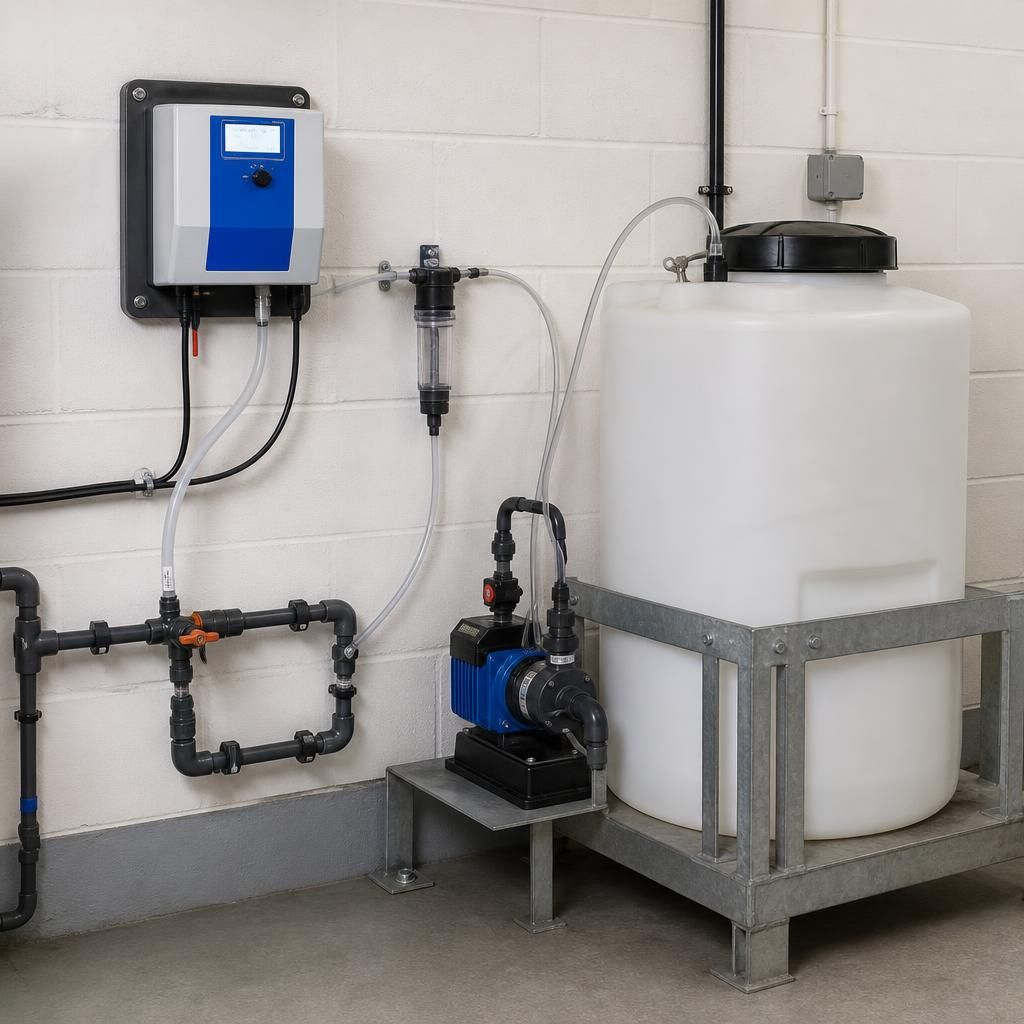
Where a chlorination compliance gap cannot be corrected immediately, an interim control may be used while permanent remedial work is planned. Depending on the risk assessment, this could involve additional supervision of dosing and monitoring, temporary operational restrictions or a defined programme of confirmatory checks. The measure should be proportionate to the identified risk and approved by the responsible person.
An interim arrangement is not evidence that the gap has been permanently closed. Its records should state why it was introduced, who is responsible for it, what information must be collected and when it will be reviewed. This prevents temporary precautions from becoming an undocumented substitute for correcting defective equipment, unsuitable system design or inadequate management arrangements.
Discuss Your Chlorinator Compliance Gap
Discuss the specific chlorinator compliance gap with Blue Fish Water Management Ltd to clarify the evidence required and the next appropriate step. This can help establish whether further assessment, testing or remedial planning is needed.