
What does legionella water testing involve?
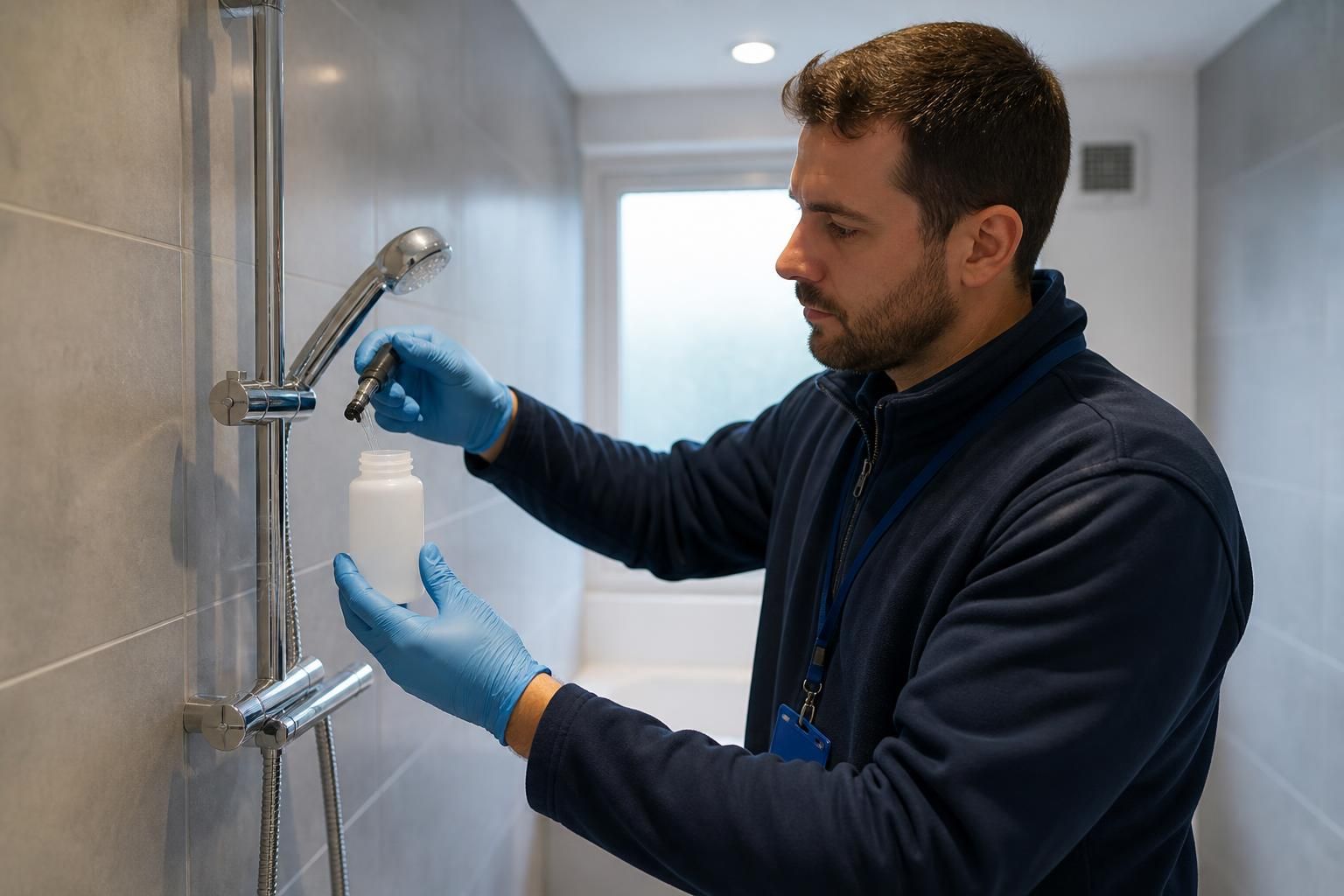
Legionella water testing is a targeted laboratory investigation used to assess whether a water system is supporting the presence and growth of Legionella bacteria. It forms one part of a wider control programme, alongside system design, temperature management, cleaning, maintenance and a documented risk assessment.
What is included in the testing process?
Before samples are taken, the sampling plan should reflect the system’s layout and risk profile. The assessor may consider the type of premises, vulnerable occupants, outlets that are infrequently used, areas where water can stagnate, and equipment such as storage tanks, calorifiers, showers and cooling systems. Sampling only a convenient tap may provide limited information if other parts of the system present a greater risk.
Potential sampling locations can include hot and cold water outlets, sentinel outlets near the beginning and end of distribution runs, storage vessels, calorifier flow and return points, showers and other higher-risk or infrequently used outlets. The selection should be justified and recorded so that future samples can be compared meaningfully.
Samples must be collected using a suitable sterile container and handled in a way that protects their integrity. Details such as the location, outlet type, water temperature, date and time of collection should be recorded. The sampler should also note any relevant observations, including signs of stagnation, unusual odours, poor outlet condition or evidence of biofilm and scale. Samples are then transported to the laboratory under appropriate conditions and within the required timeframe.
How are samples analysed?
Laboratories commonly use a culture-based method to recover Legionella from the sample and identify the organisms present. The result may include the type of Legionella detected and a quantified result expressed as colony-forming units per litre. A UKAS-accredited laboratory using an appropriate method provides a recognised basis for interpreting the findings within a compliance and risk-management process.
Additional methods, such as polymerase chain reaction testing, may be suitable in specific circumstances. These methods can detect genetic material but may not provide the same information as culture about whether organisms are capable of growing. The selected method should therefore match the reason for testing and the decision that needs to be made.
What do the results mean?
A result should never be considered in isolation. Its significance depends on the level detected, the species or strain identified, the type of system, the people exposed and the effectiveness of existing control measures. Results are reviewed against the site’s risk assessment and relevant UK guidance to determine whether the system remains under control or requires further investigation.
A result showing Legionella may lead to actions such as checking temperatures, reviewing whether outlets are being used, inspecting tanks and pipework, improving flushing arrangements, cleaning and disinfecting affected components, or carrying out remedial work. The appropriate response should be proportionate to the risk and recorded in the water safety management plan. Where results are elevated or occupants are particularly vulnerable, specialist advice may be required promptly through the organisation’s established escalation process.
When might testing be carried out?
Testing can support routine verification of control measures, investigation of an unexpected temperature or maintenance issue, validation after cleaning and disinfection, or assessment following changes to a water system. It may also be appropriate where there has been prolonged stagnation, a suspected outbreak, repeated control failures or uncertainty about the system’s condition. The need for testing and its frequency should be determined by the risk assessment rather than applied as an identical schedule to every premises.
What are the limitations?
A test result represents the sampled locations at a particular point in time. A negative result does not demonstrate that Legionella is absent from every part of the system, particularly where the sampling plan is incomplete or conditions change afterwards. Conversely, a positive result does not by itself explain the underlying cause. Reliable interpretation requires the laboratory report to be considered alongside temperature records, maintenance information, system schematics, monitoring results and previous findings.
Good records should retain the sampling plan, sample locations, collection details, laboratory report, interpretation, decisions made and any follow-up results. This creates an auditable record of how water safety has been monitored and how identified issues have been addressed. Blue Fish Water Management Ltd provides UKAS-accredited water testing alongside legionella risk management advice, enabling test findings to be considered as part of a structured approach to water hygiene and compliance.
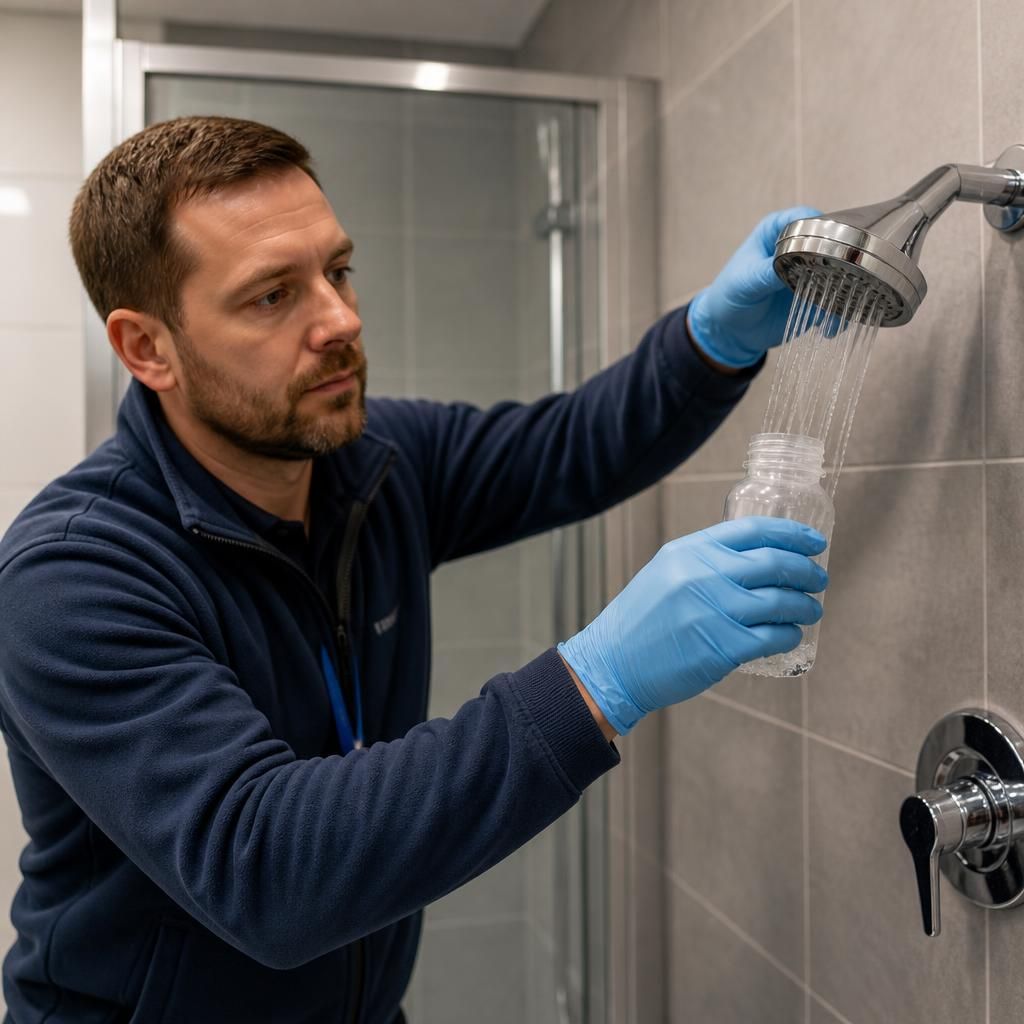
Sampling technique affects what the result represents. A first-draw sample is collected before the outlet has been flushed and can provide information about conditions within the fitting or nearby pipework. A flushed sample, taken after the outlet has run for a defined period, is more representative of the water reaching the outlet from the wider distribution system.
The appropriate approach depends on the reason for testing. For example, investigating contamination at a shower outlet may require a different protocol from checking the general condition of a hot-water distribution system. The sampling method, flushing details and purpose should be documented so that the laboratory result is interpreted correctly and future tests can be compared on a consistent basis.
Discuss Your Legionella Water Testing Requirements
Discuss your legionella water testing requirements with Blue Fish Water Management Ltd to clarify a suitable sampling scope, analysis approach and follow-up arrangements for your premises.