
Who is responsible for arranging a Legionnaires risk assessment?
The person responsible for the premises, water systems or business activities must arrange a suitable and sufficient Legionnaires’ risk assessment. This duty may be delegated to a competent specialist, but the responsible person remains accountable for ensuring the assessment is completed and acted upon.
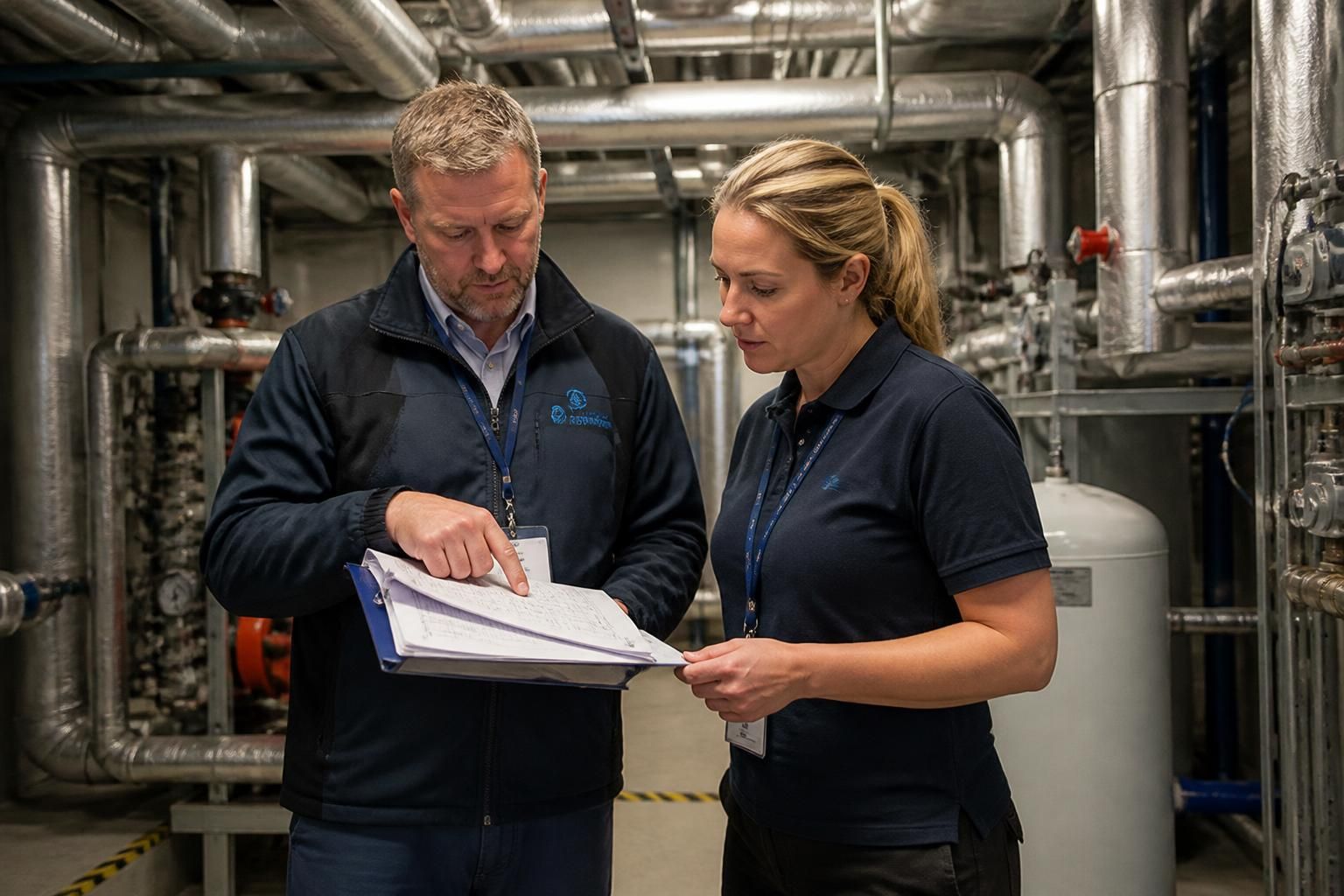
Responsibility normally rests with the person or organisation that has control of the premises, water systems or relevant work activities. In a workplace, this may be the employer, building owner, landlord, managing agent, facilities manager or another duty holder with sufficient control. Where responsibilities are shared, each party must understand its specific duties and coordinate with the others.
Under the Health and Safety at Work etc. Act and the Control of Substances Hazardous to Health Regulations, employers and other duty holders must assess and control reasonably foreseeable risks from exposure to Legionella. The HSE’s Approved Code of Practice L8 sets out expectations for managing legionella risks in applicable workplace water systems. For residential landlords and other accommodation providers, relevant housing and public health duties may also apply, depending on the premises and how they are managed.
Arranging an assessment does not mean that the responsible person must carry it out personally. They can appoint a competent person or specialist water hygiene consultant to undertake the work. However, delegation of the task does not automatically transfer overall accountability. The duty holder should check that the assessor has suitable knowledge, experience and independence, and that the assessment is appropriate for the complexity of the water systems and the people who may be exposed.
Where a property is managed by several organisations, the written agreement should make the division of responsibility clear. For example, a landlord may retain responsibility for the building and fixed water systems, while a managing agent may arrange inspections, maintenance and contractor access. An employer occupying part of the premises may still be responsible for risks arising from its own activities. Contractual arrangements should identify who will:
- appoint the competent assessor and provide access to all relevant areas;
- supply information about the building, occupancy, vulnerable people and water systems;
- implement control measures and arrange remedial work;
- manage contractors and verify that work has been completed properly;
- maintain records, monitoring results and written procedures; and
- review the assessment when circumstances change or the existing controls may no longer be effective.
The person arranging the assessment should provide the assessor with accurate information, including system schematics where available, records of water storage and distribution equipment, maintenance and monitoring histories, temperature checks, sampling results, incidents and details of infrequently used outlets. The assessor should also be told about changes to occupancy, refurbishment, periods of closure and any groups who may be particularly susceptible to illness.
A suitable assessment should examine how water is stored, distributed and used, and whether conditions could allow Legionella to multiply or spread. It should identify foreseeable exposure routes, existing controls, responsible personnel and further actions. A short document based only on a visual inspection may not be adequate where the system is complex, poorly understood or subject to significant change.
After the assessment, responsibility continues with the duty holder. Findings should be converted into an action plan with clear priorities, named owners and suitable timescales. The responsible person should ensure that urgent risks are addressed, routine controls are maintained and recommendations are not left solely within the consultant’s report.
Blue Fish Water Management Ltd can support organisations by carrying out legionella risk assessments, reviewing water safety arrangements and advising on practical control measures. Its wider water hygiene services include monitoring, compliance audits, UKAS-accredited water testing, training and remedial works, allowing clients to address assessment findings through a coordinated approach.

The responsible person should be formally identified within the organisation and given enough authority, competence and resources to manage legionella risks. This is a management role rather than simply an administrative task: it includes confirming that the assessment is commissioned, ensuring relevant information is available and checking that agreed control measures are governed effectively.
The appointed person should also have access to senior decision-makers where work, funding or changes to building use affect water safety. Recording the appointment, authority and reporting arrangements in the organisation’s water safety procedures helps prevent responsibility from becoming unclear, particularly where property ownership, occupation and facilities management are handled by different parties.
Discuss who should arrange your Legionnaires’ risk assessment
If you need to clarify who should commission a Legionnaires’ risk assessment for your premises, speak to Blue Fish Water Management Ltd about your responsibilities and the appropriate next steps.