
What information is needed for a Legionnaires risk assessment?
A Legionnaires risk assessment needs accurate information about the premises, people who use it, water systems and how those systems are operated. Provide site details, system schematics or descriptions, storage and distribution arrangements, water temperatures, usage patterns, maintenance and monitoring records, previous incidents or remedial work, and details of anyone who may be particularly vulnerable to Legionnaires’ disease.
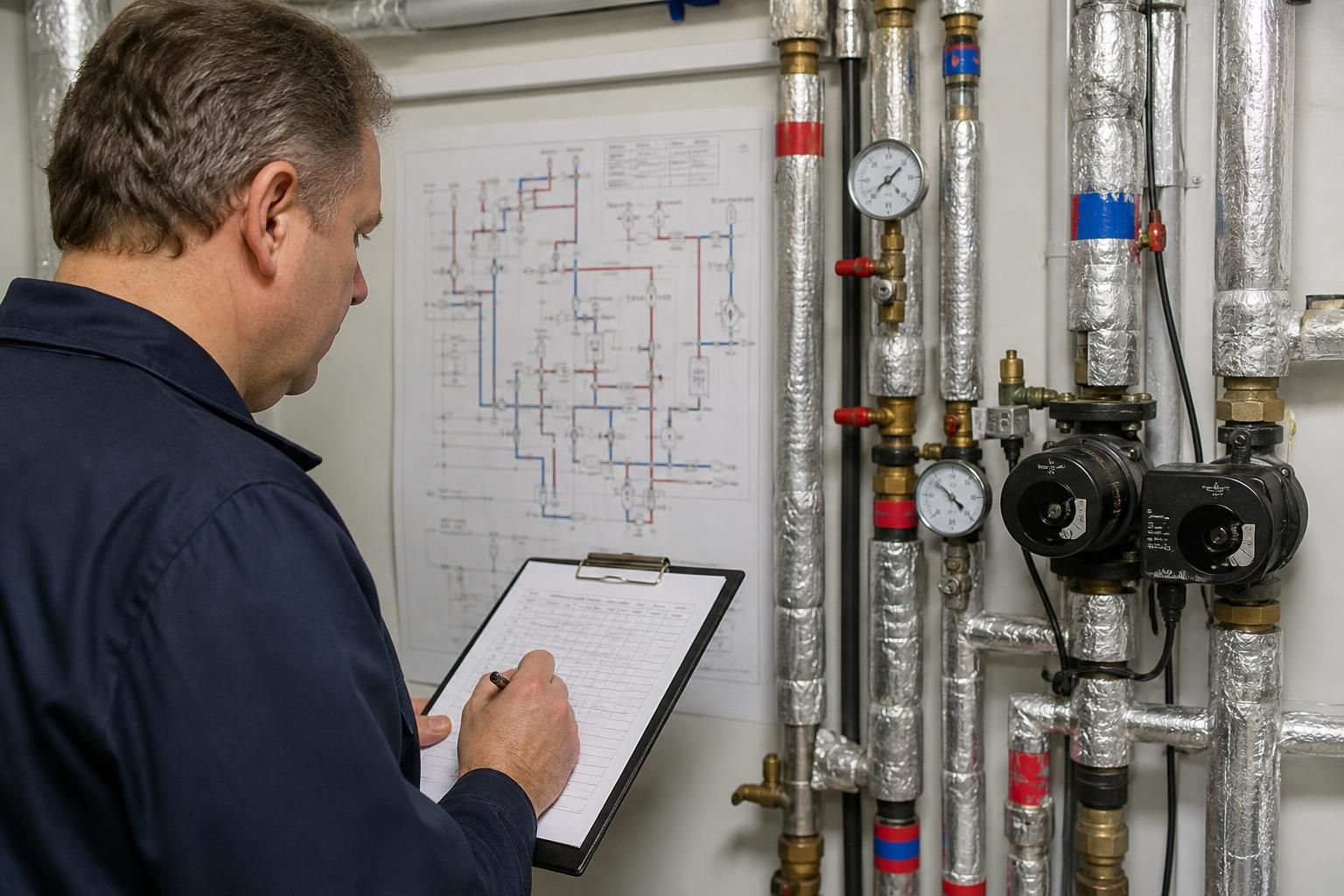
A Legionnaires risk assessment requires enough reliable information to understand how a premises is used, how water systems could create exposure, and whether existing controls are suitable. The assessor will normally need both documentary evidence and access to relevant parts of the building so that information supplied by the dutyholder can be checked against actual conditions.
Information about the dutyholder and management arrangements
The assessment should identify the person or organisation with overall responsibility for controlling the risk. It should also record who manages the water systems day to day, who carries out monitoring and maintenance, and who is authorised to take corrective action. Where responsibilities are divided between an owner, managing agent, facilities team, landlord or contractor, the boundaries between those roles should be clear.
Useful supporting information includes:
- the names or job titles of responsible people;
- the arrangements for reporting defects, abnormal results and failed control measures;
- the competence and training relevant to water hygiene duties;
- details of contractors involved in cleaning, maintenance, sampling or remedial work; and
- the arrangements for managing shared or leased areas where more than one party has duties.
This information allows the assessor to establish whether the control system is practical, understood and properly allocated, rather than assessing the physical installation in isolation.
Information about how the premises is occupied
The assessor needs to understand the building’s normal and unusual patterns of use. This includes whether areas are occupied continuously, intermittently, seasonally or only for specific events. Periods of closure, low occupancy, refurbishment, changes in tenancy and unused outlets can all affect the way water systems are managed.
The assessment should also consider how people are exposed. For example, exposure may arise through showering, bathing, aerosol-producing equipment, therapeutic facilities, cooling processes or other activities that disperse contaminated water into the air. The location and frequency of these activities can be as important as the presence of the equipment itself.
Information about the building and its water installation
The assessor needs a sufficiently accurate picture of the installation to trace water from its point of entry or source through storage, heating, distribution and outlets. Drawings are useful, but they may not reflect alterations made during repairs or redevelopment. Where records are incomplete, a physical inspection and clear written description may be needed to identify parts of the system that are not documented.
Particular points that may require clarification include:
- dead legs, redundant branches and infrequently used outlets;
- stored water vessels, calorifiers, tanks and associated pipework;
- secondary return arrangements and areas that may have poor circulation;
- blending valves, thermostatic devices, showers and other outlet fittings;
- plant rooms, risers, ceiling voids and other locations that are difficult to access; and
- connections to specialist equipment or processes that may introduce additional risk.
Information about the age, condition and history of the installation is also relevant. Corrosion, scale, sludge, biofilm, leaks, poor insulation and repeated component failures may indicate conditions that affect control, even where routine records appear satisfactory.
Evidence that existing controls are working
A risk assessment should be based on evidence rather than an assumption that procedures are being followed. The assessor may therefore review records showing how control measures have operated over time. These can include monitoring sheets, inspection reports, cleaning certificates, disinfection records, maintenance logs, water treatment records and laboratory reports.
Records should show what was checked, where, when, by whom and what happened when a result or observation was outside the expected range. Isolated readings are less informative than a consistent record that demonstrates how the system behaves under normal conditions. Missing, contradictory or retrospectively completed records should be identified as limitations in the assessment.
Information about incidents, changes and exceptions
The assessor should be told about any suspected or confirmed case of Legionnaires’ disease linked to the premises, relevant complaints, unusual sampling results, contamination events or emergency disinfection. Previous problems can reveal weaknesses that are not obvious during a single inspection.
Recent or planned changes should also be disclosed. Examples include alterations to pipework, replacement plant, changes in occupancy, building extensions, new equipment, changes to operating temperatures, water interruptions and periods when the system has been partly or completely shut down. A risk assessment that predates a material change may no longer describe the installation or its use accurately.
Information needed where records are incomplete
Incomplete information does not necessarily prevent an assessment, but the uncertainty should be recorded and addressed. The assessor may recommend further investigation, additional inspection, sampling, drawing updates or remedial work before a reliable conclusion can be reached. Guesses should not be presented as confirmed facts.
Before the assessment, the dutyholder should gather available records, identify areas that require access and arrange for relevant staff or contractors to be available to explain the installation. Access restrictions, inaccessible plant, confidential occupancy information and areas outside the client’s control should be declared at the outset. These limitations can affect the scope of the assessment and should appear in its findings.
The completed assessment should state the information considered, the areas inspected, any assumptions made and any gaps requiring action. This gives the responsible person a clear basis for deciding what must be corrected, what needs further investigation and how the findings should be incorporated into the written water safety arrangements.

Temperature information for a Legionnaires risk assessment should show how the water system performs at different points, rather than provide isolated readings. The assessor may need temperatures from stored hot water, flow and return pipework, representative outlets and cold-water entry points, alongside the date, time, location and method used for each reading.
Readings should be interpreted in relation to how the system operates. For example, a satisfactory temperature near a calorifier may not reflect conditions at a distant outlet, while a blended outlet may require separate consideration of the hot-water supply and the point-of-use temperature. Records should also identify unusual conditions, such as low demand, recent flushing, shutdowns or changes in occupancy, because these can affect the result and its relevance to the assessment.
Discuss your Legionnaires risk assessment requirements
Discuss your Legionnaires risk assessment requirements with Blue Fish Water Management Ltd to clarify the appropriate scope and supporting evidence for your premises.