
Who should oversee Legionnaires’ disease prevention risk controls?
The person with overall control of a premises or water system should oversee Legionnaires’ disease prevention risk controls, supported by a competent person with suitable knowledge and experience. They remain responsible for ensuring risks are assessed, control measures are implemented, and findings and actions are reviewed and recorded.

The dutyholder or responsible person for the premises should oversee Legionnaires’ disease prevention risk controls, with day-to-day activities assigned to a suitably competent person. This arrangement should make clear who has authority to act, who carries out each task, how performance is checked and when issues must be escalated.
Responsibility usually sits with the person or organisation that controls the premises, water systems or relevant work activities. Depending on the setting, this may be an employer, landlord, managing agent, facilities operator or building owner. In a multi-occupied building, more than one party may have duties. The parties should define their respective responsibilities in writing rather than assume that another organisation is managing the risk.
Appointing a competent person does not remove the dutyholder’s accountability. The dutyholder should ensure that the appointed person has appropriate knowledge, experience, training and authority for the complexity of the water systems. They should also provide sufficient time, access, information and budget to carry out the role effectively.
The competent person may coordinate the practical control programme. Their responsibilities can include:
- arranging or reviewing the legionella risk assessment;
- maintaining an accurate description of water systems and points of use;
- organising monitoring, inspection, cleaning, disinfection and maintenance activities;
- checking that temperature checks, sampling and other control measures are completed correctly;
- reviewing results, identifying trends and escalating failures or unusual findings;
- keeping records that demonstrate what was done, when it was done and by whom; and
- advising senior management when additional resources, remedial work or specialist input are needed.
Facilities, engineering and maintenance teams may carry out specific tasks, but each person should understand the limits of their role. Staff taking temperatures, inspecting outlets or carrying out remedial work need suitable instruction and should know how to report abnormal readings, inaccessible outlets, changes to use or suspected faults. Procedures should also identify who can stop or restrict the use of affected equipment where a significant concern is found.
External contractors can provide risk assessments, water testing, cleaning, disinfection, monitoring and remedial services. The organisation appointing them should still check that their scope of work is suitable, their personnel are competent and their reports are sufficiently detailed to support management decisions. A contractor’s visit does not replace internal oversight: the responsible organisation must review the findings, approve actions and confirm that completed work has addressed the identified issue.
Oversight should include a planned review process rather than rely only on routine checks. The responsible person should consider whether controls remain suitable after changes to occupancy, water-system configuration, operating temperatures, building use, maintenance arrangements or periods of low use. A new risk assessment or review may also be appropriate following an incident, significant control failure, building alteration or change in responsibility.
Where several organisations share control, effective coordination is essential. Landlords, managing agents, employers, tenants and specialist contractors should exchange relevant system information and agree who will manage shared tanks, calorifiers, outlets, records and corrective actions. Written arrangements should cover access, communication and escalation so that a defect is not left unresolved because responsibility is unclear.
Blue Fish Water Management Ltd can support organisations by providing legionella risk assessments, water testing, compliance audits, system monitoring, training and remedial works. Its role can complement the client’s governance arrangements by supplying technical findings and practical recommendations, while the dutyholder retains oversight of the prevention programme and decisions affecting the premises.
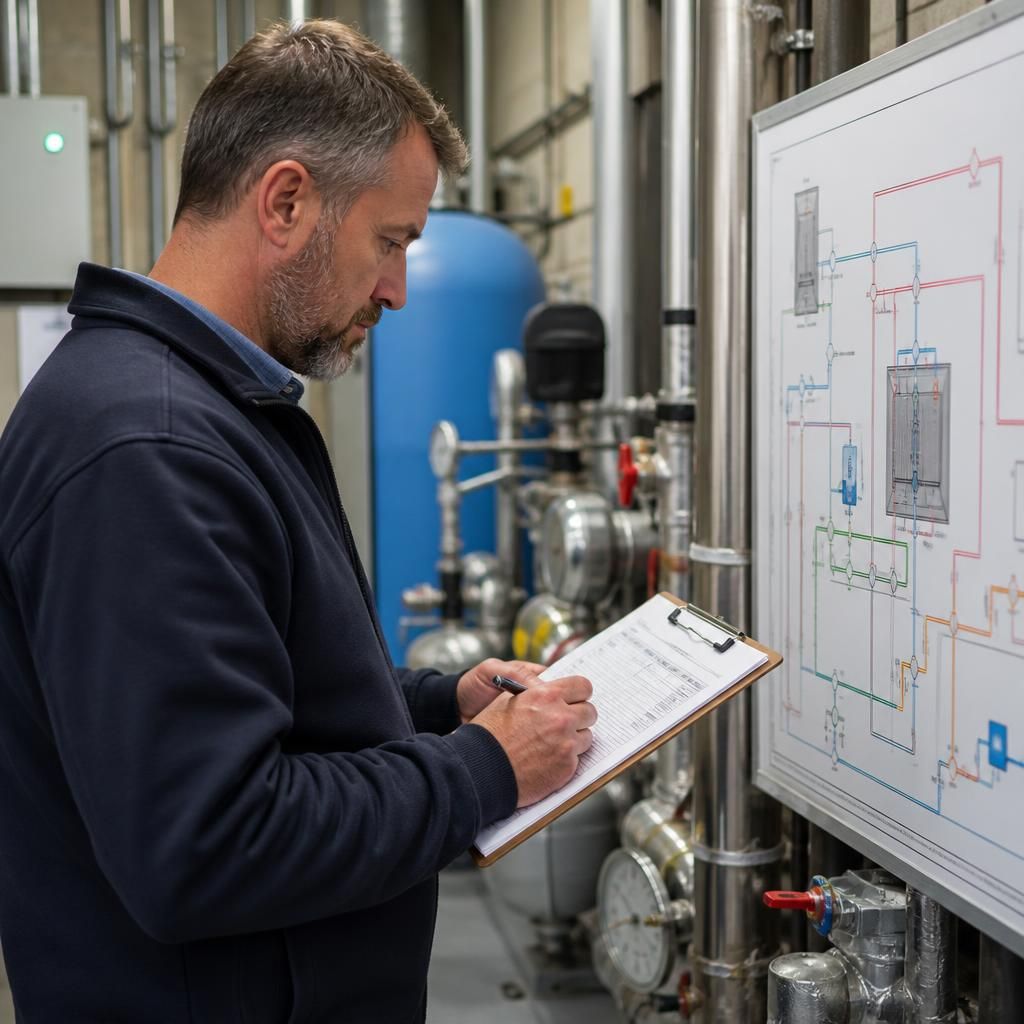
Effective oversight includes independent assurance that the prevention arrangements work in practice, not simply that procedures and records exist. The dutyholder can require a suitably qualified person who is not responsible for carrying out the routine checks to review selected records, observe relevant tasks and investigate whether corrective actions have been completed.
This review should report clear findings to the person with authority to make decisions about the premises and water systems. Any unresolved weakness should have an owner, an agreed action and a documented decision about interim precautions. This gives senior management a reliable basis for confirming that Legionnaires’ disease prevention risk controls remain suitable and properly governed.
Discuss who should oversee your Legionnaires’ disease prevention risk controls
Discuss your Legionnaires’ disease prevention risk controls with Blue Fish Water Management Ltd to clarify accountability, identify any gaps in oversight and determine whether specialist support is appropriate.