
Which water system controls help prevent Legionnaires’ disease?
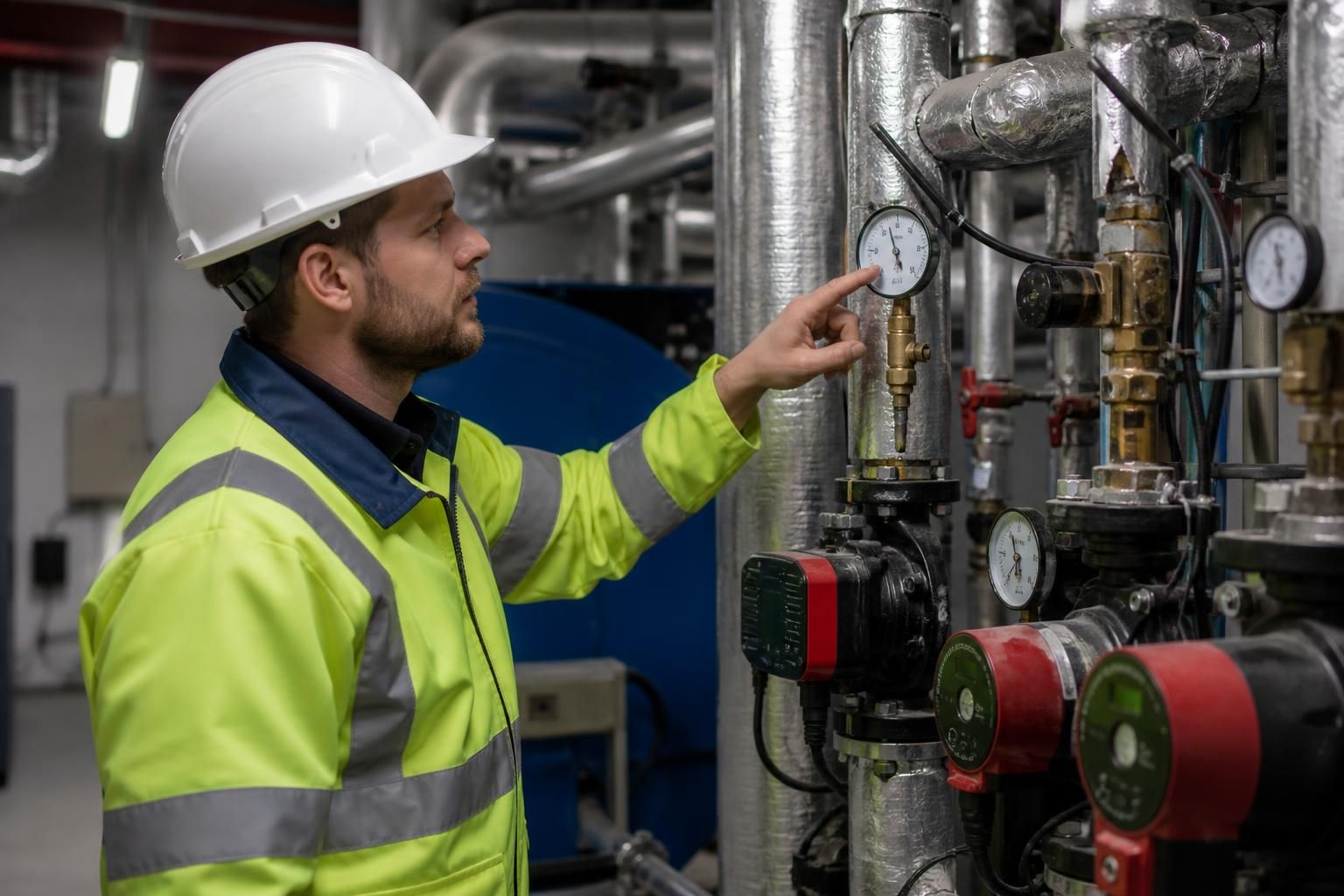
Effective water system controls are the engineering, operational and management measures used together to reduce Legionella growth and limit exposure to contaminated water droplets. The appropriate controls depend on the system’s design, temperature profile, water usage, condition, occupants and potential aerosol-producing outlets; there is no single measure that is suitable for every building.
Design and installation controls
Risk reduction should begin at the design stage. Systems should be as simple as practical, with pipework routed to minimise unnecessary branches, oversized sections and infrequently used outlets. Storage capacity should reflect realistic demand rather than excessive capacity, and hot and cold services should be arranged to avoid unwanted heat transfer. Where systems are altered or extended, the effect on circulation, flow and control points should be assessed before work is completed.
New or modified installations should be commissioned properly, with pipework cleaned and disinfected where required before use. A current schematic should show tanks, calorifiers, pumps, valves, sentinel outlets, treatment equipment and other significant components. This makes it possible to identify vulnerable sections and ensures that control checks are carried out at representative points rather than selected at random.
Storage, circulation and outlet controls
Storage vessels, calorifiers and distribution arrangements should be selected and operated so that water is not held unnecessarily. Circulating hot-water systems need adequate flow through their return circuits, while cold-water services need protection from heat sources such as plant rooms, uninsulated hot-water pipework and direct sunlight. Tanks should have suitable covers, screened vents and secure access arrangements to prevent contamination.
Outlets that are rarely used, temporarily closed or located in vacant areas require a defined management approach. Options may include removal, redesign, isolation or controlled use, depending on the risk and the operational need for the outlet. Thermostatic mixing valves and other safety devices should be positioned and maintained so that scalding protection does not create unmanaged sections of warm water.
Controls at aerosol-producing outlets
Showers, spray taps, hoses, spa equipment, air washers, humidifiers and some process plant can create aerosols that increase the opportunity for inhalation exposure. These outlets should be included in the system risk assessment, with suitable design, access for cleaning and a clear method for taking them out of service when necessary. Showerheads, hoses, strainers and spray components can collect scale and biofilm, so their condition and suitability for the application should be considered separately from the wider pipework.
Where a water system is not needed for a period, leaving aerosol-producing equipment connected and unused may increase risk. The responsible person should decide whether equipment is to be isolated, drained, removed or managed through a documented recommissioning process before use resumes. Any decision should account for the equipment design and the manufacturer’s instructions.
Water treatment and disinfection
Some systems require additional treatment, particularly larger or more complex installations and evaporative cooling systems. Possible measures include filtration, physical treatment or chemical dosing, but the method must be compatible with the system, water quality, materials and intended use. Chemical treatment requires controlled dosing, suitable storage, calibration of dosing equipment and checks that treatment is achieving its intended purpose without creating another hazard.
Disinfection may be appropriate after contamination, significant system work or a control failure. It should be planned by a competent person, taking account of the system configuration, affected users, discharge arrangements and any restrictions on water use. A disinfection exercise is not a substitute for correcting the design or operational condition that allowed the risk to develop.
Control limits and escalation
A written control scheme should define the conditions that indicate satisfactory operation and the action required when those conditions are not met. It should identify who checks each control, what evidence is retained, who reviews exceptions and when specialist advice is needed. Isolated abnormal results should not be dismissed automatically: they should be considered alongside system history, usage patterns, maintenance work, complaints and any changes to the building.
Controls should also reflect the people using the premises. Healthcare settings, care facilities and other buildings occupied by individuals who may be more susceptible to severe infection require a more cautious assessment of exposure routes and control failures. Areas with vulnerable occupants may need tighter operational discipline, closer coordination between facilities and clinical teams, and a clearly documented response to suspected contamination.
Verification and review
Control measures remain reliable only when they are checked against the actual system. Independent review can help identify unrecorded branches, inaccessible components, unsuitable outlet arrangements or assumptions that no longer match how the building is used. Water sampling may support an investigation or validate controls where risk assessment indicates it is appropriate, but a favourable sample does not prove that every part of a system is safe.
Risk controls should therefore be reviewed after refurbishment, changes in occupancy, alterations to water demand, prolonged closure, repeated abnormal findings or a suspected case of Legionnaires’ disease. An appropriately scoped legionella risk assessment, supported by competent water hygiene advice, can determine which controls are necessary and whether they remain proportionate to the system’s current risk.
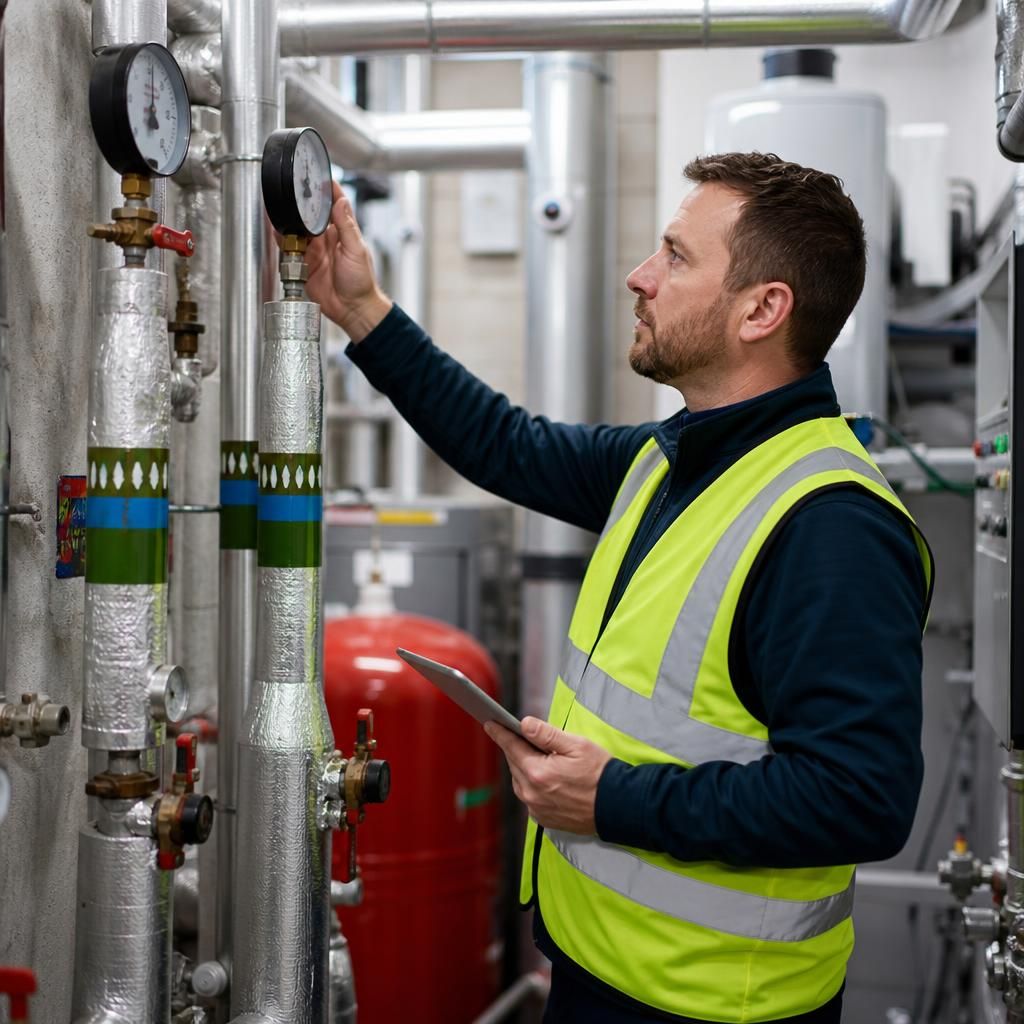
Water system controls are only effective when staff can access, identify and check the components they are responsible for managing. Valves, tanks, pumps, temperature gauges and sampling points should be clearly labelled and located where inspections and maintenance can be carried out safely.
Good documentation should link each control point to the relevant task, such as checking a gauge, operating an isolation valve or inspecting a tank. Instruments should be suitable for their purpose, and any faults, inaccessible components or damaged labels should be recorded and addressed rather than worked around. This practical level of control helps ensure that the written water safety arrangements reflect the system that is actually in use.
Review your water system controls for Legionnaires’ disease
If you need to establish whether your current arrangements remain suitable, arrange a legionella risk assessment with Blue Fish Water Management Ltd. Their specialists can help identify gaps and define proportionate control measures for your water system.