
What does a Legionnaires disease risk assessment include?
A Legionnaires’ disease risk assessment examines a water system, identifies where Legionella could grow or spread, and evaluates who may be exposed, including vulnerable people. It records the necessary control measures, monitoring arrangements, management responsibilities and actions needed to reduce the risk and maintain compliance.
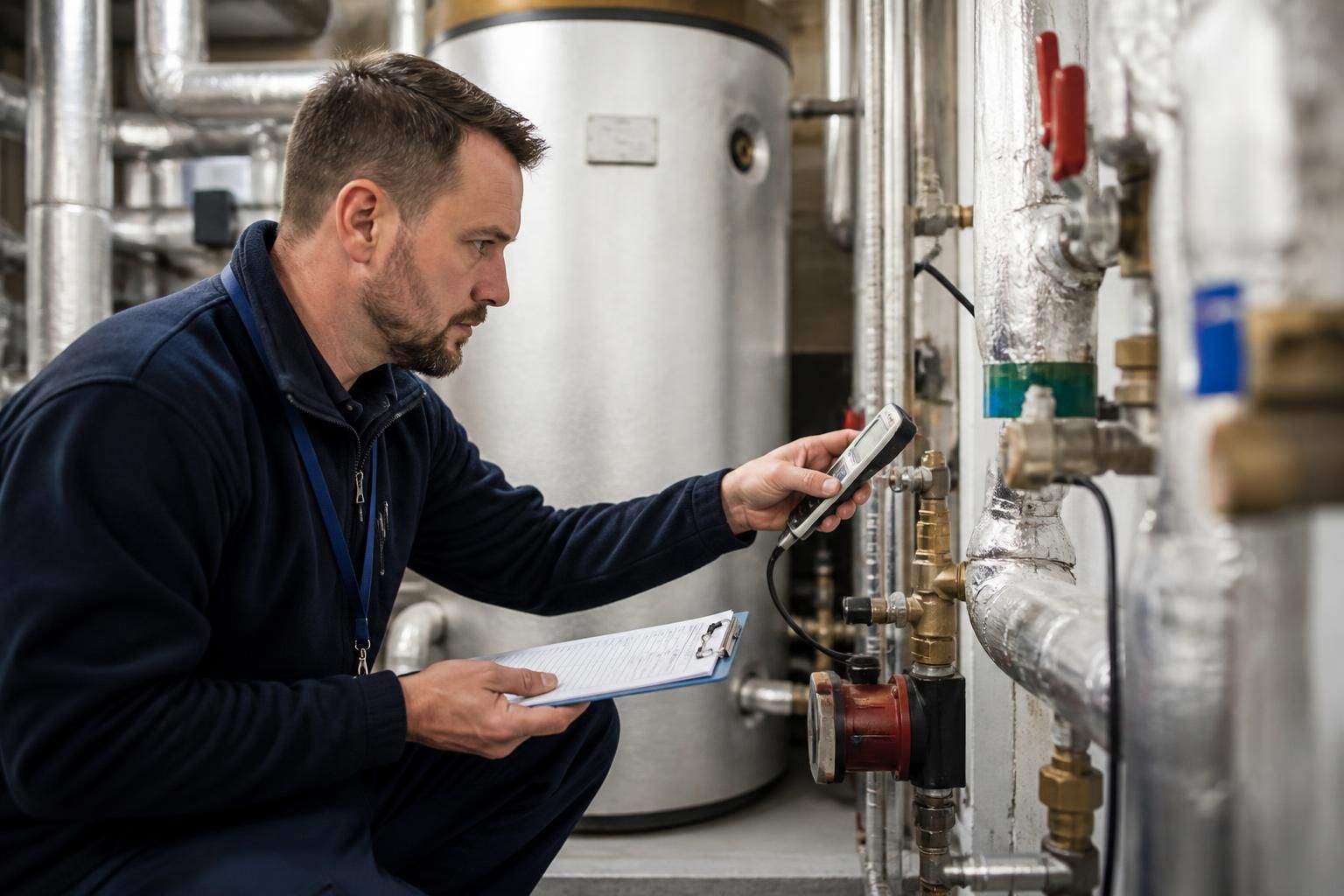
A Legionnaires’ disease risk assessment is a documented, system-specific examination of how a water system is designed, operated and maintained, with findings translated into proportionate control requirements. It should provide enough detail for the dutyholder and appointed contractors to understand the hazards, the people who may be exposed, the safeguards already in place and any further action required.
System description and scope
The assessment normally begins by defining the systems and areas included. This may cover hot and cold water services, storage cisterns, calorifiers, water heaters, showers, taps, thermostatic mixing valves, flexible hoses, emergency outlets and specialist equipment. It should identify how water enters the premises, how it is heated and circulated, and which outlets are connected to each part of the system.
Relevant drawings, schematics or asset schedules may be reviewed and updated where they are incomplete. The assessor should also note areas that are inaccessible, redundant, rarely used or supplied by an uncertain route, as these can affect the reliability of the control regime.
Conditions that could support Legionella
The inspection considers physical and operational factors that may allow bacteria to survive or multiply, including:
- Water temperatures that remain within a range favourable to growth.
- Stagnation caused by low use, oversized storage, dead legs, capped branches or redundant pipework.
- Accumulation of scale, sediment, biofilm or corrosion products.
- Insufficient circulation or poor balancing in secondary return systems.
- Defective insulation, inadequate tank covers or damaged components.
- Infrequent flushing of outlets, showers and other points of use.
- Access problems that prevent inspection, cleaning, maintenance or temperature checks.
The assessment should distinguish between a theoretical hazard and a condition that is present in the particular installation. It should explain why each finding matters and relate it to the way the system is used.
Exposure routes and affected people
Legionnaires’ disease is generally associated with inhaling contaminated water droplets or aerosols. The assessment therefore considers activities such as showering, spray-producing outlets, cleaning, maintenance, drain-downs and work on contaminated equipment. It should also consider whether water may be aspirated or splashed during particular activities.
People who may be exposed can include employees, contractors, residents, visitors, patients, pupils or members of the public, depending on the premises. The assessor should take account of individuals who may be more susceptible to serious illness, such as older people, smokers and those with certain underlying health conditions or weakened immune systems. The assessment should record relevant groups without unnecessarily collecting personal medical information.
Existing control measures
A competent assessment reviews whether current precautions are suitable and consistently applied. This may include temperature control, routine flushing, cleaning and disinfection, tank inspection, showerhead maintenance, sampling arrangements, remedial work and records of completed checks. It should consider not only whether a procedure exists, but whether it is appropriate for the system and practical for staff to carry out.
Temperature readings may be taken at representative storage, return and outlet points where relevant. However, temperature checks alone do not establish that a system is safe. Physical condition, use patterns, design, maintenance history and the quality of management controls must be considered together. Microbiological sampling is not automatically required for every assessment; it may be recommended where the risk profile, system condition, test history or other evidence justifies it.
Management arrangements
The report should set out how legionella control is organised. This commonly includes:
- The dutyholder and named responsible person.
- The competence, training and supervision required for those carrying out control tasks.
- The division of responsibilities between the client, facilities team, landlords, managing agents and specialist contractors.
- Inspection, monitoring, maintenance and record-keeping requirements.
- Arrangements for reporting defects, escalating concerns and verifying completed remedial work.
- Procedures for changes to the system, periods of non-use and alterations to building occupancy.
Where work is contracted out, the assessment should make clear which tasks remain the client’s responsibility and what information must be exchanged. A contractor’s service report does not by itself remove the dutyholder’s responsibility to understand and manage the risk.
Findings and action plan
Each significant finding should be recorded clearly, with its location, evidence, risk relevance and recommended action. Recommendations may include removing redundant pipework, improving insulation, correcting temperatures, repairing storage tanks, restoring circulation, modifying outlets, increasing flushing or arranging cleaning and disinfection. Actions should be prioritised according to the level of risk and assigned to an appropriate person, with a target for completion and a method of verification.
The completed document should also state any limitations, such as inaccessible plant, unavailable maintenance records or parts of the system that could not be inspected. These limitations are important because they identify where further investigation may be needed.
How the assessment relates to legal guidance
For workplaces and other premises covered by health and safety law, the assessment should support the dutyholder’s obligations under the Control of Substances Hazardous to Health Regulations and relevant UK guidance, including the Health and Safety Executive’s Approved Code of Practice L8 and HSG274. The exact control approach depends on the type of premises, system complexity and exposure risk. A suitable assessment should therefore be specific to the installation rather than copied from a generic template.
The final report is not an alternative to ongoing control. It provides the evidence and recommendations needed to operate the water system safely, maintain appropriate records and review arrangements when the system, building use or risk profile changes.
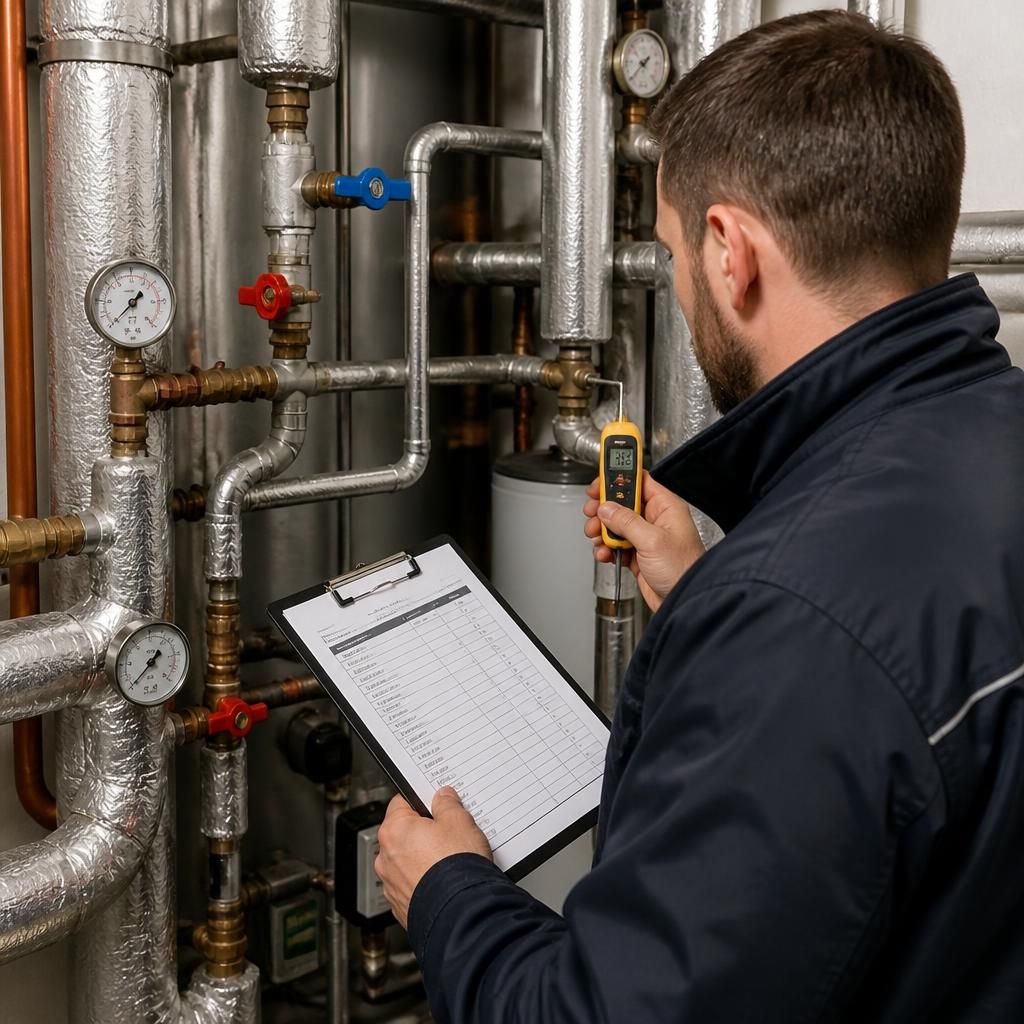
A Legionnaires’ disease risk assessment should be treated as a working management document, not a one-off certificate. Its value depends on whether the findings can be used by the people responsible for operating and maintaining the water system.
The report should therefore be clear about the evidence behind its conclusions, distinguish confirmed conditions from assumptions, and identify any information that needs to be checked. It should be understandable to both the dutyholder and the staff or contractors who carry out the resulting controls. If the building, water system or its use changes, the assessment should be revisited so that its conclusions remain relevant.
Need Help Understanding Your Legionnaires’ Disease Risk Assessment?
If you need help interpreting an existing report or establishing whether your water system requires a suitable Legionnaires’ disease risk assessment, speak to Blue Fish Water Management Ltd for practical guidance tailored to your premises.