
How often should a Legionnaires’ disease risk assessment be reviewed?

The review date should be determined by the condition and management of the water system, not treated as a purely administrative deadline. A formal review confirms that the original assessment still describes the system accurately, identifies current exposure risks and sets out controls that are suitable, implemented and monitored.
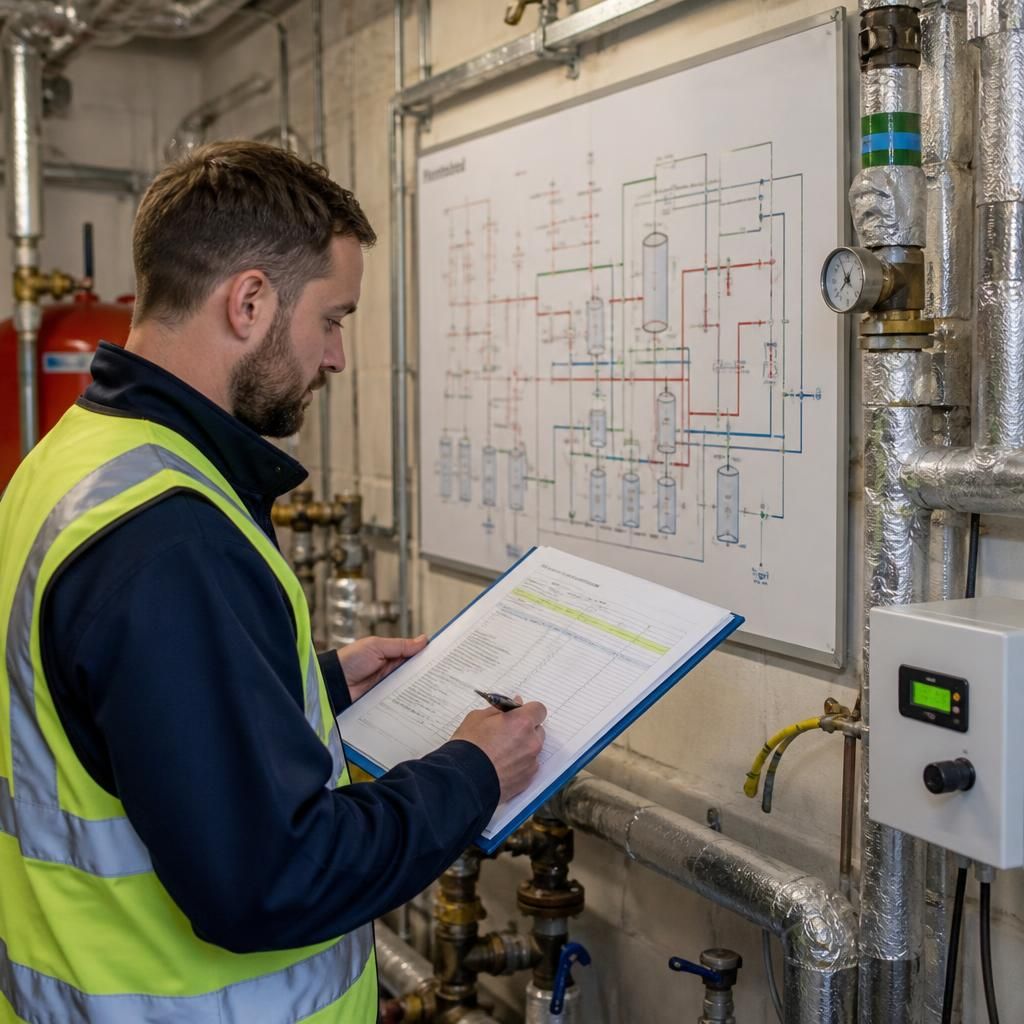
A review should examine the full assessment rather than simply changing its date. The responsible person should check:
- the current design, layout and use of hot and cold water systems;
- which outlets, tanks, calorifiers, showers, emergency facilities and other components are in service;
- whether water temperatures, flushing arrangements, cleaning, disinfection and maintenance remain appropriate;
- whether control responsibilities are clearly allocated and understood;
- whether monitoring records show that required checks have been completed and that results remain within the defined control limits; and
- whether outstanding remedial actions have been completed and whether they have been effective.
Routine monitoring is not a substitute for a formal risk-assessment review. Temperature checks, flushing records, sampling results and maintenance records provide evidence about how the system is performing between reviews. They may also reveal that the assessment needs to be reconsidered before its planned review date. A repeated failure, unexplained temperature change, positive microbiological result or recurring deficiency in records should be investigated and linked back to the assessment.
The review should also consider changes in the people who may be exposed. This includes altered occupancy, vulnerable individuals using the premises, changes to working practices and periods in which parts of a system have had limited use. The significance of a change depends on the system and the exposure pathway, so the responsible person should record why the assessment remains suitable or what additional controls are required.
Events affecting the building or its water services can require a more detailed reassessment. Examples include refurbishment, a change of building use, alterations to pipework or plant, installation or removal of outlets, changes to water treatment, prolonged shutdowns and changes in ownership or management responsibility. Where work affects the system, the review should account for the condition after completion, not just the proposed design.
A competent person should carry out or support the review where specialist knowledge is needed. The level of competence required will depend on the complexity of the water system, the risks identified and the organisation’s ability to interpret monitoring and sampling information. A review performed by someone unfamiliar with the installation may miss dead legs, low-use outlets, inadequate return temperatures or gaps between written procedures and actual practice.
The outcome should be documented clearly. Records should show the date, the person completing the review, the information considered, any changes to the risk rating or control scheme, actions allocated, responsible owners and target completion dates. If no changes are required, that conclusion should still be recorded with the reasons and supporting evidence. The assessment, schematics, monitoring results, maintenance information and action records should be kept together so that the control system can be demonstrated during an audit or investigation.
Where the review identifies significant shortcomings, the organisation should prioritise controls according to the level of risk. Interim precautions may be needed while remedial work is planned or completed. Updating the document alone does not reduce risk: the revised measures must be communicated, implemented and checked for effectiveness.
Blue Fish Water Management Ltd can support organisations with legionella risk assessments, monitoring, testing and compliance reviews. Its practical role is to help ensure that the documented assessment reflects the actual water system and that identified controls can be managed in day-to-day operations.
The two-year review point is a planning minimum, not proof that a legionella risk assessment remains suitable until that date. HSE guidance expects the assessment to be kept under review, with the interval reflecting the complexity of the water system, the people exposed and the reliability of existing controls.
For a higher-risk or complex premises, the responsible person may set shorter review intervals within the written control scheme. This is particularly appropriate where the site includes multiple water systems, healthcare or care-related activities, vulnerable occupants, or a history of control failures. The chosen interval should be recorded with the reasons for it, so that the organisation can demonstrate how its review arrangements are proportionate to the risks.
Discuss your legionella risk assessment review
Discuss your legionella risk assessment review requirements with Blue Fish Water Management Ltd to identify the appropriate scope and supporting evidence for your premises.