
Who should be involved in a legionella inspection survey?
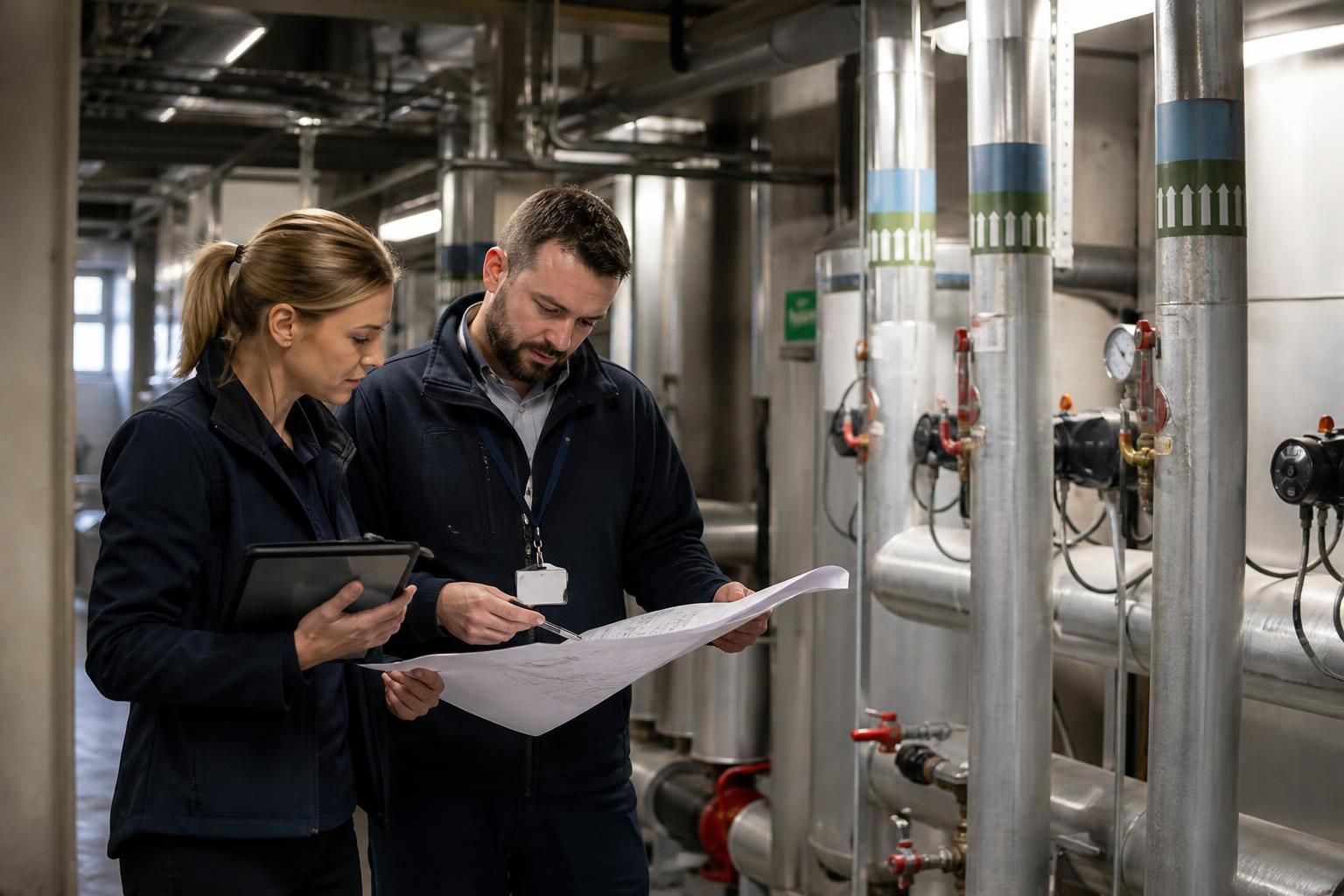
A legionella inspection survey should involve everyone who can explain how the water systems are designed, operated, maintained and used, alongside the person with authority to act on the findings. The inspection is most effective when technical evidence, site knowledge and management responsibility are considered together rather than treated as a standalone visit by an assessor.
The dutyholder and responsible person
The dutyholder retains overall responsibility for managing health and safety risks associated with water systems. They should ensure that an appropriate responsible person is appointed, given sufficient authority and provided with the resources needed to manage legionella control. The responsible person normally coordinates the survey, confirms its scope and makes sure that relevant information is available.
They should also be able to explain how the organisation manages water safety in practice, including:
- which buildings, systems and outlets are included;
- who is responsible for day-to-day control measures;
- how monitoring results and faults are recorded;
- what action is taken when control parameters are outside acceptable limits; and
- how remedial work is authorised, tracked and verified.
Where a premises is leased, managed or occupied by more than one organisation, responsibility should be clarified before the survey. The dutyholder, landlord, managing agent and tenant may each control different parts of the water system, so the inspection should identify where duties begin and end.
The competent surveyor or water safety specialist
The person carrying out the inspection must have suitable knowledge, training and experience for the systems and risks being assessed. Their role is to examine the physical installation, review relevant records, speak to those who operate the systems and identify conditions that could support legionella growth or exposure.
A competent inspector should be sufficiently independent to report deficiencies objectively. They should define any limitations to the inspection, distinguish observed facts from information supplied by others, and explain the significance of their findings. The final report should identify actions clearly enough for the responsible person to decide what needs to happen, who should do it and whether further technical input is required.
Estates, facilities and building management staff
Facilities or estates personnel often provide the operational picture that cannot be obtained from documents alone. They may know about changes to building use, alterations to pipework, redundant outlets, intermittent occupancy, temperature-control problems or recurring maintenance issues.
They can help the surveyor understand:
- how hot and cold water services are arranged;
- which plant rooms, tanks, calorifiers, sentinel outlets and higher-risk areas are present;
- how outlets are used and maintained;
- whether parts of the system are rarely used or difficult to access; and
- what defects, complaints or previous remedial measures have been recorded.
Their involvement is particularly important where drawings are incomplete or the system has changed since the last survey. They can also help confirm that the inspection covers concealed, remote or shared plant rather than only the readily visible outlets.
Maintenance teams and specialist contractors
Plumbing, mechanical, heating, water treatment and planned maintenance contractors may hold essential evidence about the system. This can include service sheets, cleaning and disinfection records, temperature-monitoring results, tank inspections, flushing logs, sampling results and details of corrective work.
Contractors should not be expected to interpret the overall risk unless that responsibility has been formally assigned and they have the necessary competence. Their value during the survey is usually in providing accurate technical information, explaining work carried out and identifying practical constraints. If several contractors are involved, the responsible person should establish who controls each task and how their records are brought together.
Occupier, tenant and operational representatives
People who use or manage the premises can provide information about actual use that may differ from the intended design. A tenant representative, site manager or departmental lead may know which outlets are used regularly, which areas are vacant, whether staff have reported low flow or unusual water temperatures, and whether access is restricted at particular times.
This information helps the surveyor assess exposure and identify underused outlets or parts of the system. In premises such as care settings, healthcare environments, residential accommodation or facilities used by people who may be more susceptible to infection, appropriate operational and health-and-safety representatives should be involved in interpreting the consequences of any findings. Personal or clinical information should only be shared where it is necessary and properly managed.
Health and safety, compliance and procurement colleagues
Health and safety or compliance staff can help connect the inspection with the organisation's wider risk-management arrangements. They may review whether the legionella management system is documented, whether actions are assigned and closed effectively, and whether incidents or significant changes have been escalated appropriately.
Procurement or contract-management staff may also need to participate where external services are used. They can confirm the agreed scope of a contractor's work, check that responsibilities are not duplicated or omitted, and ensure that recommendations requiring expenditure are routed to the person authorised to approve them. They should support the process without replacing the competent technical judgement of the surveyor.
Who needs to attend the inspection?
Not everyone involved in legionella management needs to be present for the entire survey. The responsible person should normally be available for the opening discussion and findings review. A facilities or maintenance representative should accompany the surveyor where practical, particularly when access, plant identification or system operation may be uncertain. Contractors or tenant representatives can attend for the areas and questions relevant to their responsibilities.
Before the visit, the responsible person should agree the inspection scope, arrange access to plant and outlets, identify any restricted areas, and collect current drawings, asset information, monitoring records, sampling results, cleaning records and previous reports. After the inspection, the same group should review the findings, confirm ownership of actions and record how completion will be checked.
Blue Fish Water Management Ltd can provide competent legionella inspection, water hygiene and compliance support where an organisation needs independent technical input. The important point is that the surveyor supplies specialist assessment, while the dutyholder and appointed responsible person retain control of decisions, implementation and ongoing management.

Involvement in a legionella inspection survey should be based on each person’s knowledge and authority, rather than on job title or seniority alone. A small organisation may have one person covering several roles, while a larger estate may need input from several departments or sites.
The responsible person should identify who can provide reliable evidence about system operation, maintenance history, building use and management decisions. This helps the surveyor distinguish between documented arrangements, intended practice and what actually happens on site. Senior managers do not need to attend every inspection, but they should understand findings that require changes to resources, contracts or risk controls.
Where information is divided between departments or properties, the survey should record the source of each important piece of evidence. This creates a clearer audit trail and reduces the risk of assumptions being treated as confirmed facts. It also helps the organisation direct follow-up questions to the person best placed to answer them.
Plan your legionella inspection survey
Review your current responsibilities, records and access arrangements before arranging a legionella inspection survey. Contact Blue Fish Water Management Ltd to discuss the appropriate inspection scope and the technical support your organisation may need.