
What records are needed for a legionella inspection survey?
For a legionella inspection survey, keep the current legionella risk assessment, written control scheme or water safety plan, system schematics, monitoring records, water testing results, cleaning and disinfection certificates, maintenance logs, training records, and evidence of any remedial actions. Records should be current, traceable to the relevant water systems, and show who completed each task, when it was done, the results obtained, and how any exceptions were addressed.

The records presented for a legionella inspection survey should show how the organisation understands, controls and reviews the risk from its water systems. An inspector is not simply checking whether documents exist; they are looking for a coherent evidence trail that matches the systems installed and the way the premises are used.
Start with a document register. A simple index helps the inspector identify the latest version of each relevant document, its approval date, its review date and the person responsible for it. Superseded documents should be clearly marked rather than mixed with current records. Keeping a controlled archive is useful where historic decisions, defects or incidents need to be understood.
Provide enough information to identify the systems. Drawings and schematics are more useful when they can be matched to plant-room labels, tanks, calorifiers, outlets and other assets on site. Supporting information may include an asset register, equipment schedules, photographs or commissioning information. These records help establish whether the paperwork reflects the actual installation, particularly where equipment has been altered, removed or added.
Show who has authority and responsibility. The inspection file should make clear who acts as the responsible person, who carries out operational checks and who reviews findings. Where duties are shared between an owner, managing agent, facilities team and specialist contractor, the relevant agreements and instructions should define the boundaries between them. This prevents gaps where each party assumes that another organisation is managing a particular control.
Retain the evidence behind unusual results. A temperature reading, sample result or inspection entry may need context if it falls outside the expected range. Keep the associated investigation, decision, authorisation and follow-up evidence together. An inspector may need to establish whether the result was an isolated event, whether the affected outlet or system was taken into account, and whether the response was proportionate.
Make laboratory information complete. Water analysis should be accompanied by the laboratory report rather than only a summary spreadsheet. The report should identify the sample locations, collection dates, sample types and results, together with the laboratory details and any relevant interpretation supplied by the laboratory. Sampling plans should explain why locations were selected and should be consistent enough to allow meaningful comparison over time.
Include evidence relating to equipment and methods. Records from contractors should identify the work performed, the equipment or areas covered, the method used and any limitations encountered. Where measuring instruments are relied on, calibration or verification information may be relevant. For chemical treatment, disinfection or other specialist work, retain the method statement, completion evidence and information about any precautions required before the system was returned to use.
Record changes to the premises and its use. Refurbishment, changes to occupancy, periods of low use, alterations to hot or cold water services and changes in operating arrangements can affect legionella risk. Keep project handover information, design changes, isolation records and decisions made after a change. A surveyor may compare these records with the current installation to see whether the control arrangements were updated when circumstances changed.
Keep records of incidents and complaints where relevant. Reports of unusual water conditions, illness concerns, scalding, odour, discolouration, loss of temperature control or prolonged stagnation can provide important context. The file should show how the issue was assessed and closed, without including unnecessary personal information. Health information should be handled securely and shared only where there is a legitimate need.
Check the file before the survey. Compare the latest documents with the premises, remove duplicates, identify missing signatures or approvals and check that open actions have a named owner. Ask the people who operate the systems whether the documented arrangements reflect what they actually do. Any known gap should be recorded transparently with an explanation and planned action, rather than concealed by presenting incomplete information as current.
UK guidance, including the Health and Safety Executive’s Approved Code of Practice L8 and HSG274, places emphasis on suitable management arrangements, competent control and evidence that those arrangements are implemented. The precise records required will depend on the complexity of the water systems, the type of premises, occupancy and the findings of the risk assessment. A well-organised file therefore supports the survey by demonstrating not only what the controls are, but how the organisation knows they remain suitable.
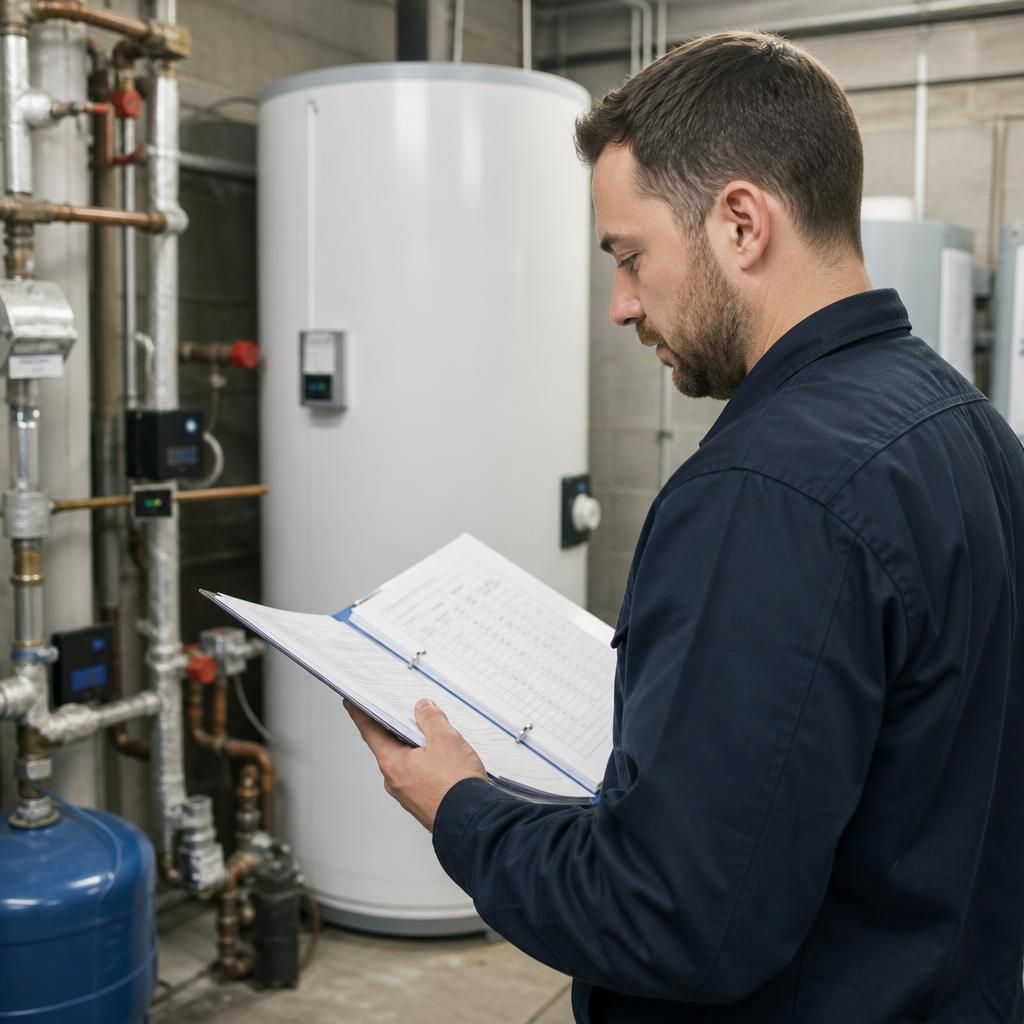
Records for a legionella inspection survey should be accessible in a format that allows the inspector to examine the evidence properly. Digital logs should be readable, dated and attributable to the person who entered or approved the information, with amendments identifiable rather than silently overwriting the original entry.
Where records are held in a contractor portal or electronic maintenance system, provide the relevant reports and access arrangements in advance. Exported files should retain useful details such as the asset or outlet, task completed, result, date and status. Avoid relying on screenshots or summary dashboards that remove the underlying context. Access should be limited to relevant information, with personal or sensitive data redacted where it is not needed for assessing water-system controls.
Discuss your legionella inspection records
If you are unsure whether your documentation is complete or suitably organised, discuss your legionella inspection records with Blue Fish Water Management Ltd to identify any information that may need clarification before the survey.