
Does a legionella inspection include water sampling?
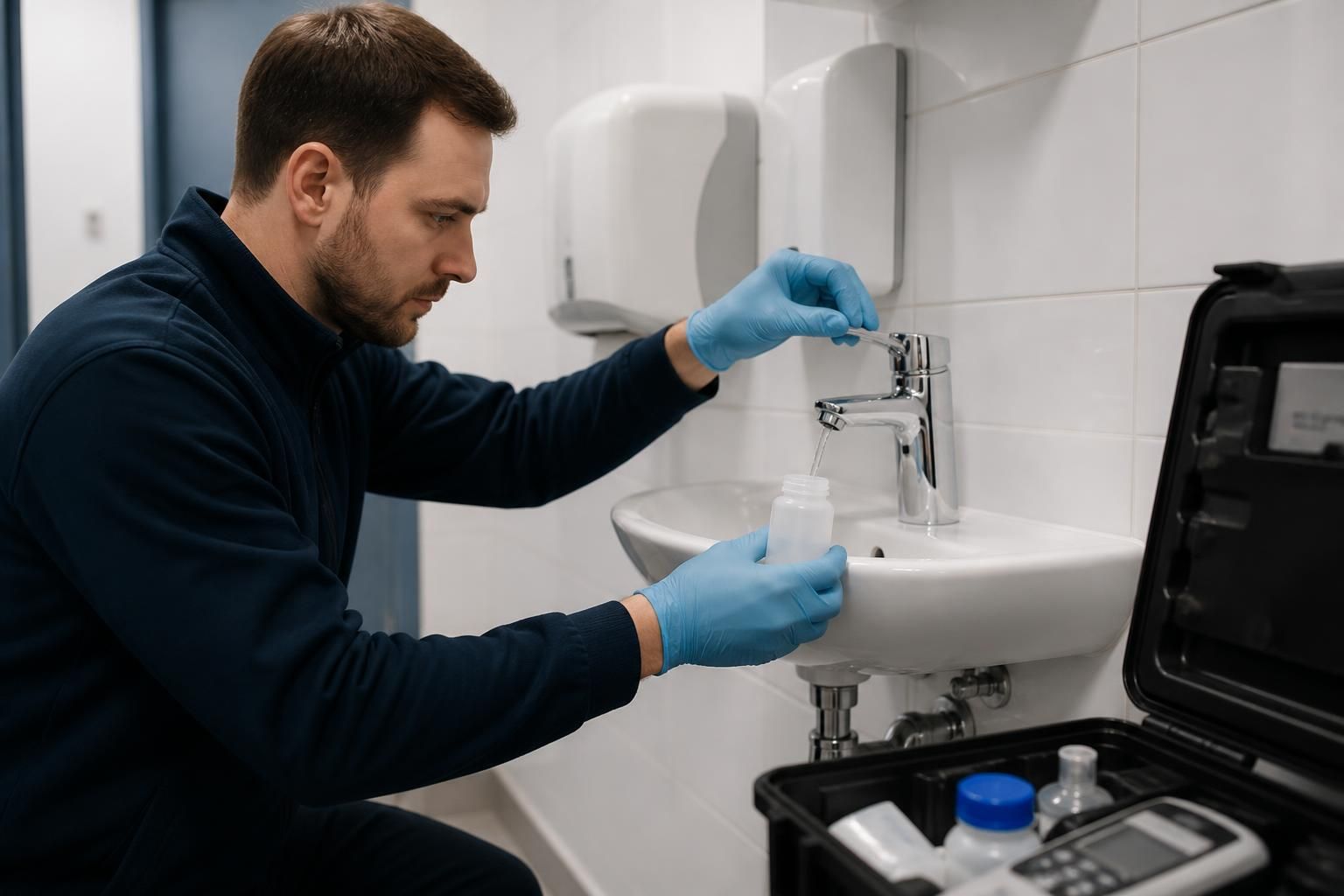
A legionella inspection and water sampling are related but distinct activities. An inspection examines the condition and management of a water system, while sampling involves taking water from selected points for laboratory analysis. Sampling may form part of the inspection process where there is a clear risk-based reason to test, but a visual inspection and document review can be completed without collecting samples.
The inspection normally considers how the system is designed, operated and maintained. This can include hot and cold water services, storage tanks, calorifiers, distribution pipework, outlets, showers and other equipment that may create conditions favourable to Legionella growth or aerosol production. The inspector may assess:
- water temperatures at relevant points and whether they are being controlled consistently;
- areas of low use, stagnation, dead legs or redundant pipework;
- the cleanliness and condition of tanks, calorifiers, outlets and associated components;
- signs of scale, corrosion, contamination or damage;
- the presence and condition of thermostatic mixing valves and other risk controls;
- maintenance records, temperature monitoring logs and previous test results; and
- whether the written control scheme, responsibilities and procedures reflect the system that is actually installed.
These checks can indicate whether sampling would add useful evidence. For example, testing may be considered where there are unexplained temperature failures, evidence of stagnation or contamination, persistent problems despite remedial work, changes to the system, prolonged periods of disuse, or a history of positive results. Sampling may also be appropriate when investigating suspected exposure or supporting an incident investigation. The decision should be based on the risk assessment and the circumstances of the site rather than on a fixed testing routine.
Where Legionella sampling is commissioned, samples should be taken by a competent person using a documented method. The sampling plan should identify the outlets or system locations selected, the reason for choosing them and any relevant conditions at the time. Depending on the system and the purpose of the investigation, samples may be collected from hot or cold outlets, storage vessels, calorifiers or other representative points. Taking samples from only one convenient tap may not provide a meaningful picture of the wider system.
Good sampling practice also requires suitable sterile containers, accurate labelling, records of sample location and condition, and appropriate handling and transport to the laboratory. The laboratory method and sample submission details matter because poor technique, contamination or delays can affect the reliability of the result. UKAS-accredited water testing can provide an independently assessed laboratory service for this type of analysis.
A laboratory result should be interpreted alongside the inspection findings and the site’s risk assessment. A negative result does not prove that Legionella is absent from every part of a system, because a sample represents a particular location and time. Conversely, a positive result should not be considered in isolation. Its significance depends on the concentration reported, the sampling point, the type of system, the vulnerability of exposed people and the effectiveness of existing control measures.
If testing identifies a concern, the response may involve checking the sampling process, reviewing temperatures and control records, inspecting additional parts of the system, carrying out cleaning or disinfection, correcting defects and increasing monitoring. Further sampling can then be used to assess whether the corrective measures have addressed the identified issue. The appropriate action should be documented, assigned to a responsible person and reviewed against the control scheme.
The inspection report should distinguish clearly between observations made during the visit, samples taken, laboratory results received and recommendations arising from them. If results are not yet available when the inspection report is issued, this should be stated, with the outstanding laboratory report recorded separately when received. This avoids treating a site inspection as though it were a laboratory test and gives the dutyholder a clearer record of the evidence used to manage the system.
For a commercial or industrial site, the most useful approach is therefore to agree the scope before the visit. The inspection should establish what has been checked, whether sampling is justified, which locations should be tested and how any result will be acted upon. Blue Fish Water Management Ltd can support this process through legionella risk assessments, water testing, compliance audits, system monitoring and remedial advice tailored to the water system and its users.
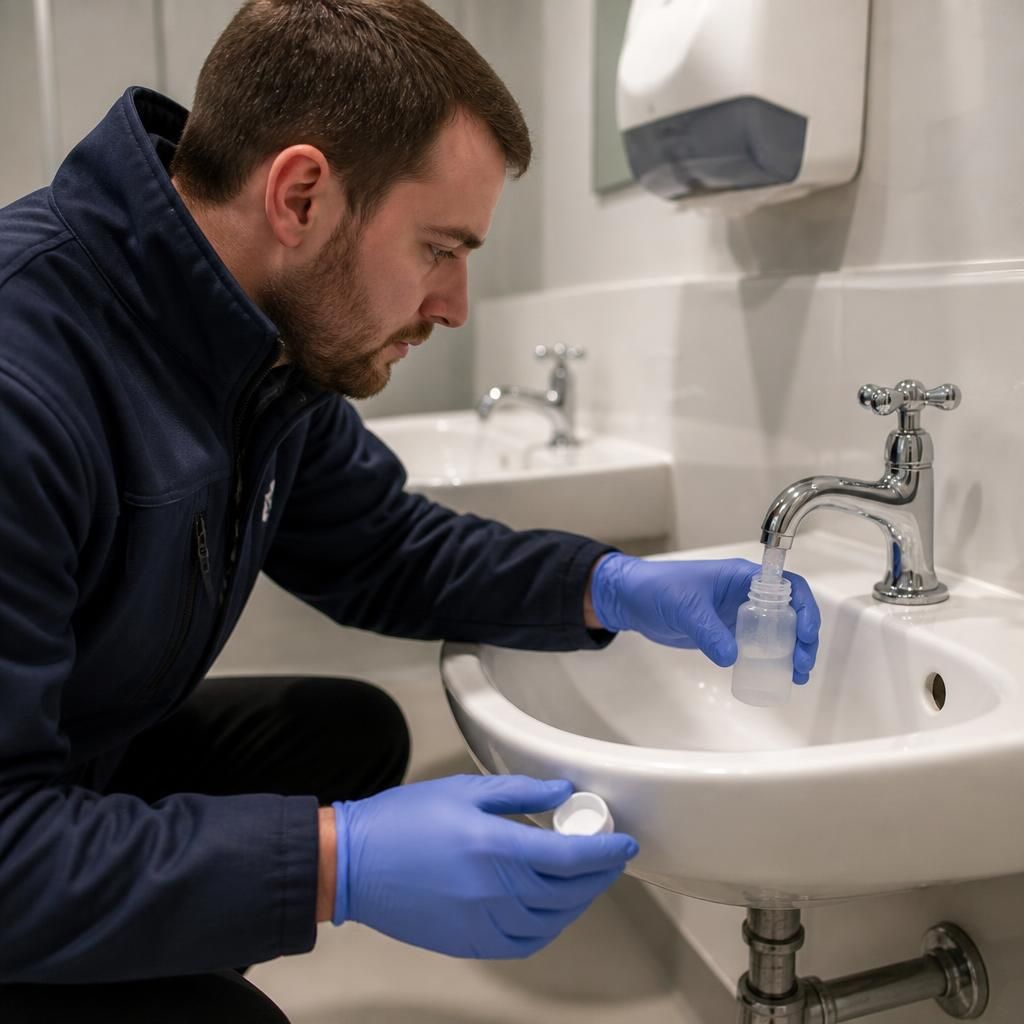
Water sampling is evidence about the condition of selected points at a particular time; it is not a substitute for a legionella inspection or ongoing control measures. A laboratory result cannot confirm that every part of the water system is safe, especially where outlets, pipework or storage areas have not been sampled.
For this reason, sampling should be treated as one element of a wider inspection process. The inspector should relate any result to the system’s temperature control, usage patterns, maintenance arrangements and known vulnerabilities. This provides a more reliable basis for deciding whether further investigation or corrective action is needed than relying on a laboratory result alone.
Discuss your legionella inspection and sampling requirements
Discuss your site’s legionella inspection and sampling requirements with Blue Fish Water Management Ltd to agree an appropriate, evidence-led scope for the work.