
How disruptive is a legionella inspection survey for occupied premises?
A legionella inspection survey is usually minimally disruptive in occupied premises. The inspector reviews records, checks relevant water outlets and may take samples; access can temporarily affect particular rooms or facilities, so the work is coordinated with site contacts to limit interruptions.
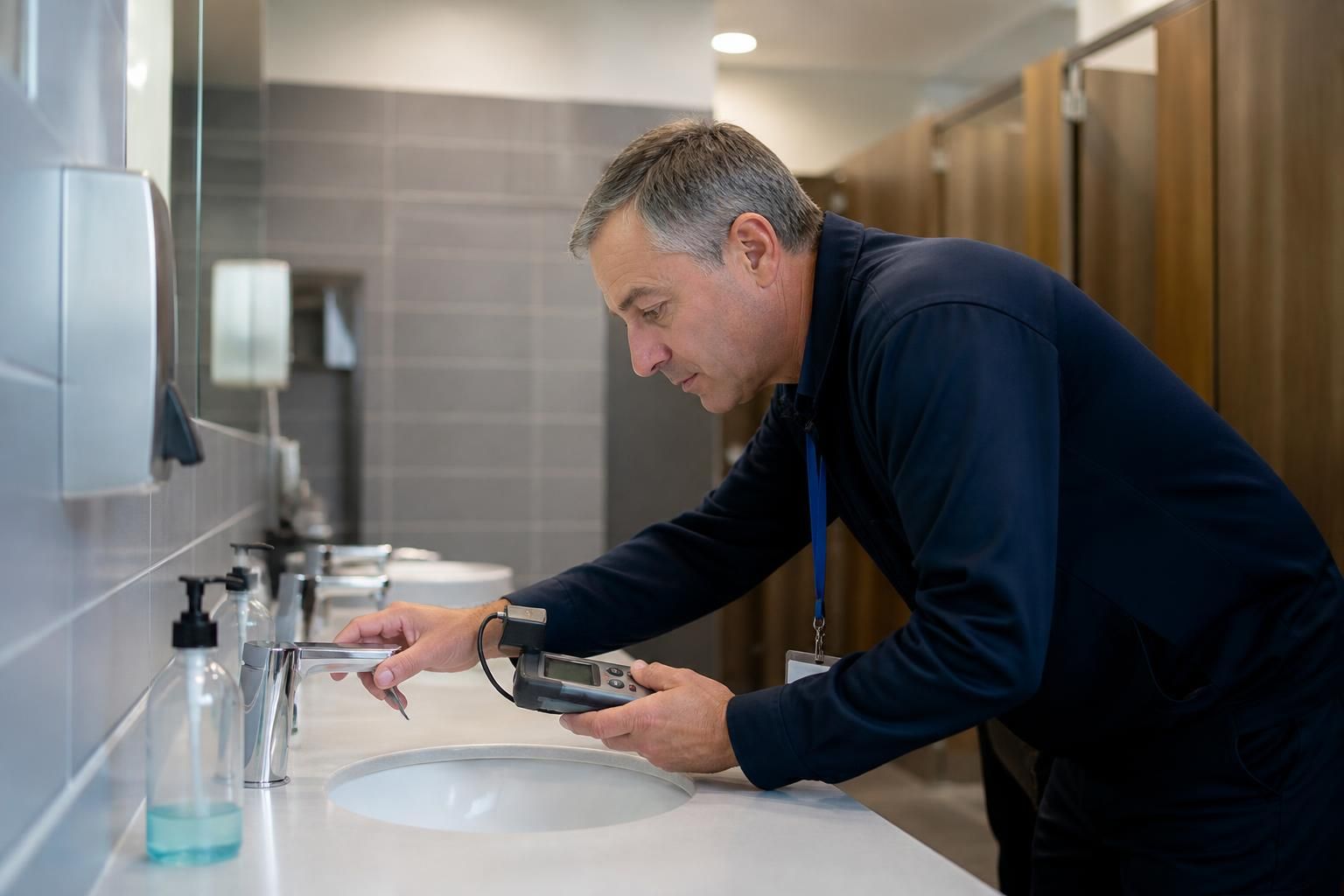
For an occupied premises, a legionella inspection survey is generally a controlled site activity rather than a major interruption to normal operations. The survey itself does not normally require the whole building to close or be vacated. Any disruption is more likely to be localised, affecting individual rooms, outlets, plant areas or sections of a water system while the relevant checks are completed.
The practical effect depends on the building’s layout, the number and type of water systems, the access arrangements and the activities taking place on site. A straightforward office, for example, may need only planned access to washrooms, kitchens, showers and plant areas. A healthcare, education, residential, hospitality or industrial setting can require more careful coordination because water outlets may be in use by residents, service users, staff, visitors or production teams.
Before the survey, the site contact should identify any areas where access is restricted or particularly sensitive. This can include occupied bedrooms, treatment rooms, laboratories, secure areas, tenant-controlled spaces and locations where entry could interrupt business-critical work. Agreeing an access plan helps the inspector work through the premises in a logical order instead of repeatedly returning to the same areas.
- Access to rooms and outlets: individual rooms may need to be entered briefly so their water fittings, use and condition can be considered.
- Plant-room access: boilers, storage tanks, calorifiers, distribution pipework and other water-system components may be located away from occupied areas, although suitable access and safety controls are still required.
- Short interruptions to use: a particular tap, shower or other outlet may need to remain unused while an observation or sample is completed. The site contact can advise occupants where this is necessary.
- Movement around the premises: the inspector may need to move between floors, buildings or separate operational areas, so an escort or induction may be required.
Most disruption can be reduced through preparation rather than by changing the technical scope of the survey. Providing relevant water-system information in advance, identifying responsible contacts and confirming access permissions can prevent avoidable delays. It is also useful to tell staff, tenants or other occupants what areas may be visited and whether a fitting might be temporarily unavailable. This avoids confusion without suggesting that the entire site is affected.
Occupied premises may have additional safety and safeguarding requirements. The inspector may need to follow sign-in procedures, wear site-specific personal protective equipment, observe hygiene controls, avoid sensitive activities and comply with restrictions on photography or access to confidential areas. These requirements can add coordination steps, but they are part of carrying out the survey responsibly in a working environment.
The survey should be distinguished from remedial work. An inspection records the condition and management of the water system and identifies matters requiring attention. Corrective work, such as cleaning, alterations, component replacement or changes to control arrangements, may require a separate method statement, isolation of equipment or a more substantial interruption. The survey may therefore identify work that could be disruptive later, but that does not mean the remedial work is carried out as part of the inspection itself.
There are circumstances in which the inspection takes more planning. Examples include:
- multiple buildings or complex distribution systems;
- water outlets located inside occupied or restricted rooms;
- limited access to tanks, plant and service risers;
- premises where water use is closely linked to care, accommodation or production;
- changes to the building, occupancy or water system that are not reflected in existing records; and
- sites where several contractors or duty holders share responsibility for the water systems.
The responsible person should make sure the inspector receives accurate information about the site, including known changes to the water system, periods when particular areas cannot be entered and any existing control concerns. They should also nominate someone who can provide access and answer questions about how the system is operated. Occupants do not usually need to participate in the technical survey, but they may need clear instructions about temporary access restrictions.
After the site work, the findings should be reviewed against the premises’ existing legionella control arrangements. If the survey identifies a significant concern, the response should be assessed according to the nature of the finding and the risk to people using the building. Any action that affects water availability, occupied rooms or business operations should be planned with the relevant site managers so that safety controls and operational needs are considered together.
In practical terms, the survey is least disruptive when access, responsibilities and occupant communications are agreed beforehand. The inspection can then be integrated into normal site management, while any more intrusive action is considered separately and supported by appropriate planning.
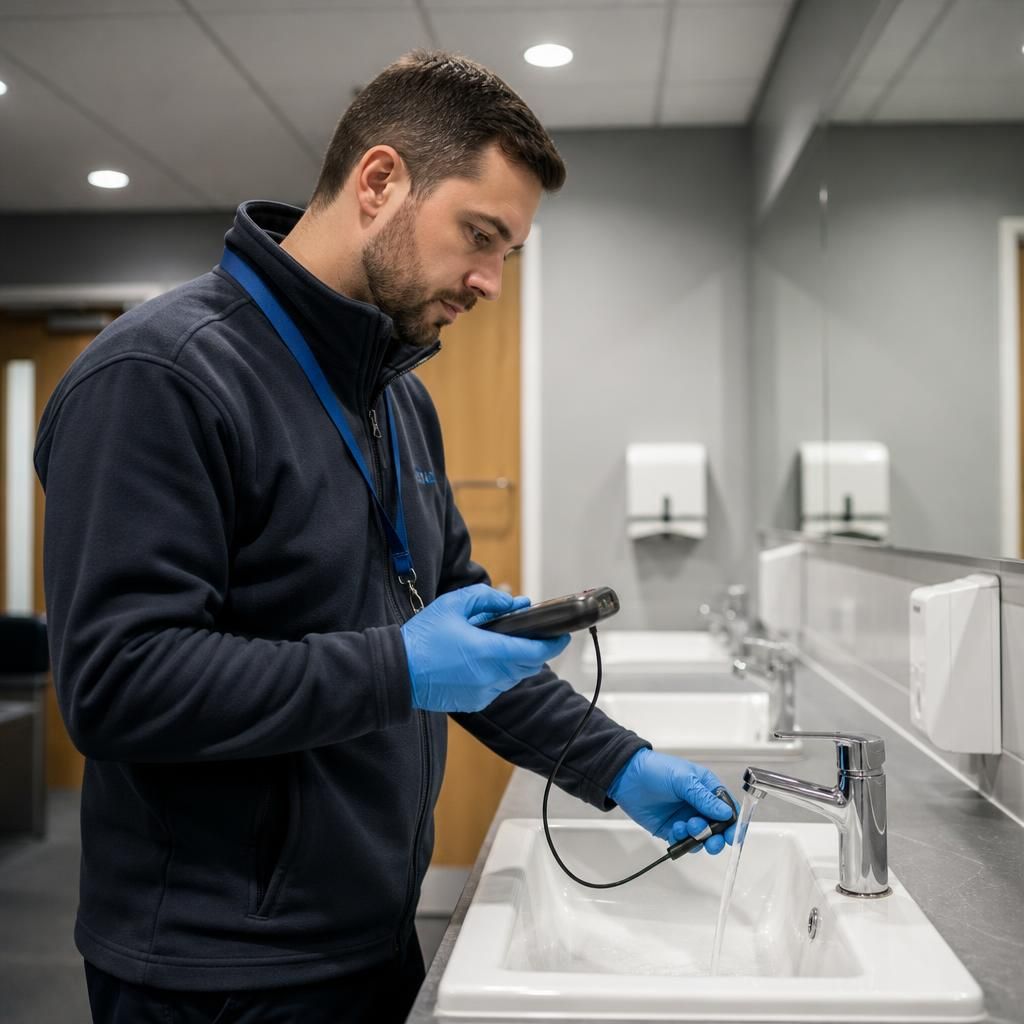
A legionella inspection survey is primarily an evidence-gathering exercise, so it normally creates little noise, dust or physical interference with the building. The inspector may take temperature readings, make visual observations and review system information without dismantling equipment or carrying out building work.
This distinction matters in occupied premises. The inspection can identify whether water-system controls are working and whether further action is needed, while leaving any cleaning, alterations, replacement of components or system changes to a separately planned stage. Occupiers should therefore expect an assessment of the system rather than a construction or maintenance project.
Discuss Your Legionella Inspection Survey Requirements
If you are planning a legionella inspection survey for an occupied premises, discuss your site layout, water systems and access requirements with Blue Fish Water Management Ltd to establish a suitable survey approach.