
What responsibilities make someone suitable for a Legionella RA Course?
Someone is suitable for a Legionella RA Course when their responsibilities include identifying legionella hazards, evaluating risks in water systems, and deciding or overseeing appropriate control measures. This may include personnel who arrange assessments, maintain compliance records, review findings, or coordinate remedial actions with competent contractors.
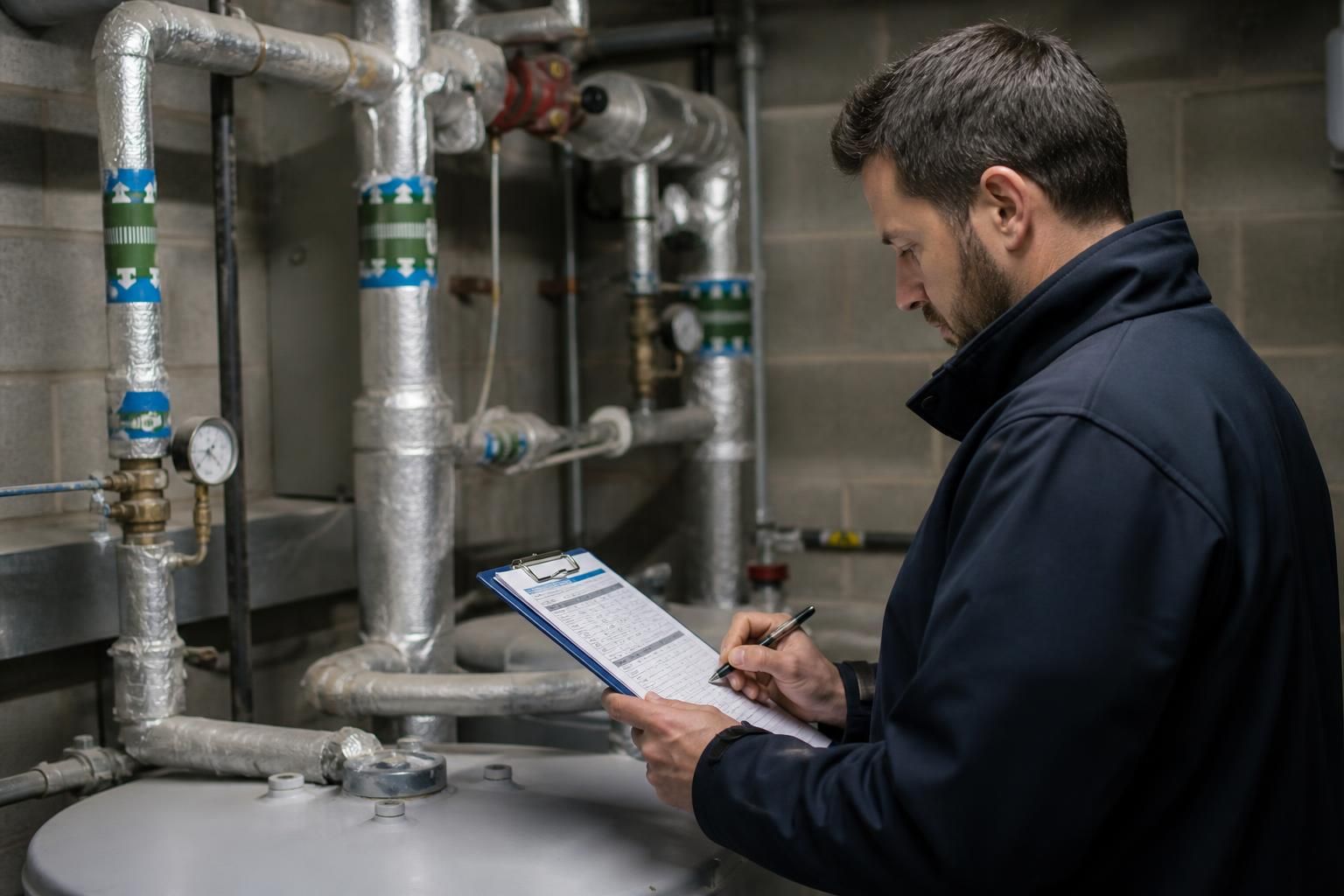
The most suitable candidates for a Legionella RA Course are people whose duties give them responsibility for managing water-system risks, instructing others, or checking that legionella controls are properly implemented. Suitability is therefore determined by a person’s role and decision-making responsibilities, rather than by job title alone.
Typical responsibilities that indicate a strong need for this training include:
- Managing statutory or organisational compliance: overseeing arrangements intended to meet relevant health and safety duties, maintaining evidence of actions taken, and ensuring that responsibilities are clearly assigned.
- Controlling buildings or estates: making decisions about domestic water systems, plant rooms, outlets, storage tanks, showers, cooling equipment, or other assets that may affect water hygiene.
- Commissioning specialist services: preparing requirements for a competent risk assessor, selecting suitable contractors, checking the scope of work, and confirming that reports address the systems and risks present.
- Managing contractors: providing access and accurate system information, explaining site restrictions, monitoring agreed work, and escalating incomplete or unsuitable actions.
- Authorising remedial work: determining whether corrective measures should be approved, prioritised, funded, or followed up after a risk assessment, inspection, test result, or incident.
- Maintaining management arrangements: keeping written schemes, asset information, logbooks, monitoring records, training records, and action trackers under suitable control.
- Reviewing changes to premises or systems: considering how refurbishment, alterations, changes in occupancy, periods of closure, changes in water use, or newly installed equipment may affect legionella risk.
- Providing assurance to senior management: reporting significant findings, overdue actions, control failures, and resource requirements to the people who have authority to respond.
The course is also relevant to people who act as the organisation’s competent point of contact, even when they do not carry out technical assessments themselves. For example, a facilities manager may need to understand enough about the assessment process to brief an assessor accurately, challenge an unclear recommendation, and distinguish between a completed task and effective risk control. Similarly, a health and safety adviser may need to connect water hygiene arrangements with the organisation’s wider risk-management system.
People responsible for several sites can benefit from the course because their role may involve standardising procedures, comparing reports, checking that local teams are applying the management scheme, and identifying inconsistencies between buildings. The same applies to those who manage higher-risk or complex premises, where water systems, occupancy patterns, vulnerable individuals, or operational constraints require informed coordination.
A suitable participant should be prepared to engage with both technical and management aspects of legionella control. They do not necessarily need to be a water-treatment specialist, but they should be able to understand system descriptions, ask relevant questions, assess whether recommendations are being addressed, and communicate responsibilities to colleagues and contractors. The course is less appropriate as a substitute for practical competence where a person is expected to perform specialist sampling, disinfection, engineering work, or formal risk assessment without the necessary additional training and experience.
Before enrolling, an organisation should compare the course content with the participant’s actual duties. It is particularly relevant where the individual has authority to influence budgets, maintenance programmes, contractor appointments, operational procedures, or corrective action. It is also useful where responsibilities are shared, because training can clarify who owns each part of the control process and reduce gaps between the person commissioning an assessment, the person managing the building, and the contractor completing the work.
In practice, the strongest candidates are those who must make informed decisions about water safety or demonstrate that those decisions have been properly implemented. A Legionella RA Course can give them a structured understanding of the assessment process, the information they should expect from competent professionals, and the management responsibilities needed to act on the findings.

A Legionella RA Course is particularly suitable for people who must make defensible decisions when information about a water system is incomplete, changing or open to interpretation. Their responsibility may include deciding whether an assessment provides enough detail for action, recognising when findings need further investigation, and recording why a particular response was selected.
This is relevant where a person must interpret the significance of limitations such as unavailable records, inaccessible parts of a system, unusual usage patterns or changes since the assessment was completed. Training can help them separate a genuine absence of identified risk from a lack of evidence, so that uncertainty is addressed rather than overlooked.
It also supports sound communication with senior decision-makers. A suitable participant should be able to explain the practical significance of findings, distinguish urgent control concerns from routine improvements, and set out what information or specialist input is needed before a decision is made. These responsibilities are common in organisations where water safety decisions must be justified, reviewed and understood by people who are not technical specialists.
Explore Whether a Legionella RA Course Fits Your Responsibilities
Contact Blue Fish Water Management Ltd to discuss whether the Legionella RA Course aligns with your organisation’s responsibilities and training needs.