
Should building owners attend a Legionella RA Course?
Yes. Building owners should consider attending a Legionella Risk Assessment Course if they have responsibility for the safety, management or oversight of water systems in their premises.
The training helps them understand their duties, recognise relevant risks and evaluate whether risk assessments and control measures are suitable, even where a competent specialist carries out the assessment.

Building owners are not generally required to hold a personal Legionella Risk Assessment qualification. However, attending a suitable course is appropriate where the owner acts as, or appoints, the person responsible for managing water-system risks. Training provides the knowledge needed to make informed decisions about competence, control arrangements and the standard of work carried out on the premises.
Under the Health and Safety at Work etc. Act and the Control of Substances Hazardous to Health Regulations, the duty holder must take suitable precautions against exposure to legionella bacteria where a foreseeable risk exists. The Health and Safety Executive’s Legionnaires’ disease: The control of legionella bacteria in water systems guidance, commonly known as HSG274 and L8, sets out the principles for assessing and controlling that risk. The exact allocation of duties depends on the property, its use, occupancy and contractual arrangements.
A course can help an owner understand how those duties apply in practice. Relevant subjects typically include:
- identifying water systems and conditions that may support bacterial growth;
- understanding the roles of the responsible person, appointed contractors, facilities teams and other duty holders;
- checking whether a risk assessment addresses the actual building and its water services;
- understanding written control schemes, monitoring routines, maintenance and corrective actions;
- recognising when records, procedures or control measures require review; and
- selecting and supervising external specialists without treating a report or certificate as evidence of compliance on its own.
The training is particularly relevant where a building has stored or distributed hot and cold water, showers, spa facilities, healthcare-related uses, accommodation, vulnerable occupants or periods of low occupancy. Complexity can also arise from shared ownership, leased units, multiple contractors, older installations, dead legs, redundant pipework or changes to how the building is used.
Owners should understand that commissioning a legionella risk assessment does not transfer all legal responsibility to the assessor. An assessor may provide technical findings and recommendations, but the owner or other duty holder must ensure that the assessment is suitable, that recommendations are considered, and that proportionate controls are implemented. Where the owner lacks the necessary technical competence, a competent person or specialist contractor may be appointed. The owner still needs enough understanding to define the scope of the work, provide accurate building information, review the findings and monitor completion of agreed actions.
Course attendance can also improve governance when water safety is divided between an owner, managing agent, tenant, facilities provider and maintenance contractor. Written responsibilities should identify who controls each part of the system, who carries out monitoring, who receives abnormal results, who authorises remedial work and who keeps the relevant records. Training helps an owner ask meaningful questions about those arrangements rather than relying on unclear phrases such as “the contractor handles legionella”.
It may be unnecessary for an owner who has no operational involvement and has formally delegated the relevant duties to a suitably competent organisation. Even then, the owner should verify that responsibilities are clearly documented and that the appointed organisation has the competence and resources required for the premises. A course is also not a substitute for a site-specific risk assessment, practical system knowledge or specialist remedial work where defects are identified.
When choosing training, building owners should check that the course reflects current UK guidance, explains the legal and management context, and covers the types of water systems present in their properties. The course should also make clear the limits of the learner’s role: introductory awareness is different from the technical competence required to carry out a detailed risk assessment. If an owner intends to assess systems personally, they should confirm that the course content, practical experience and ongoing competence are sufficient for that task.
In practical terms, a Legionella Risk Assessment Course is most valuable when it enables the owner to maintain effective oversight. After training, the owner should be able to identify the relevant duty holders, understand the main risk controls, challenge incomplete or unsuitable documentation, and ensure that actions arising from assessments and monitoring are managed through to completion.
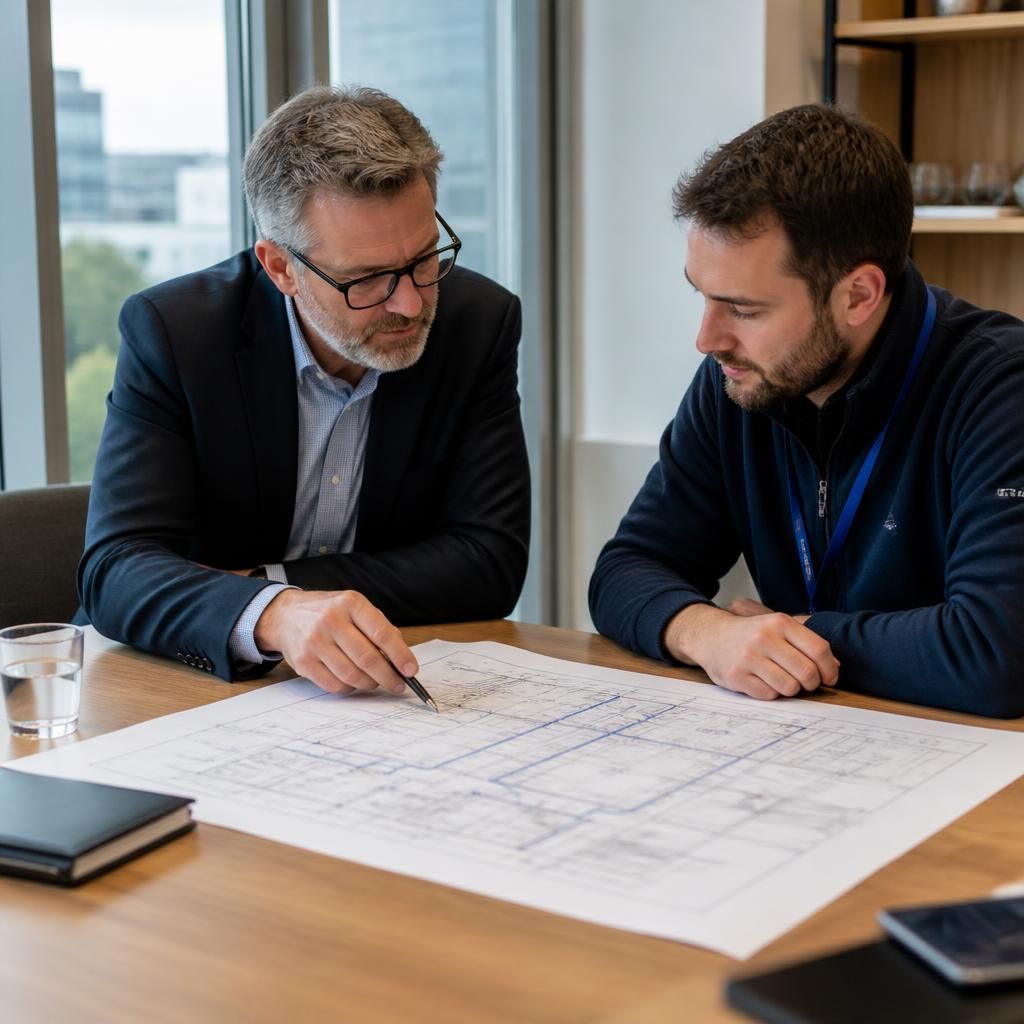
A Legionella Risk Assessment Course can be particularly useful when a building owner is acquiring, refurbishing or changing the use of a property. These events can alter water demand, occupancy patterns, pipework configuration and the level of control needed, so water safety should be considered alongside wider building decisions.
Training helps an owner recognise when project information may affect legionella risk. For example, an owner can ask whether new outlets have been included in the assessment, whether redundant pipework has been removed or isolated, and whether commissioning records and updated schematics will be provided at handover. This supports better communication between designers, contractors, managing agents and water hygiene specialists.
The course does not turn an owner into a specialist assessor, but it can help them identify when a property change requires professional review rather than relying on an existing assessment that no longer reflects the building.
Discuss the right Legionella RA training for your responsibilities
If you are unsure which Legionella Risk Assessment Course matches your building responsibilities, speak to Blue Fish Water Management Ltd about the appropriate level of training for your role and premises.