
Do I need prior water hygiene experience to attend a Legionella RA Course?
No, you do not usually need prior water hygiene experience to attend a Legionella Risk Assessment (RA) Course. The training introduces the principles, responsibilities and assessment methods needed to carry out effective legionella risk assessments, although a basic understanding of the relevant water systems can be helpful.

Prior water hygiene experience is not normally a prerequisite for attending a Legionella Risk Assessment (RA) Course. A suitable course should provide the technical foundation needed to understand how legionella risks arise, how water systems are assessed and how significant findings are recorded and managed. Attendees do not generally need to have worked as water hygiene specialists beforehand.
The course is intended to develop knowledge, not to assume that every delegate already understands the terminology or operation of domestic water systems. Training commonly introduces the conditions that can allow Legionella bacteria to grow and spread, including suitable temperatures, stagnation, stored water and areas where contamination or aerosol generation may occur. It should also explain how these factors relate to the design, use and management of a building’s water system.
A basic familiarity with the building or systems being assessed can be useful, but it is different from specialist water hygiene experience. For example, someone who understands a site’s maintenance arrangements, plant rooms or building services may find it easier to relate course content to practical situations. However, a delegate without that background can still learn the principles and methods involved in a legionella risk assessment.
Who can attend without previous experience?
- Building owners and employers who need to understand their duties as the responsible person.
- Property or facilities managers who coordinate monitoring, maintenance and remedial work.
- Health and safety professionals who need to evaluate whether water safety arrangements are suitable.
- Maintenance personnel who are becoming involved in water system management.
- New or developing water hygiene professionals who need structured introductory training.
- Contract managers who review risk assessment reports and oversee actions arising from them.
The value of attending is not limited to people who will personally carry out site surveys. A responsible person may need to understand an assessment well enough to provide access to relevant records, identify people with operational knowledge, question unclear findings and ensure that recommended controls are assigned and monitored. For that purpose, understanding the assessment process can be more important than having carried out previous water hygiene work.
What the course should help a beginner understand
Although course content varies, a Legionella RA Course will generally cover the structure of an assessment and the information required to complete one properly. This may include:
- Identifying water systems, outlets, storage vessels, distribution pipework and associated equipment.
- Understanding how system design, temperature control, usage patterns and maintenance affect risk.
- Recognising vulnerable people and locations where exposure to contaminated aerosols could occur.
- Reviewing existing control measures, monitoring records and management procedures.
- Recording hazards, assessing the level of risk and identifying proportionate control measures.
- Presenting findings clearly so that responsible people can act on them.
- Understanding the importance of reviewing and updating an assessment when systems, use or conditions change.
Some technical terms may be unfamiliar at first. A good course should explain them in context and use practical examples, rather than assume that attendees already know how hot and cold water systems are configured. Delegates should be able to ask questions about unfamiliar equipment or scenarios and relate the principles to the type of premises they manage or inspect.
Does attending make someone competent to assess every system?
Not necessarily. Completing a course demonstrates that the attendee has received relevant training, but competence to undertake a particular risk assessment also depends on knowledge, practical ability and experience appropriate to the system and building. A straightforward assessment may require a different level of understanding from an assessment involving complex plant, healthcare premises, unusual water systems or significant changes to the original design.
Someone new to the subject may therefore need supervised practical experience, further technical development or input from a suitably experienced person before taking sole responsibility for complex assessments. The responsible person should consider the assessor’s capability in relation to the specific task, rather than relying on course attendance alone.
How to prepare if you have no water hygiene background
Preparation is not usually about gaining specialist experience before booking. It is more useful to understand the premises or role that the training relates to. Before attending, a delegate may wish to review available water system schematics, asset information, previous risk assessments, monitoring records and maintenance arrangements. Bringing practical questions about a building can make the technical material easier to apply.
After the course, knowledge should be applied carefully. An attendee can use the learning to improve oversight, identify gaps in existing arrangements and contribute to assessments. Where an assessment requires specialist judgement beyond the attendee’s current competence, the appropriate approach is to obtain further guidance or involve a suitably qualified and experienced assessor.
In summary, prior water hygiene experience can make the subject easier to relate to, but it should not prevent a suitable delegate from attending. The important considerations are the person’s responsibilities, their ability to understand the training and whether they will receive the additional practical experience or support needed for the systems they are expected to assess.
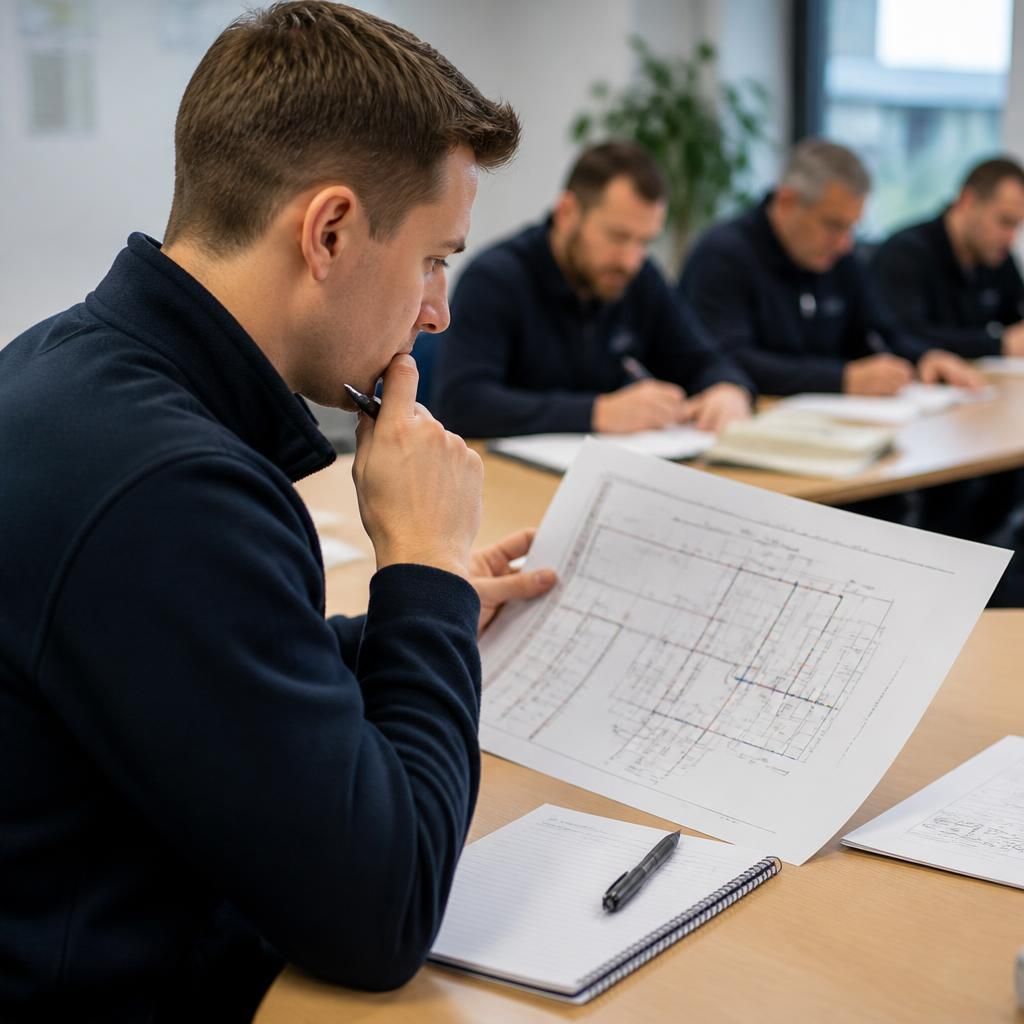
Prior water hygiene experience is usually a course-level consideration rather than a universal entry requirement. An introductory Legionella Risk Assessment (RA) Course should explain the core terminology, water system features and assessment principles needed by a newcomer. By contrast, an advanced or specialist course may assume that delegates already understand hot and cold water systems and have some practical assessment experience.
Before enrolling, check the course description for its intended audience, entry requirements and level of assessment. If previous experience is not required, the training should clearly establish the fundamentals before progressing to more detailed risk assessment work. This helps ensure that the course matches the attendee’s current knowledge and intended responsibilities.
Discuss Your Legionella RA Course Training Needs
Discuss your role, current responsibilities and the types of premises involved to identify whether the Legionella RA Course is appropriate for your level of knowledge and intended duties.