
What standards should a legionella risk assessor course cover?
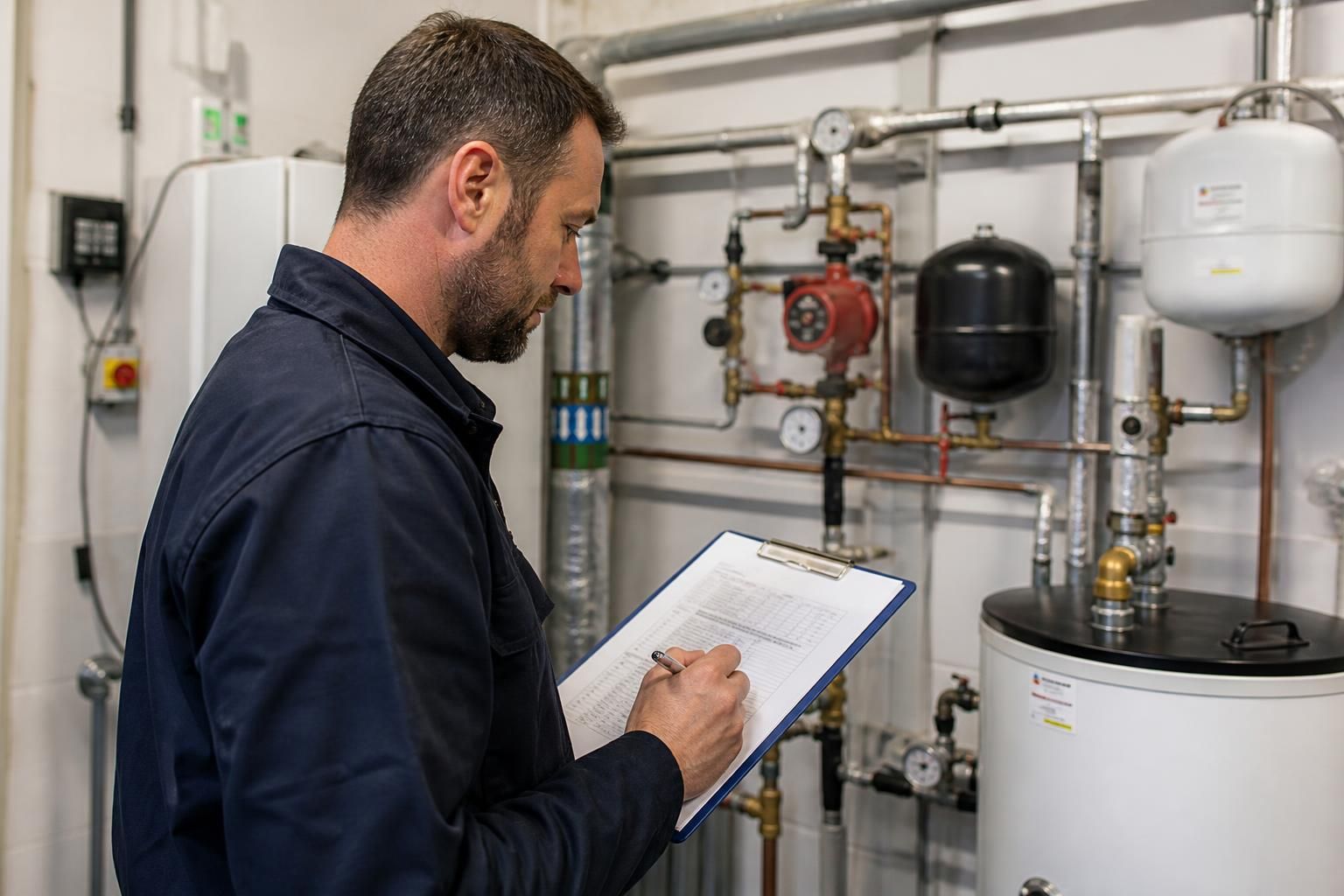
A suitable legionella risk assessor course should cover more than the names of key guidance documents. It should explain the legal duties behind legionella control, show how recognised technical standards are applied to real water systems, and develop the assessor’s ability to produce evidence-based findings, recommendations and reports.
The legal framework. Training should establish how legionella sits within wider UK health and safety law. This includes the general duties placed on employers and those responsible for premises, the requirement to assess and control risks, and the relevance of the Control of Substances Hazardous to Health Regulations where exposure to legionella bacteria is foreseeable. It should also explain how responsibilities may be shared between an employer, landlord, managing agent, facilities team, contractor and specialist assessor.
A course should make clear that an assessment is not a certificate of compliance in itself. The responsible person must use the findings to put suitable controls in place, maintain them and review them when circumstances change. Training should also distinguish between legislation, approved codes of practice, practical guidance and voluntary British Standards. These sources have different legal status, but each can help define a competent and defensible approach.
Water system identification and scope. The syllabus should teach delegates how to establish what is included in an assessment before inspecting the site. This normally involves identifying hot and cold water services, storage vessels, calorifiers, secondary return systems, showers, taps, thermostatic mixing valves, outlets, dead legs, redundant pipework and other equipment that could influence bacterial growth or aerosol exposure.
Delegates should learn how to check whether drawings and asset registers accurately represent the installation. Where records are incomplete, the course should cover practical methods for tracing pipework, recording assets and producing a clear schematic. It should also address systems such as cooling towers, spa pools, humidifiers or other higher-risk water systems where these fall within the assessor’s competence.
Risk factors and vulnerable people. A competent assessor must consider how system conditions and building use combine to create risk. Course content should include water temperature, stagnation, low or intermittent use, sediment, scale, corrosion, poor circulation, inadequate insulation, contamination and opportunities for aerosol generation. It should also explain why a risk assessment must consider the people who may be exposed, including those who are more susceptible because of age, illness, treatment or other health factors.
The assessment should not rely on a checklist alone. Training should show delegates how to judge the significance of individual observations, how several moderate weaknesses can interact, and how to separate a theoretical possibility from a credible exposure pathway. This is particularly important in complex premises with multiple users, changing occupancy or several interconnected systems.
Control measures and written arrangements. The course should explain how findings are translated into proportionate controls. Topics should include temperature management, flushing, cleaning and disinfection, removal of redundant pipework, maintenance of storage and distribution systems, outlet management, monitoring and remedial action. Delegates should understand that recommendations need to be specific enough for the responsible person to implement and verify.
Training should also cover the relationship between the risk assessment, the written control scheme and day-to-day monitoring. A written scheme should identify responsibilities, control measures, monitoring frequencies, required records, escalation arrangements and review triggers. The assessor should be able to identify gaps between what a document says and what is actually being done on site.
Inspection, evidence and sampling. A robust course should teach delegates how to gather reliable evidence through document review, interviews, observation, measurements and inspection of plant. It should address the limitations of each evidence source and explain when specialist input or water sampling may be appropriate. Sampling should be presented as one part of an investigation rather than a substitute for understanding the system and its controls.
Delegates should learn how to record locations, conditions, measurements, photographs and conversations in a way that supports the final conclusions. Where samples are taken, the course should cover chain of custody, representative locations, interpretation of laboratory information and the need to relate results to the wider risk picture. It should also explain that laboratory findings do not remove the need to act on evident control failures.
Reporting and prioritisation. Standards-based training should develop clear reporting skills. An assessment report should describe the system and its use, identify hazards and exposed groups, explain the reasoning behind each finding, and distinguish immediate concerns from longer-term improvements. Recommendations should be prioritised according to risk, supported by evidence and assigned to an appropriate dutyholder or responsible person.
The course should address report quality, including accurate terminology, traceable evidence, limitations, photographs or schematics where useful, and a clear action plan. It should discourage unsupported statements such as declaring a system simply “safe” or “unsafe” without explaining the conditions and controls considered.
Competence, independence and review. Finally, the syllabus should define the assessor’s limits of competence. Delegates should understand when a system is too specialised or complex for them to assess alone and when they should seek advice from an appropriately qualified engineer, microbiologist, water treatment specialist or other professional. Training should cover impartiality and conflicts of interest, particularly where the same organisation may recommend remedial work after completing an assessment.
A complete course should finish by showing how assessments are reviewed after alterations, changes in use, incidents, significant monitoring failures or new information about the system. It should include a formal knowledge check and a practical or case-based assessment so that delegates demonstrate they can apply the standards, not merely recall their titles.

A legionella risk assessor course should also teach delegates how to keep their reference material current. Guidance, standards and sector-specific advice may be revised, so an assessor needs to check the edition or version being relied on, identify relevant amendments and record the sources used for an assessment.
This supports consistent, auditable work. A well-designed course should include exercises where delegates compare requirements from the applicable guidance and standards, identify which provisions are relevant to the system being assessed, and explain any professional judgement where the documents do not provide a direct answer.
Explore the Legionella Risk Assessor Course
Explore the Legionella Risk Assessor Course to review its structure, learning outcomes and suitability for your role. Use that information to decide whether the training matches your existing experience and professional responsibilities.