
What responsibilities can a trained legionella risk assessor undertake?
A trained legionella risk assessor can inspect water systems, identify conditions that may allow Legionella growth and transmission, evaluate the level of risk, and document their findings. They can also recommend proportionate control measures, establish monitoring requirements, review records and communicate actions needed to support ongoing compliance.

A trained legionella risk assessor is responsible for gathering and analysing evidence about a water system, then setting out the actions needed to control the risk. Their work can cover the physical system, management arrangements, maintenance practices, water-use patterns and available records, provided the assessor has the competence required for the complexity of the site.
Before producing an assessment, the assessor can define the scope of the review and obtain relevant information from the dutyholder or responsible person. This may include drawings, asset registers, schematic diagrams, plant details, temperature records, cleaning and disinfection certificates, contractor reports and previous findings. Where information is missing, they can identify the gaps and state what needs to be verified rather than making unsupported assumptions.
During the assessment, they can examine how the water system is designed and operated. Relevant considerations may include:
- cold-water storage, hot-water generation and distribution arrangements;
- dead legs, low-use outlets, redundant pipework and other areas of stagnation;
- temperatures at representative points and the operation of thermostatic mixing arrangements;
- showers, spa facilities, cooling systems or other higher-risk equipment where present;
- access for inspection, cleaning, maintenance and safe sampling; and
- the way changes to occupancy, use or plant operation could affect risk.
The assessor can evaluate whether the existing control scheme is suitable in practice. This includes examining who has been assigned responsibilities, whether staff understand their duties, whether planned checks are being completed, and whether deviations are investigated and closed out. An assessment should distinguish between a documented procedure and evidence that the procedure is actually being followed.
Where water samples are required, a trained assessor can select sampling points and establish a sampling rationale based on the system and its risk profile. They may arrange for samples to be collected and submitted for appropriate laboratory analysis, then consider the results alongside site conditions and control records. A test result is not, by itself, a complete assessment of legionella risk; its significance depends on the sampling location, system operation and other evidence available.
The assessor can prioritise actions according to their significance and specify practical improvements. These may include correcting inadequate temperature control, removing or altering little-used pipework, improving access, updating written procedures, revising monitoring arrangements or commissioning specialist remedial work. Recommendations should identify the issue, the required action and any further verification needed, without prescribing work beyond the assessor's competence.
After the initial review, the assessor can support follow-up activity by checking whether agreed actions have been completed and whether the control scheme remains appropriate after alterations to the system. They can also contribute to compliance audits, provide technical explanations to managers and maintenance teams, and help establish training or instruction requirements for people carrying out operational checks.
The role has clear limits. The trained assessor does not automatically become the site's responsible person, take on the employer's legal duties or assume responsibility for day-to-day control unless this has been expressly agreed. They should also recognise when specialist input is needed, such as mechanical design advice, complex remedial engineering, treatment of contaminated systems or interpretation of unusual laboratory findings. The quality of the outcome therefore depends not only on training, but on relevant experience, impartial judgement, suitable records and working within defined competence.
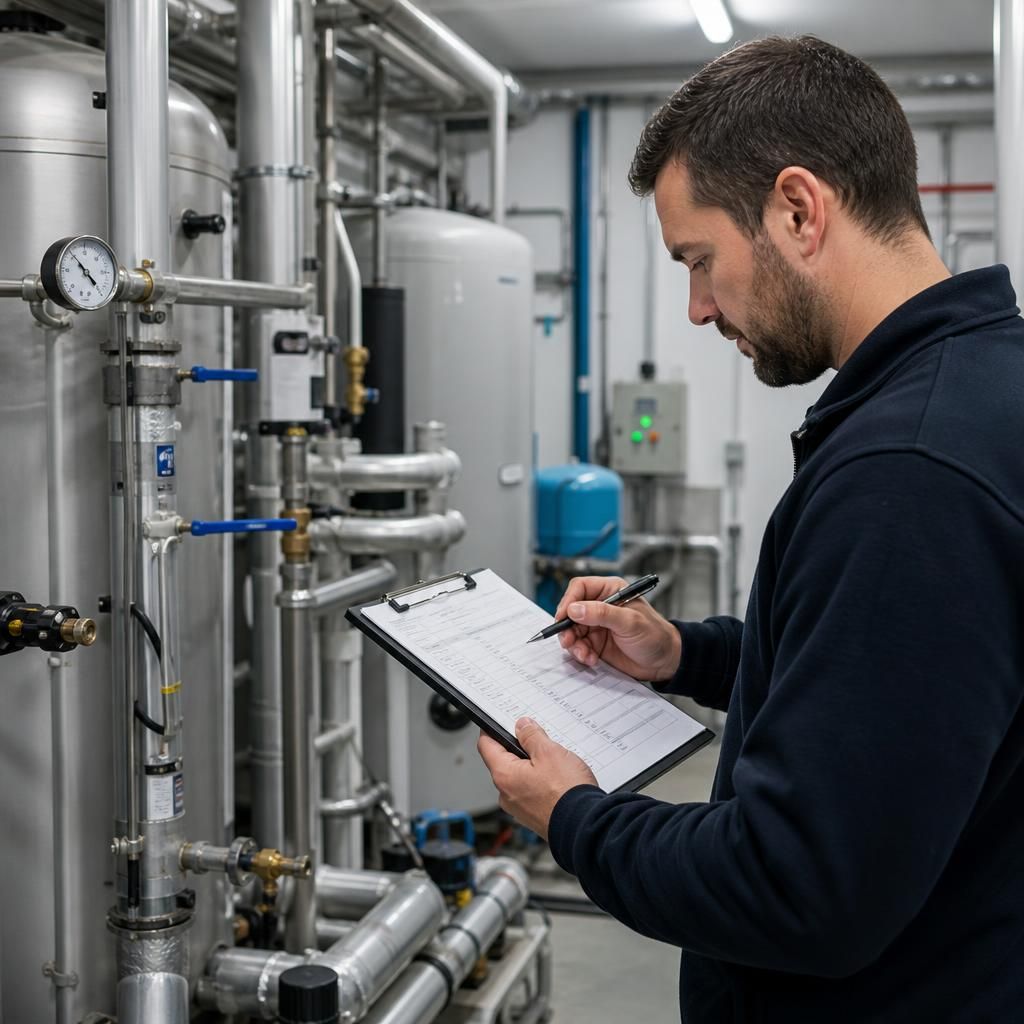
A trained legionella risk assessor also has a responsibility to maintain their own professional competence. This includes keeping knowledge of relevant guidance and assessment methods current, recognising how changes in building use or water-system design affect the work, and confirming that their experience is suitable for the site being assessed.
Where a system presents features beyond the assessor’s training or experience, they can identify the need for additional specialist input before drawing conclusions. This helps ensure that the assessment is based on appropriate technical knowledge rather than treating a course certificate as evidence of competence for every type of installation.
Explore Legionella Risk Assessor Training Options
Review the available Legionella risk assessor training options to identify a course suited to your existing knowledge, responsibilities and the types of water systems you may assess.