
What prior knowledge is needed for a legionella risk assessor course?

A legionella risk assessor course does not usually require previous specialist legionella training. It is more important that learners can follow a structured assessment process, understand the difference between evidence and assumption, and recognise when a water-safety issue needs further investigation or escalation.
Knowledge that is useful before starting
- Water-system terminology: Be familiar with terms such as storage vessel, distribution pipework, outlet, dead leg, secondary return, calorifier and thermostatic mixing valve. These terms are commonly used when describing the design and condition of domestic hot and cold water systems.
- Building operation: An assessor needs to understand that water systems are affected by occupancy, usage patterns, maintenance arrangements, changes to the building and periods when parts of a system are not used. This helps the learner relate technical observations to how the premises actually operate.
- Legal and management responsibilities: Basic awareness that legionella control involves defined duties, documented arrangements and competent management is helpful. A learner should be prepared to distinguish the role of the duty holder, responsible person, maintenance providers and the risk assessor.
- Written communication: Risk assessments must communicate observations, risks and recommendations clearly. Experience of writing concise reports, describing locations accurately and separating priority actions from general comments will make the coursework easier to apply.
- Basic data handling: Learners may need to review asset information, inspection records, temperature records, sampling results, schematic drawings and maintenance documents. Confidence with tables, notes and ordinary office software can therefore be useful.
What learners are not normally expected to know in advance
Most introductory courses are designed to teach the specific legionella assessment methodology, including how to identify relevant hazards, evaluate control arrangements and present findings. Learners are not generally expected to diagnose every plumbing defect, design remedial engineering work or carry out laboratory analysis themselves. Those activities may require separate technical competence or specialist input.
Nor does attending a course automatically make someone competent to assess every type of premises or water system. Competence depends on the assessor’s knowledge, practical experience, understanding of the systems being reviewed and ability to recognise the limits of their own expertise. A newly trained learner may need supervised experience, additional technical study or advice from an appropriately qualified specialist when dealing with complex healthcare, industrial or unusual systems.
How to prepare if your background is limited
- Read the course outline and confirm whether the provider sets any formal entry conditions.
- Revise the main components of hot and cold water systems and learn the terminology used in schematic drawings and asset registers.
- Refresh your understanding of how responsibilities, policies, maintenance records and risk controls fit together within a workplace.
- Practise writing objective notes based on observed conditions, avoiding unsupported conclusions.
- Prepare questions about any systems or premises that fall outside your previous experience.
Before enrolling, it is sensible to tell the course provider about your current role and experience. This allows them to explain the expected starting level and identify whether additional background reading would be useful. Blue Fish Water Management Ltd can provide practical guidance on legionella control and water hygiene training as part of its wider professional services.
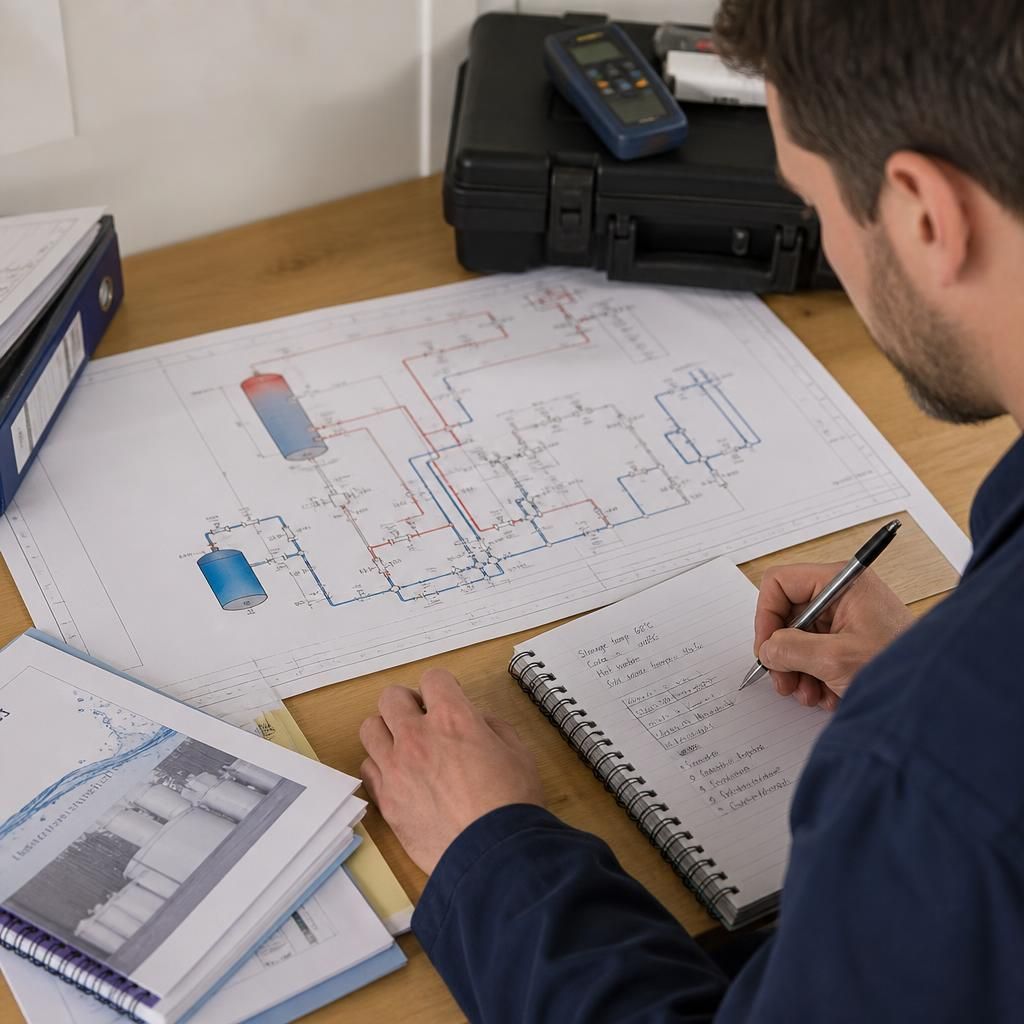
Prior knowledge is most useful when it helps a learner evaluate information rather than simply recall technical terms. Before starting a legionella risk assessor course, it is helpful to understand that procedures, site records and industry guidance must be checked against the conditions found on the premises, rather than accepted without question.
This mindset supports accurate assessment work. A learner should be prepared to identify missing or outdated information, ask how a control is being applied in practice and record when further evidence is needed. The course can then focus on applying legionella-specific principles to those findings, instead of treating existing documents as proof that risks are controlled.
Discuss your legionella risk assessor course requirements
Discuss your current role and experience with Blue Fish Water Management Ltd to clarify whether a legionella risk assessor course matches your development needs. You can also ask what preparation or further training may be appropriate for your intended assessment work.