
What standards should a Legionella Risk Assessment follow?
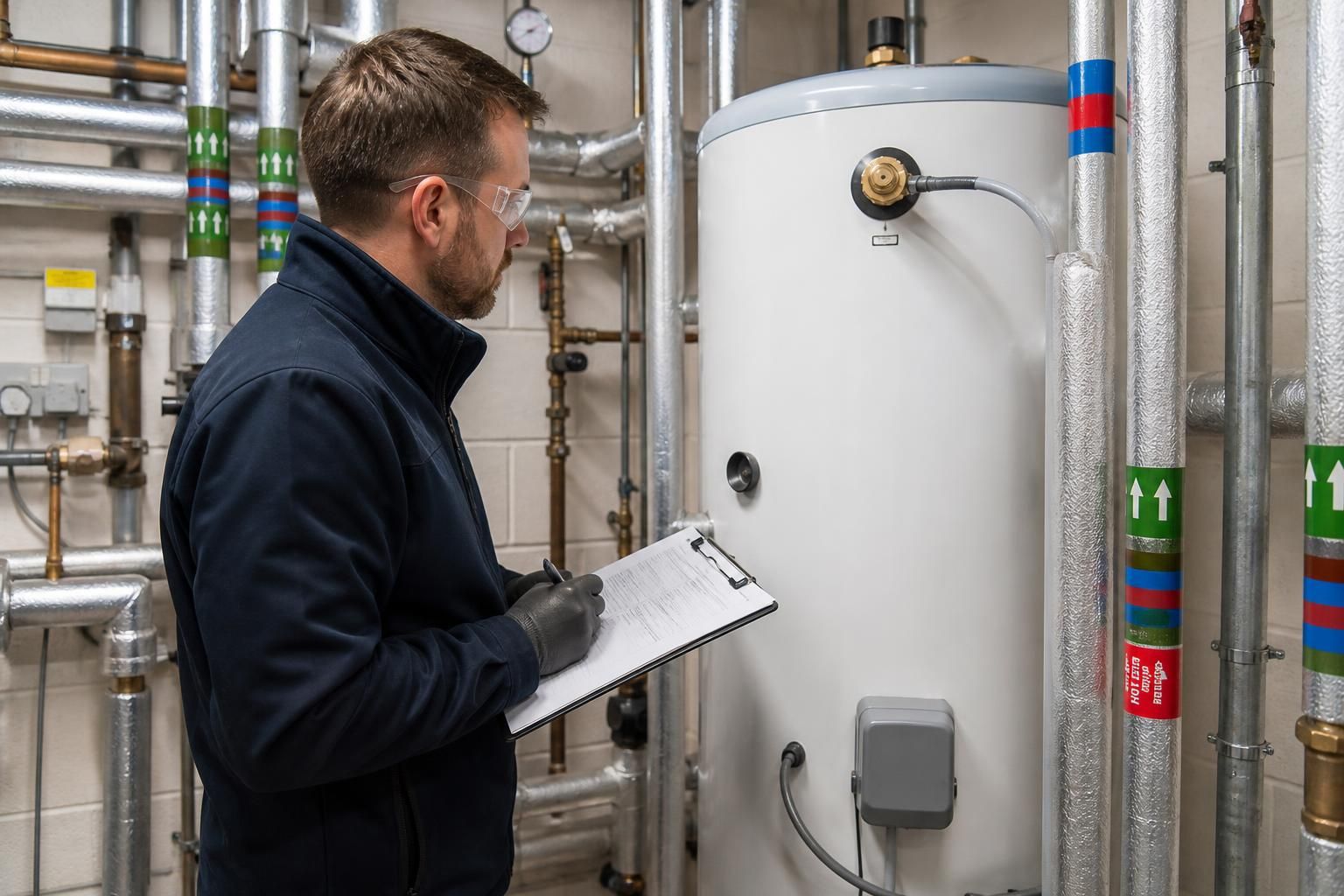
A compliant Legionella risk assessment is a site-specific, evidence-based examination of how Legionella could grow or spread through a water system, who could be exposed, and whether the existing controls are adequate. It should be prepared by someone with suitable knowledge, training and practical experience, rather than completed as a generic checklist or treated as a one-off certificate.
The principal benchmark is the current body of UK health and safety guidance, supported where relevant by recognised British Standards and sector-specific technical guidance. These sources do not prescribe an identical format for every building. Instead, they establish the principles that a competent assessment should apply to the particular water systems, users and operating conditions at the premises.
A well-founded assessment should normally include the following areas:
- Scope and system description: identify the premises covered, the water services included, points of use, storage vessels, secondary circulation, showers, taps, TMVs, calorifiers, dead legs, flexible hoses and any other relevant equipment.
- System verification: compare available drawings and written information with what is physically installed. In larger or altered buildings, this may require inspection, tracing pipework and updating schematics.
- Hazard identification: consider conditions that can support bacterial growth or aerosol exposure, including unsuitable temperatures, stagnation, low-use outlets, scale, sludge, corrosion, biofilm and poorly maintained components.
- Exposure assessment: consider how water may be used and who may be exposed. Particular attention may be required where occupants are older, immunocompromised or otherwise more vulnerable to Legionnaires’ disease.
- Existing controls: examine temperature management, flushing, cleaning, disinfection, inspection, maintenance, sampling arrangements and the way abnormal results or faults are handled.
- Action planning: record significant findings, assign responsibility, set priorities and distinguish immediate corrective work from longer-term improvements.
- Evidence and traceability: support conclusions with inspection notes, photographs where useful, system records, drawings, maintenance information, test results and discussions with relevant personnel.
For hot and cold water services, the assessment should be consistent with the relevant part of HSG274 and the principles set out in BS 8580-1. HSG274 is divided into technical areas, so the applicable section depends on the system being assessed. Part 2 is relevant to evaporative cooling systems, while Part 3 covers other risk systems, such as spa pools, humidifiers and selected industrial or process applications. An assessment that deals only with domestic hot and cold water services may therefore be incomplete where other water systems are present.
Sector guidance can add requirements or practical considerations that are not fully addressed by general water-system guidance. Healthcare premises, for example, may need to be assessed with reference to the relevant NHS technical standards. Care settings, hotels, residential buildings, education premises and manufacturing sites can also have different patterns of occupancy, vulnerability, water use and engineering risk. The assessor should explain which guidance has been applied and why it is suitable for the site.
BS 8580-1 is particularly useful for defining the quality and content of a risk assessment. It supports a structured approach to competence, information gathering, system examination, risk evaluation, reporting and review. Following a recognised standard does not remove the need for professional judgement: the assessor must still investigate unusual arrangements, limitations in the available information and hazards created by the way the building is operated.
The assessment should also identify the management arrangements needed to keep controls effective. This includes naming the responsible person, setting out who carries out monitoring and maintenance, defining escalation routes and showing how records are retained. The document should make clear whether a task is carried out by employees, contractors or another appointed party, and how the quality of that work is checked.
A report is weaker if it simply lists recommended temperatures, sampling points or cleaning tasks without explaining their relevance to the system. Recommendations should be linked to identified hazards and should be practical for the building operator to implement. Where a control cannot currently be verified, the report should say so and specify what information, inspection or remedial work is required.
Review is required when the water system, building use, occupancy, equipment or management arrangements change, and when monitoring or sampling identifies a new concern. Significant alterations such as refurbishment, changes to hot water plant, installation of new outlets, periods of prolonged disuse or changes in vulnerable occupancy should prompt consideration of whether the existing assessment remains accurate. A scheduled review should also be defined according to the level of risk rather than relying on an arbitrary document expiry date.
There is no universal certificate that makes an assessment compliant. The important question is whether it is current, sufficiently detailed, based on an accurate understanding of the installation, completed by a competent person and integrated into an effective control scheme. Blue Fish Water Management Ltd can advise businesses on the interpretation of applicable guidance, the evidence required and the remedial actions needed to address identified gaps.

The standards used for a Legionella Risk Assessment should be identified clearly in the report, with each one’s role explained. Legal duties establish what the dutyholder must manage, the HSE’s Approved Code of Practice and guidance describe recognised control principles, and British Standards provide a structured benchmark for carrying out and documenting the assessment.
Where the site differs from the approach described in a standard or guidance document, the assessor should record the reason and explain how the alternative arrangement controls the same risk. This makes the assessment easier to scrutinise and helps the responsible person distinguish a genuine compliance gap from a recommendation that requires professional judgement.
Discuss Your Legionella Risk Assessment Requirements
Discuss your site’s Legionella Risk Assessment requirements with Blue Fish Water Management Ltd to clarify which standards apply and what information should be prepared for the assessment.