
How long does a legionella risk assessment take?
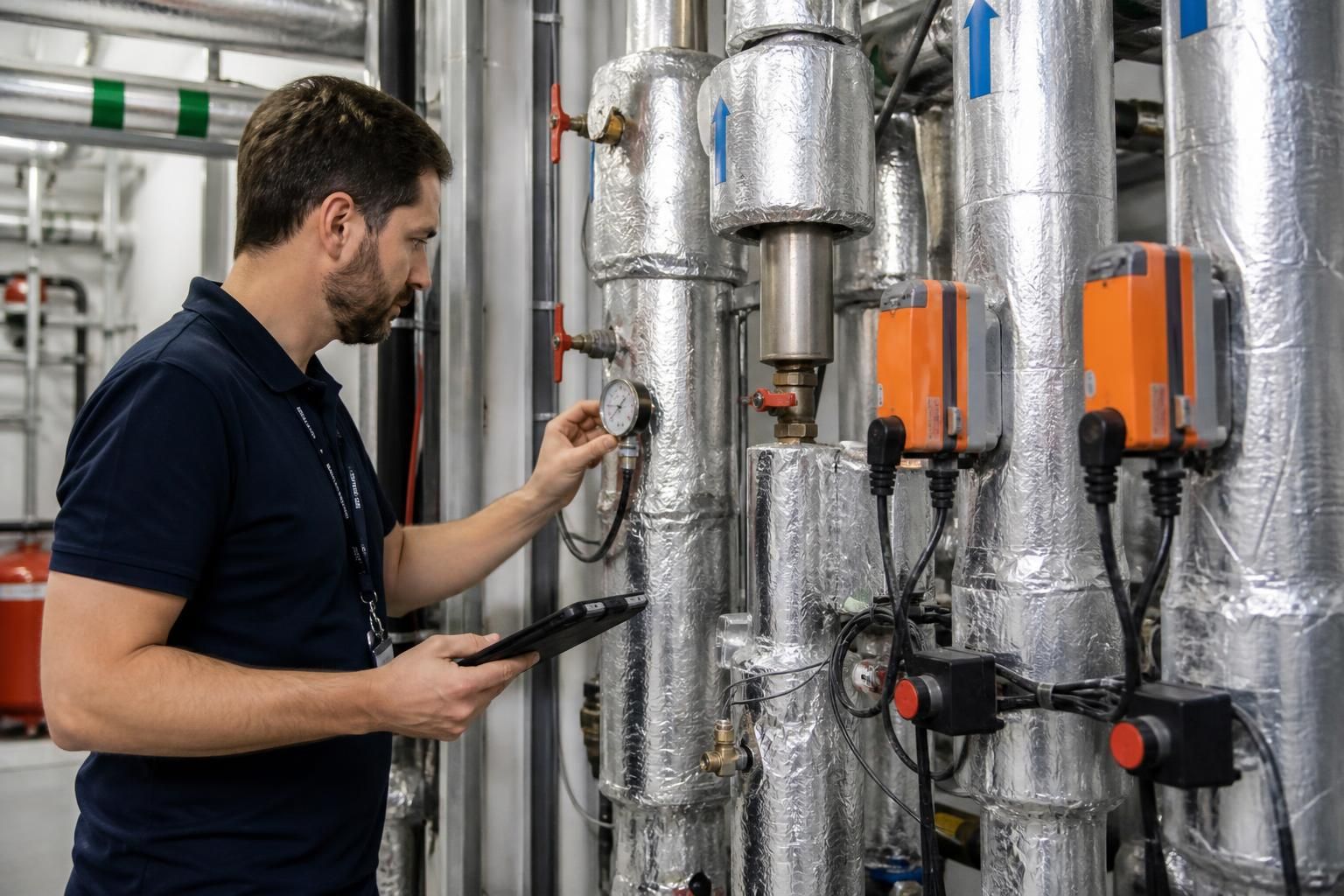
The time required for a legionella risk assessment is determined by the scope of the assessment rather than by a standard fixed duration. A straightforward, well-documented system may be assessed during a single site visit, while a complex organisation with multiple buildings, varied water systems or incomplete records will require more investigation and a longer reporting process.
The main factors affecting the timescale are:
- System complexity: hot and cold water services, storage tanks, calorifiers, secondary circulation, showers, spa facilities, cooling systems and other risk sources each require appropriate consideration.
- Number of buildings and outlets: one building with a clearly defined system is less involved than a portfolio containing several sites, plant rooms and extensive outlets.
- Accessibility: the assessor needs suitable access to plant, tanks, calorifiers, outlets, records and other relevant areas. Restricted or difficult-to-access equipment can increase the time needed on site.
- Quality of existing information: schematic drawings, asset registers, previous assessments, monitoring records, maintenance information and water treatment records help the assessor understand how the system operates.
- Site activities and occupancy: healthcare, care, residential, educational, industrial and commercial premises may have different patterns of water use and different groups who could be more vulnerable to legionella exposure.
- Changes or unusual conditions: extensions, vacant areas, alterations to pipework, redundant outlets, low-use facilities and evidence of poor temperature control may require additional investigation.
A professional assessment generally involves several connected stages. Before attending, the assessor may review available drawings, asset information, previous reports, control schemes and monitoring records. During the site inspection, they identify and examine relevant water systems, trace pipework where possible, check outlets and equipment, and record conditions that could affect legionella control. Discussions with the responsible person, facilities team or maintenance personnel can also clarify how the systems are operated and managed.
The written report is prepared after the inspection. It should describe the systems assessed, identify foreseeable sources of risk, record the control measures in place, and set out recommendations where further action is needed. The report may take longer to complete when the site contains several systems, when information must be checked against physical findings, or when remedial priorities need to be explained clearly.
A site visit should therefore not be treated as the whole assessment. The assessment is complete only when the findings have been evaluated and documented in a way that enables the responsible person to manage the risks. A short inspection does not necessarily indicate a suitable assessment if important areas were inaccessible or relevant systems were not identified.
To help keep the process proportionate and avoid preventable delays, the person arranging the assessment should provide, where available:
- current water system schematics and asset registers;
- previous legionella risk assessments and review records;
- temperature monitoring, flushing and cleaning records;
- maintenance and water treatment information;
- details of changes to the building or water services;
- access to plant rooms, tanks, outlets and other relevant areas; and
- the names of personnel responsible for operating or maintaining the systems.
If the assessor identifies gaps in information, inaccessible equipment or a need for specialist investigation, the work may need to be extended or followed by additional actions. Sampling is not automatically required for every risk assessment; whether it is appropriate depends on the system, the findings and the purpose of the investigation. Where testing or remedial work is recommended, this should be distinguished from the time needed to complete the risk assessment itself.
The assessment should also be reviewed when there is a significant change to the water system, building use, occupancy or management arrangements, or when monitoring indicates that existing controls may not be effective. Regular review is part of ongoing water safety management and is separate from estimating how long the original assessment will take.

The stated duration for a legionella risk assessment should be understood as the time required to complete the work, not simply the time spent on site. A visit lasting part of a day may still be followed by analysis, report preparation and clarification of findings before the assessment is complete.
When comparing timescales, check whether the estimate includes:
- review of information supplied before the visit;
- inspection and discussions at the premises;
- evaluation of identified risks and existing controls;
- preparation of the written assessment; and
- discussion of recommendations or required follow-up.
This makes it easier to distinguish a genuine assessment timescale from an estimate that covers only a brief inspection.
Discuss your legionella risk assessment requirements
Discuss your premises, water systems and available records with Blue Fish Water Management Ltd to establish the appropriate scope for your legionella risk assessment. This helps ensure the assessment is planned around your organisation’s actual requirements.