
Which sectors need a sector-specific Legionella Risk Assessment?

A sector-specific Legionella Risk Assessment is needed where the way a building is occupied, managed or operated creates risks that a generic assessment would not properly address. UK dutyholders must arrange a suitable and sufficient assessment of the risk from exposure to Legionella, taking account of the water systems, users, activities and management arrangements at the premises. Sector guidance and operational detail help determine what “suitable and sufficient” means in practice.
The sector does not, by itself, determine the level of risk. A small premises may have significant risk because it contains a vulnerable population, a spa pool or a complex hot-water system, while a larger office may have relatively straightforward arrangements. A sector-specific approach is appropriate when the normal use of the premises changes the likelihood of exposure or the potential consequences of an outbreak.
- Healthcare premises: Hospitals, clinics, treatment centres and other healthcare settings require particular consideration because patients may be more susceptible to infection. The assessment needs to reflect clinical activities, patient accommodation, specialist outlets, water storage and distribution, temperature control, maintenance access and the relationship between estates management and infection prevention teams. Healthcare water safety arrangements should align with the relevant healthcare technical guidance and local governance structure.
- Care homes and supported living: Older people and residents with underlying health conditions can be more vulnerable to the consequences of Legionella exposure. Assessors should consider assisted bathing, en-suite facilities, mobility limitations, resident routines, communal areas, room occupancy and how staff control outlets that are not used regularly. The management plan also needs to be practical for care staff, rather than relying solely on engineering controls.
- Hotels, serviced accommodation and similar premises: Guest rooms create a large number of water outlets with changing occupancy patterns. Rooms may remain vacant, refurbishment may introduce altered pipework, and cleaning or maintenance teams may have different responsibilities from the operator. Where the premises includes a spa pool, hot tub, sauna shower or other aerosol-generating feature, that equipment should receive specific attention rather than being treated as an ordinary guest-room outlet.
- Schools, colleges and universities: Educational buildings commonly have periods of low or interrupted use, including holidays, term breaks and partial occupation. The assessment should address showers, sports facilities, boarding accommodation, laboratories, residential blocks, disused areas and the procedures for returning buildings to use. It should also identify who controls the system when responsibility is shared between a school, academy trust, local authority, landlord or facilities contractor.
- Social housing and residential property portfolios: Landlords and managing agents need to understand whether each property has an individual or communal water system and where duties sit between the landlord, managing agent, contractor and tenant. Communal hot-water systems, stored water, sheltered accommodation, void properties, heat interface units and low-use outlets may require different controls. A portfolio-level policy can support consistency, but it should not replace site-specific consideration where buildings or residents differ.
- Leisure and recreation premises: Leisure centres, gyms, sports clubs, swimming facilities and holiday venues often contain showers and other outlets that generate aerosols. Spa pools, hot tubs and similar systems can introduce additional hazards because of their operating conditions and method of use. The assessment should account for water treatment, bather load, cleaning, monitoring, plant configuration, seasonal use and the competence of the people responsible for operation.
- Industrial and manufacturing sites: Industrial premises may contain cooling towers, evaporative condensers, process-water systems, emergency showers, welfare facilities or areas that are occupied only during particular production stages. The assessment must distinguish between domestic water systems and process systems, consider changes caused by shutdowns or production alterations, and coordinate water safety with engineering, maintenance and occupational health procedures. Access restrictions and contractor control may also affect how monitoring and remedial work are carried out.
- Offices, retail premises and commercial buildings: These premises are not automatically low risk. Larger buildings may have stored water, extensive distribution networks, rarely used outlets, shower facilities, cooling systems or multiple tenants. An assessment should reflect occupancy patterns, building services, tenant responsibilities, refurbishment work and arrangements for managing vacant floors or areas.
Other settings may also require a tailored assessment, including prisons, military accommodation, laboratories, religious buildings, temporary accommodation and premises with specialist bathing or treatment facilities. The relevant question is whether the building’s use creates distinctive exposure routes, user vulnerabilities, water-system conditions or management duties.
A sector-specific assessment is particularly important when one or more of the following apply:
- people using the premises may be especially susceptible to Legionnaires’ disease;
- water outlets are numerous, dispersed, infrequently used or difficult to access;
- the site contains cooling towers, evaporative condensers, spa pools or other aerosol-generating systems;
- occupancy changes by season, shift pattern, term, booking or production cycle;
- the property includes communal accommodation or several organisations with shared responsibilities;
- building alterations, vacancies, shutdowns or changes of use can affect water circulation and temperature control; or
- employees, residents, visitors, patients or contractors may be exposed in different ways.
The assessment should be reviewed when the use of a premises changes, after significant alterations to its water systems, following an incident or suspected exposure, or when monitoring shows that existing controls are not operating as intended. It should also be revisited where organisational changes leave uncertainty about who acts as the responsible person or who carries out particular control measures.
A competent assessor will therefore examine the actual premises and its operating arrangements, not simply select a sector template. Blue Fish Water Management provides sector-aware Legionella Risk Assessments that translate the relevant water-system risks and dutyholder responsibilities into practical control requirements for commercial and other managed premises.
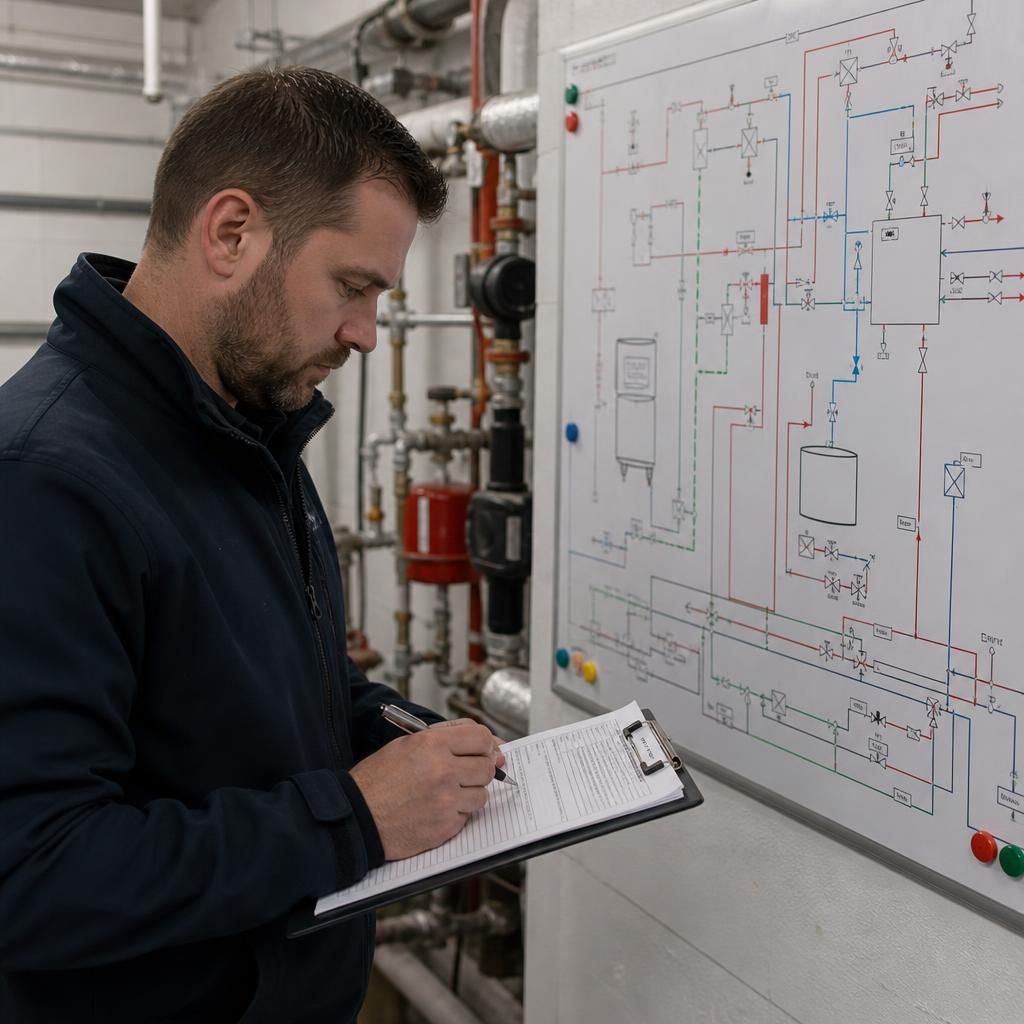
A sector-specific Legionella Risk Assessment may be necessary for a specialist part of a building even when the wider premises appears low risk. For example, a dental or medical suite within an office, staff accommodation at an industrial site, or a gym and spa within a hotel may introduce different users, outlets, operating routines and control requirements from the main building.
The assessment should therefore identify distinct activities and facilities within the premises, rather than assigning one risk profile to the organisation as a whole. This approach helps determine whether separate arrangements are needed for:
- specialist treatment or bathing facilities;
- staff, resident or guest accommodation;
- tenant areas operated under different procedures;
- process or engineering plant; and
- areas used by vulnerable people or infrequent visitors.
In practice, the deciding factor is the exposure created by each activity and water system. A premises may operate across several sectors and require controls that reflect each function.
Discuss your sector-specific Legionella Risk Assessment
Discuss your premises and operating arrangements with Blue Fish Water Management to establish the appropriate scope for a sector-specific Legionella Risk Assessment. This can help clarify the information, site access and management responsibilities needed before an assessment begins.