
What makes a Legionella Risk Assessment proportionate to a sector?
A proportionate Legionella Risk Assessment matches the depth of investigation and control measures to the sector’s water systems, occupancy, vulnerable users and potential exposure. It should address the actual risks present, provide clear evidence for the required controls, and avoid both generic assumptions and unnecessarily complex measures.

A proportionate Legionella Risk Assessment is one that reaches a defensible conclusion using the level of evidence and analysis needed for the premises concerned. It should identify the people and activities that could be affected, evaluate how the water systems are managed, and specify controls that are practical for the organisation to maintain. Proportionality is therefore about suitability and justification, not about producing the shortest or least expensive assessment.
Sector operations are central to the assessment. The same type of water system can present different management challenges depending on how a building is used. An assessment should consider the way water is stored, distributed and used during normal operations, including periods of low demand, changes in occupancy, cleaning regimes, maintenance activities and any processes that create aerosols. It should also examine whether the organisation has enough control over the system to implement the recommended measures.
A sector-specific approach is particularly important where the consequences of exposure may be more serious or where water systems are unusually complex. Relevant factors can include:
- the age, health or dependency of people using the premises;
- the duration and frequency of occupancy;
- the presence of sleeping accommodation or areas where people cannot easily relocate;
- showers, spa pools, spray-producing equipment, humidifiers or other aerosol-generating outlets;
- hot and cold water storage, secondary circulation, little-used outlets and redundant pipework;
- shared systems, landlord-controlled plant or interfaces between several responsible organisations;
- process water, cooling equipment or other non-domestic systems that require separate consideration; and
- the competence, staffing arrangements and records available to operate the control scheme.
The assessment should distinguish between inherent risk and managed risk. Inherent risk is the potential for exposure before safeguards are considered. Managed risk reflects the effect of temperature control, flushing, cleaning, inspection, maintenance, monitoring and staff procedures. A sector may have relatively straightforward equipment but weak operational controls, or sophisticated plant that is well controlled. The assessment should explain which situation applies rather than assigning a broad risk label based only on the building type.
For example, a care setting may require close attention to bathing facilities, residents who need assistance, water outlets in bedrooms and the continuity of monitoring when staffing changes. A hotel or residential building may need analysis of guest rooms, seasonal occupancy, vacant areas and the relationship between landlord and operator. An education setting may require consideration of term-time shutdowns, infrequently used facilities and arrangements for bringing systems back into service. Industrial premises may need the domestic hot and cold water assessment to be considered alongside process systems, cooling equipment or areas with restricted access.
These examples do not create automatic conclusions. The relevant question is whether the features of the particular premises alter the route by which exposure could occur, the people who might be affected or the reliability of the proposed controls. A sector label can guide the investigation, but it cannot replace a site-specific examination.
Proportionality also affects the evidence collected. The assessor should inspect accessible plant and outlets, review available schematic drawings and records, speak with people who operate the systems, and record limitations such as inaccessible tanks, missing information or uncertain ownership. Where a conclusion depends on an assumption, that assumption should be stated and assigned for verification. Sampling, specialist examination or additional technical investigation may be appropriate where the existing information cannot support a reliable conclusion; it should not be included merely as a routine addition with no identified purpose.
The resulting action plan should connect each recommendation to a particular finding. It should identify what needs to be done, who is responsible, what evidence will demonstrate completion and whether the measure is a routine control, a remedial task or a matter requiring further design advice. This makes it easier for a responsible person to prioritise work and demonstrate that decisions were made on a reasoned basis.
A proportionate assessment must remain usable after it is issued. Procedures should fit the organisation's actual management structure, including contractors, facilities teams, tenants and duty holders who share responsibility. Instructions that cannot be carried out consistently are not effective controls, even if they appear technically comprehensive. The assessment should make clear how monitoring results are reviewed, how failures are escalated and when corrective action is required.
It should also identify events that require reassessment. These may include alterations to pipework or plant, a change in building use, a significant change in occupancy, prolonged closure, repeated control failures, changes in responsibility or new information about vulnerable occupants. A review should consider whether the original assumptions remain valid rather than simply reproducing the previous document.
In practice, the quality of proportionality can be tested by asking three questions: does the assessment reflect how the premises actually operate, can the organisation implement and evidence the stated controls, and are the recommendations supported by findings rather than habit? If the answer to each is yes, the assessment is more likely to provide an appropriate basis for managing Legionella risk within that sector.
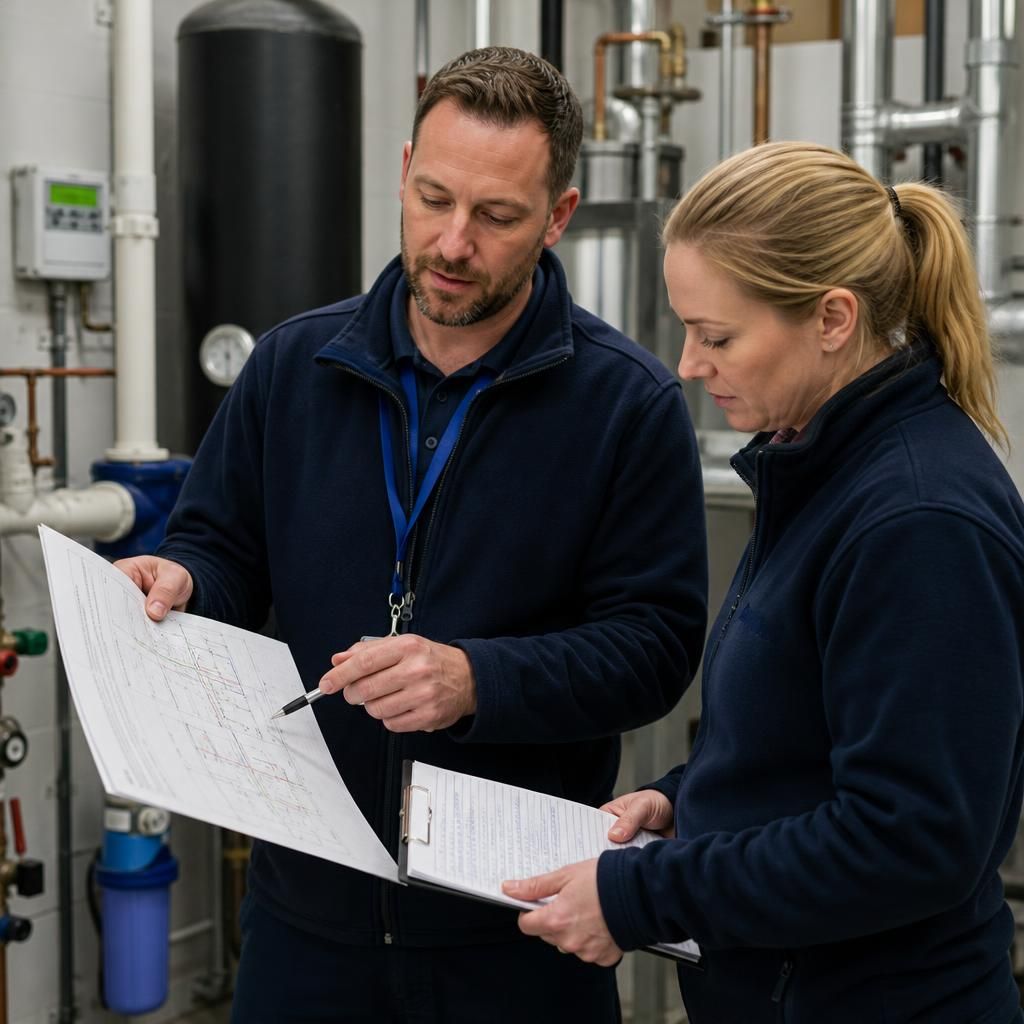
Assessor competence is part of proportionality because the level of investigation must reflect the complexity of the premises. A competent assessor should be able to recognise unusual plant, understand how sector operations affect exposure, and distinguish a genuine low-risk arrangement from one that has not been examined sufficiently.
Where the assessment involves unfamiliar equipment, complex interfaces or specialist processes, the report should explain the assessor’s basis for reaching a conclusion and identify where further technical input is needed. This creates a clear boundary between a proportionate assessment and a generic checklist completed without enough sector knowledge.
Discuss a Proportionate Legionella Risk Assessment
Discuss your premises and sector requirements with Blue Fish Water Management Ltd to establish what a proportionate Legionella Risk Assessment should examine. Contact the team for practical guidance on defining the appropriate scope and evidence.