
What should employers check before booking a Legionnaires awareness course?
Before booking a Legionnaires awareness course, employers should check that the content reflects current health and safety guidance, the trainer has relevant water hygiene expertise, and the course is suitable for the responsibilities of the intended learners. They should also confirm how learning is assessed, what evidence of completion is provided, and whether the training supports their organisation’s legionella control arrangements.
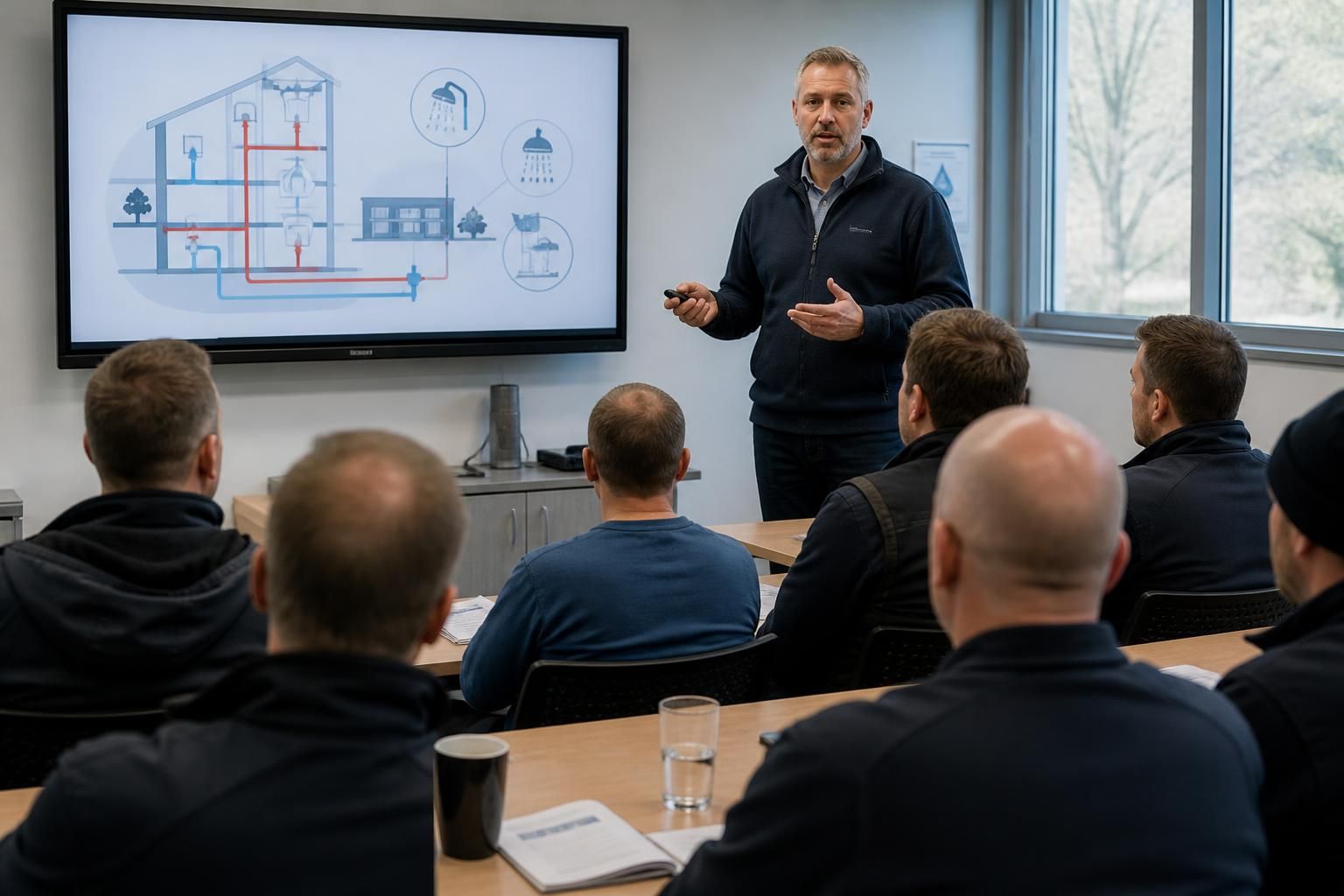
Employers should check a Legionnaires awareness course for the accuracy of its content, the scope of learning, the way it relates to workplace controls, and the quality of the provider’s training arrangements. A suitable course should improve understanding of legionella risks without presenting basic awareness training as a substitute for a competent risk assessment, a written control scheme or specialist technical work.
Check the syllabus and learning outcomes
Request a detailed outline rather than relying on the course title alone. The content should normally explain:
- what legionella bacteria are and how exposure can occur;
- the conditions that allow bacteria to multiply in water systems;
- which types of building, equipment and water use may create relevant risks;
- the purpose of temperature control, cleaning, disinfection and other preventive measures;
- how routine checks, monitoring results and maintenance records support control;
- what employees should report, to whom concerns should be escalated, and what action may be needed after an abnormal result or suspected case.
The syllabus should distinguish between general awareness and duties requiring additional competence. For example, an employee who recognises a risk is not automatically qualified to design control measures, interpret complex sampling results or manage a water safety programme.
Check the legal and technical references
Course materials should identify the health and safety guidance on which they are based and show when that material was reviewed. In the UK, employers should expect relevant reference to the Health and Safety Executive’s guidance on the control of legionella in water systems, including the principles set out in Approved Code of Practice L8 and HSG274 where applicable. The course should explain how legal duties and accepted guidance affect the organisation, rather than simply listing document titles.
Ask whether the provider has a process for reviewing changes to guidance, legislation and accepted water hygiene practice. Out-of-date slides or generic information can leave learners with an inaccurate understanding of their responsibilities.
Check how the course applies to the workplace
Generic awareness content is useful, but employers should consider whether learners will be able to relate it to the buildings, systems and working practices they encounter. Before booking, check whether the provider can use relevant examples, discuss the organisation’s terminology and acknowledge the limits of the learner’s role.
Useful questions include whether the course can address hot and cold water systems, showers, cooling systems, spas or other equipment present on the premises, and whether it covers the reporting routes used by the organisation. Any tailored content should complement, not replace, the employer’s own risk assessment and written control scheme.
Examine the provider’s quality controls
Employers should ask who is responsible for maintaining the course, how teaching materials are checked, and how learner feedback is used. A clear course specification, consistent materials and a documented review process indicate that the training is being managed systematically.
It is also sensible to ask about class size, delivery method, joining instructions, technical requirements for online learning and arrangements for learners who need reasonable adjustments. These practical details affect whether the course can be completed properly and whether employees can participate without avoidable barriers.
Clarify the boundaries of the course
The provider should state what the course does not cover. Awareness training is not normally a replacement for training aimed at people who carry out water hygiene monitoring, manage contractors, undertake risk assessments or take technical decisions about remedial work. Employers should map the course against each role and identify any separate instruction or competence assessment required.
This distinction is important when demonstrating that staff have received appropriate training. A completion record can show participation in an awareness session, but it does not by itself demonstrate that an individual is competent to perform specialist tasks.
Compare the overall value
Price should be considered alongside the course content, delivery method, materials supplied, administration and any follow-up support. Employers should confirm what is included before comparing providers, including learner resources, attendance records, certificates, technical assistance and arrangements for replacing or updating materials.
Finally, retain the course outline and completion records within the organisation’s training system. Review the training periodically against changes in employees’ duties, premises, water systems and control arrangements. This helps ensure that booking decisions remain connected to the organisation’s actual legionella management needs rather than being treated as a one-off administrative exercise.

Discuss Your Legionnaires Awareness Training Requirements
Contact Blue Fish Water Management Ltd to discuss your organisation’s Legionnaires awareness training requirements, including learner roles, delivery needs and the level of support required.