
How long does a Legionnaires awareness course take?
There is no single standard duration for a Legionnaires awareness course: the length depends on the course format, learner responsibilities and depth of coverage. Most courses are designed as focused training sessions covering Legionnaires’ disease, risk factors, control measures, monitoring and the responsibilities relevant to the learner’s role.
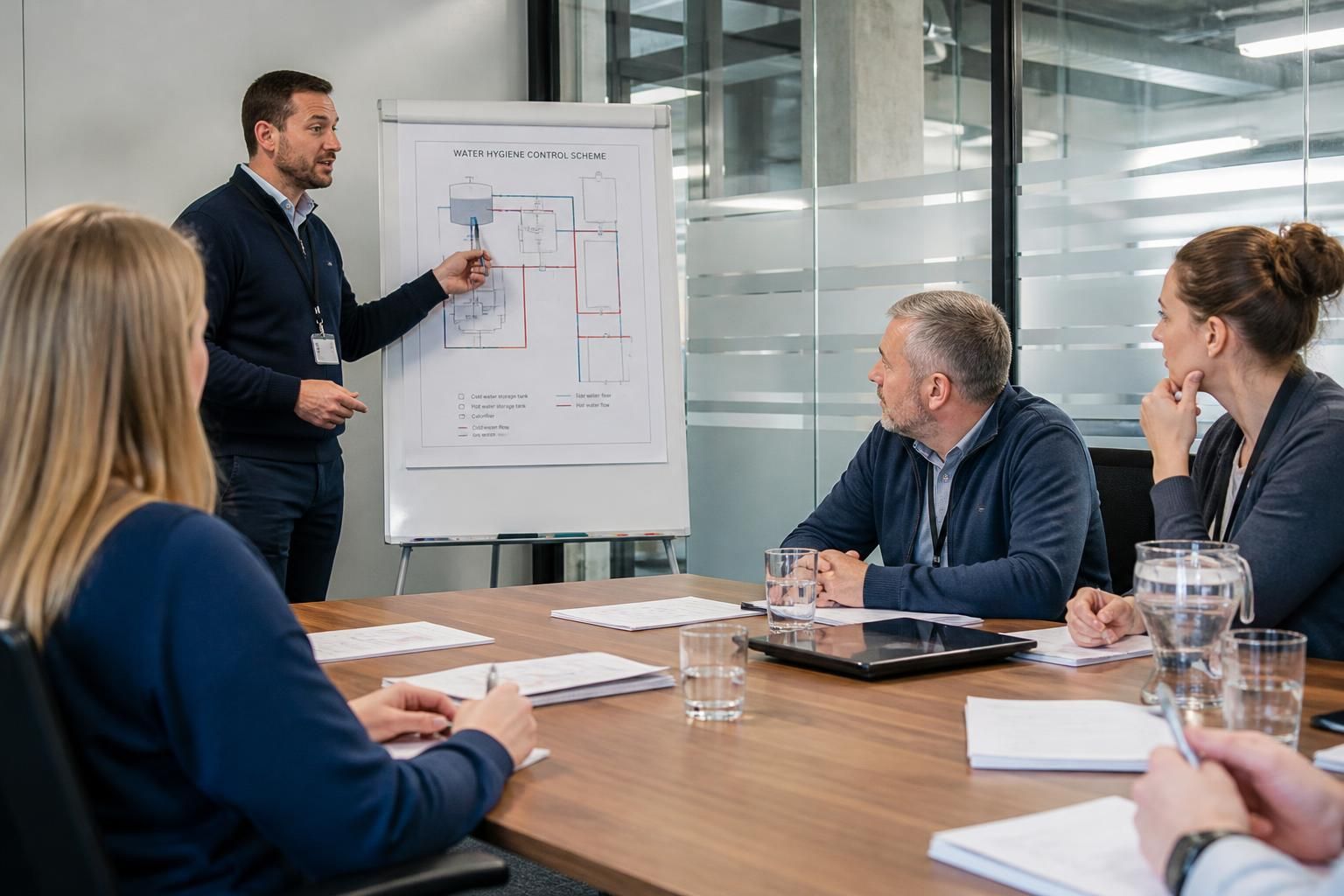
A Legionnaires awareness course can range from a concise briefing to a more detailed full-day programme. The suitable length depends on how much detail learners need, whether the training is delivered online or in person, and whether the course includes knowledge checks or practical exercises.
A short awareness session is generally intended for people who need to understand the basic risks and follow established workplace controls. It may cover how Legionnaires’ disease develops, where Legionella can occur, the conditions that support bacterial growth, and the actions employees must take when using or maintaining water systems. This format is often suitable for general staff, occupants with relevant responsibilities, or workers who need to recognise and report potential issues.
A longer course allows more time to examine how water systems create risk and how control measures operate in practice. It may explore temperature management, outlets and equipment, flushing arrangements, cleaning and disinfection, record keeping, incident reporting and the importance of following the site’s control scheme. More detailed training is appropriate where learners have a direct role in monitoring, supervision, maintenance or compliance.
The delivery method also affects the time required. Online learning may be divided into modules that the learner completes in stages, with progress checks between sections. In-person training follows a set timetable and may allow questions, group discussion and scenario-based exercises. A course that includes an assessment can take longer than one based solely on presentation and discussion, particularly if learners need to review answers or revisit specific modules.
Most well-structured courses follow a logical sequence:
- the health implications of Legionnaires’ disease and the groups who may be more vulnerable;
- common sources of exposure and conditions that encourage Legionella growth;
- the purpose of a water hygiene control scheme;
- the responsibilities assigned to different people within an organisation;
- the records, checks and reporting processes used to demonstrate control; and
- a knowledge check, discussion or assessment to confirm understanding.
The course should be long enough for learners to understand what they are expected to do, rather than simply recognise technical terms. For example, a person responsible for reporting low temperatures or infrequently used outlets may need more instruction than someone whose role is limited to raising concerns. Training should also explain the limits of the learner’s authority, so that faults are escalated instead of being treated as tasks they are not competent or authorised to perform.
Employers should compare the advertised duration with the syllabus before booking. Check whether the stated time includes breaks, an assessment, completion of online reading or any practical element. It is also worth confirming whether the content is aimed at general awareness or at a dutyholder, responsible person, maintenance worker or contractor. A longer course is not automatically more suitable; relevance to the learner’s actual duties is the more important consideration.
After training, organisations should retain appropriate evidence of completion and consider whether further instruction is needed when responsibilities change, a water system is altered, control procedures are updated or an individual has not applied the required procedures for some time. Awareness training supports a wider legionella control programme, but it does not replace a competent risk assessment, suitable monitoring or remedial action where a system presents a risk.
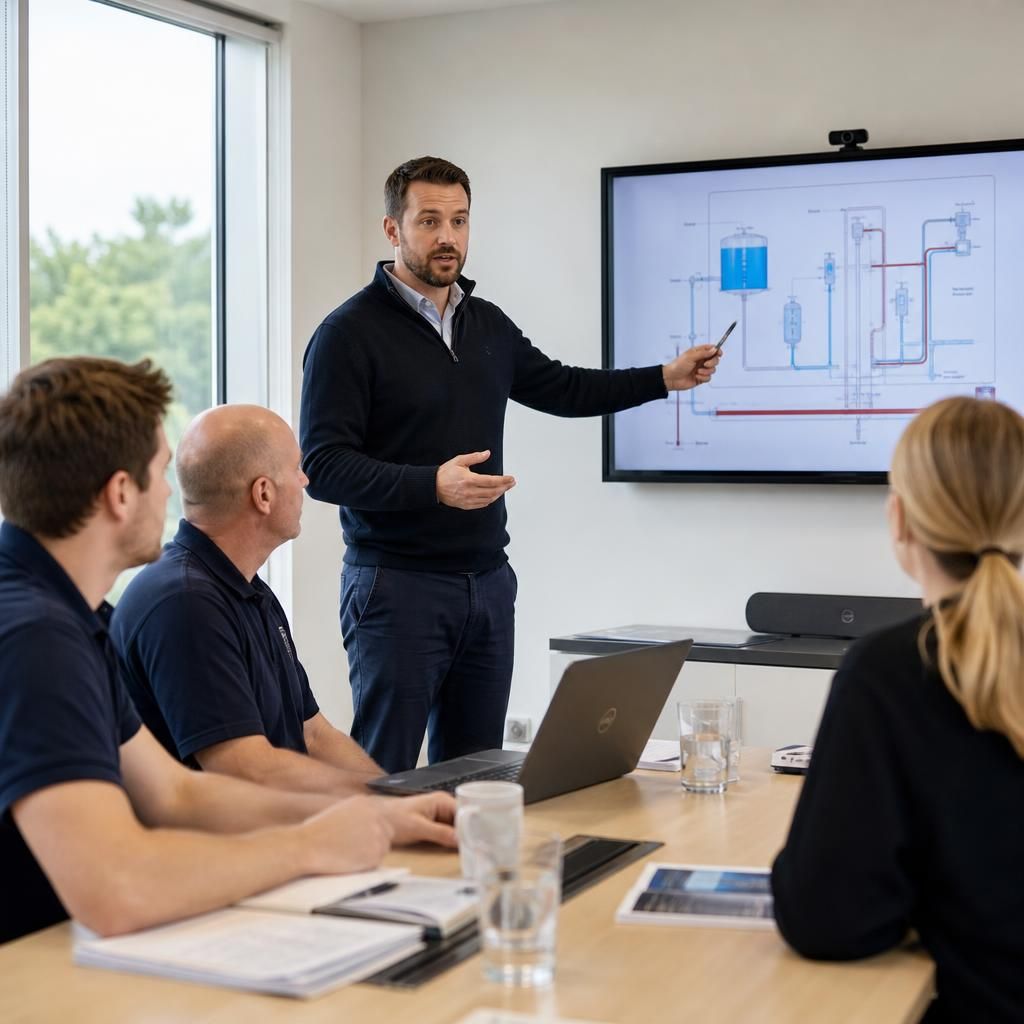
The stated course length normally covers the planned awareness content, but it may not include a separate site induction. Learners may still need to be shown the organisation’s own water hygiene procedures, reporting routes, relevant plant or outlets, and the records they are expected to complete. This site-specific familiarisation should be treated as additional instruction rather than a reason to shorten the awareness course.
This distinction is particularly important when staff move between premises or take on new duties. A general course provides the underlying understanding of Legionnaires’ disease and water system risks; local instruction explains how that knowledge applies at a particular workplace. Employers should therefore consider both the advertised course duration and the time needed to brief learners on their own control arrangements.
Discuss your Legionnaires awareness training needs
If you are unsure which course format suits your learners’ responsibilities, discuss your Legionnaires awareness training needs with Blue Fish Water Management Ltd. They can help you identify the appropriate level of coverage for your organisation.