
Is a legionella awareness course enough for risk assessment?
Usually, no: a legionella awareness course explains the hazards and basic responsibilities but does not normally provide the depth of knowledge or practical competence required to complete a suitable and sufficient legionella risk assessment. Risk assessments should be carried out by someone with appropriate training, knowledge, experience and competence for the water systems being assessed.
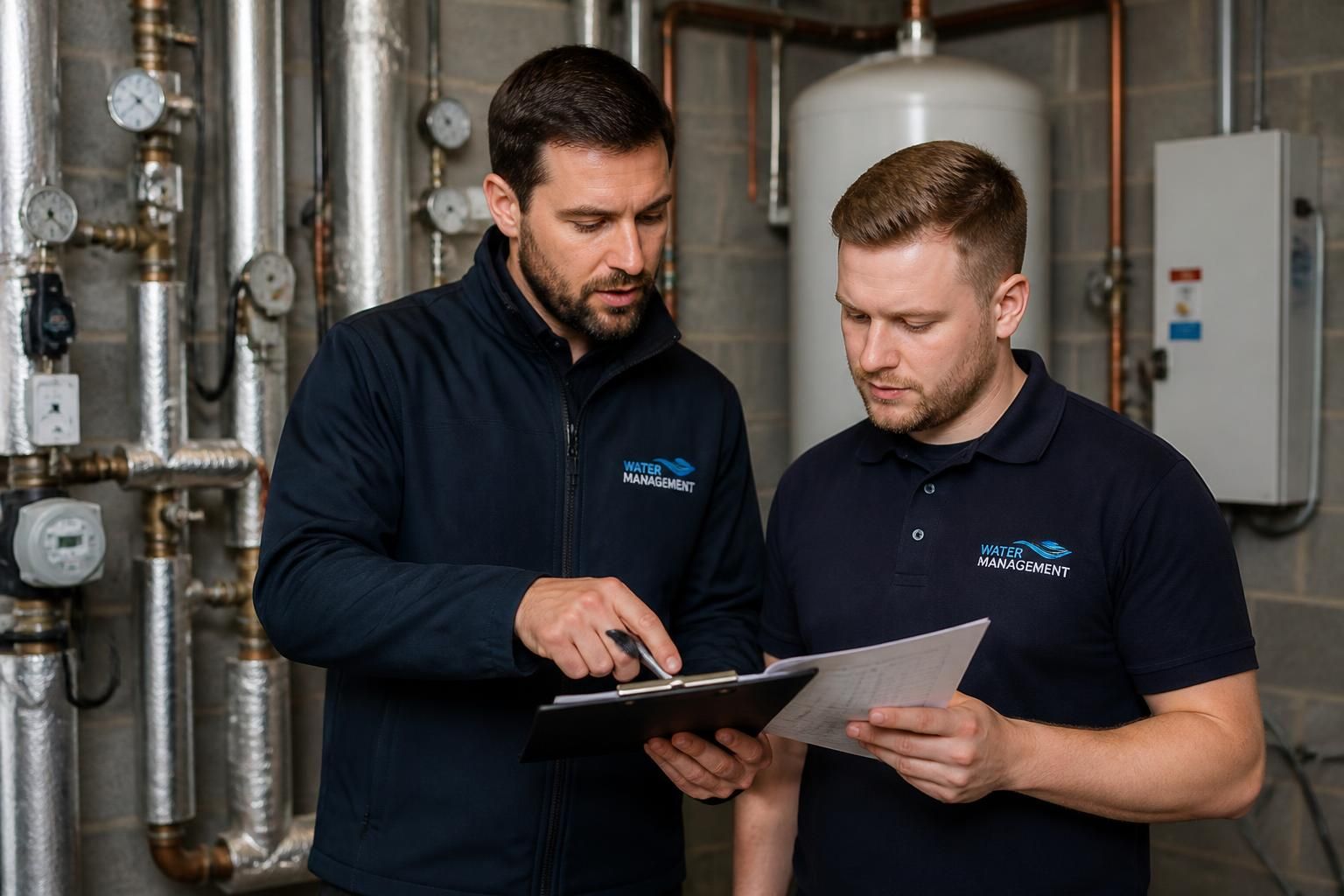
A legionella awareness course is generally suitable for understanding the hazard and supporting day-to-day control, but it is not normally a complete route to competence in carrying out a legionella risk assessment. Its value depends on the learner’s role, the course syllabus and the complexity of the water system involved.
Awareness training commonly covers:
- what legionella is and how exposure can occur;
- the health risks associated with contaminated water systems;
- the broad responsibilities of employers, dutyholders and employees;
- typical conditions that allow legionella to multiply, such as suitable temperatures, stagnation and poor system management;
- the importance of temperature control, cleaning, maintenance and monitoring; and
- how to report concerns or escalate problems.
This knowledge helps staff recognise hazards and follow an existing control scheme. It does not usually teach the learner how to inspect an installation systematically, identify all relevant risk sources, evaluate the significance of findings or produce a defensible written assessment.
A suitable and sufficient assessment requires a more detailed process. The assessor may need to understand the design and operation of the hot and cold water systems, storage arrangements, outlets, secondary return systems, thermostatic mixing valves, showers, infrequently used outlets and any vulnerable or higher-risk areas. They must also be able to identify responsibilities, assess existing controls, recommend additional measures and explain how those controls should be monitored and reviewed.
The assessor needs competence that is appropriate to the system being examined. This normally combines relevant training with technical knowledge, practical experience and an understanding of the applicable health and safety requirements. A person assessing a straightforward domestic-type system may need a different level of knowledge from someone assessing a healthcare premises, industrial process, large residential building or complex commercial installation.
UK guidance does not generally operate on the basis that one particular course certificate automatically qualifies somebody to assess every type of water system. Under the principles set out in the Health and Safety Executive’s Approved Code of Practice L8 and HSG274, the person appointed should be competent for the work they are expected to undertake. The dutyholder remains responsible for appointing an appropriate person and ensuring that the assessment is suitable and sufficient.
For that reason, completing an awareness course does not remove the need to consider:
- whether the learner has received risk-assessment-specific training;
- whether the training includes practical application rather than awareness alone;
- whether the learner understands L8 and the relevant parts of HSG274;
- whether they can interpret system information and identify foreseeable risks;
- whether they have assessed comparable systems under suitable supervision; and
- whether their knowledge is maintained through experience, review and further learning.
An awareness-trained employee may still make a useful contribution. They could provide site information, identify changes to outlets or equipment, check that routine tasks are being completed, report defects and support the person responsible for legionella control. They may also be able to complete limited checks if they have been separately trained and authorised for those specific duties. Those activities should not be confused with taking overall responsibility for the risk assessment.
Organisations should review the course outline rather than relying on the word “awareness” in the title. A course aimed at general staff may not cover system surveying, risk evaluation, written reporting, control schemes or assessor competence. Evidence of learning, such as an attendance record or test result, can demonstrate participation, but it does not by itself demonstrate the practical ability to assess a water system.
Where an internal employee is being considered for the role, the organisation should document their relevant training, previous experience, scope of responsibility and any supervision or quality checks. The assessment should be reviewed when there are changes to the water system, its use, occupancy, control measures or relevant guidance, and at suitable intervals based on the risks identified.
The practical conclusion is that awareness training can be an appropriate foundation, but it should normally be followed by more specific legionella risk assessment training and relevant practical experience before the individual is appointed as the assessor. Where the organisation does not have suitable internal competence, it should use a person or organisation able to demonstrate the necessary knowledge and experience for the systems being assessed.

The key issue is whether the individual’s assigned task matches the level of training they have completed. An awareness course can support defined, supervised activities, but it should not be treated as authority to approve the overall legionella risk assessment.
Organisations can reduce uncertainty by documenting the boundary between awareness-based duties and assessment duties. For example, an awareness-trained employee may collect current information about outlets, equipment and maintenance records, while the appointed competent assessor interprets that information, evaluates the risks and approves the written assessment. This creates a clear audit trail and helps prevent a course certificate being mistaken for evidence of full assessor competence.
When reviewing an internal arrangement, retain the course record alongside the person’s role description, supervision arrangements and any checks of their work. If the scope of the water system or the person’s responsibilities changes, reassess whether their training remains appropriate rather than relying on the original course alone.
Discuss your legionella risk assessment training needs
Discuss your legionella risk assessment training needs with Blue Fish Water Management Ltd to identify a training route appropriate to the responsibilities and water systems involved.