
Does building size affect Legionnaires’ risk assessment cost?
Yes. Building size can affect Legionnaires’ risk assessment cost because larger premises often contain more outlets, water systems and areas to inspect, although system complexity, access and the level of assessment required may have an equal or greater influence.

Legionnaires’ risk assessment pricing is normally based on the scope and complexity of the inspection rather than floor area alone. Building size is relevant because it can increase the number of areas, outlets and water assets that must be considered, but a smaller premises with complicated or poorly documented systems may require more assessment work than a larger building with a straightforward layout.
The main size-related factors include:
- Number of outlets: showers, taps, baths, hose connections and other outlets each form part of the system review. A building with many outlets requires more locations to identify, record and assess.
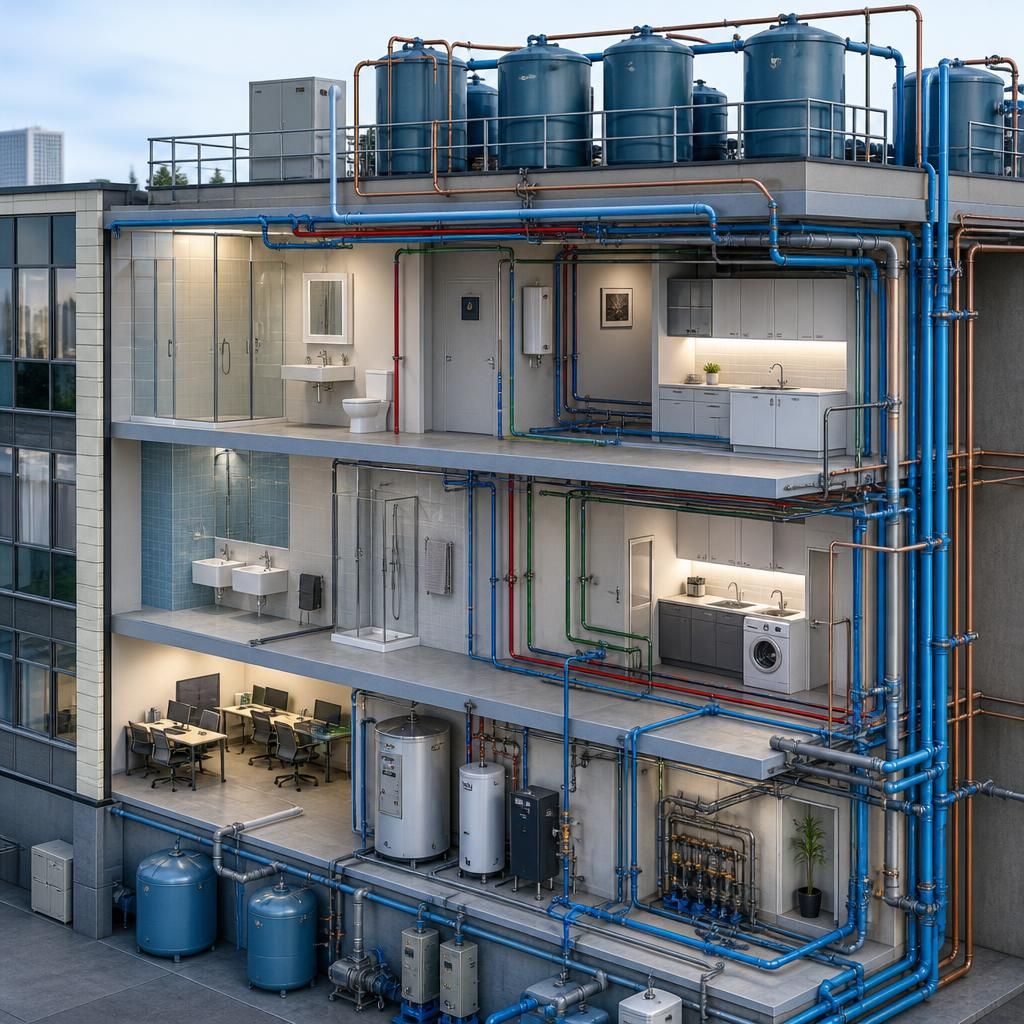
- Extent of the distribution network: long pipe runs, multiple floors, separate wings and remote outlets can make it harder to understand how water moves through the premises and where temperatures or stagnation may present risks.
- Number of water systems: a site may contain more than one hot and cold water system, along with storage tanks, calorifiers, secondary returns or other assets. Each relevant system adds to the assessment scope.
- Number of buildings: several buildings on one site may have independent supplies, separate plant rooms or different patterns of use. These usually need to be considered individually rather than treated as one simple installation.
- Access and layout: restricted plant rooms, secured areas, concealed pipework and difficult-to-reach outlets can increase the time needed to inspect and document the system accurately.
Building use is also important. A large office with one consistent water arrangement may present a more manageable assessment than a smaller site containing sleeping accommodation, healthcare facilities, leisure areas or other uses where water demand, occupancy and vulnerability differ. Intermittent use, vacant areas and outlets that are rarely used can also affect the review because they may indicate conditions associated with stagnation.
The condition and history of the installation can influence the work involved as well. Incomplete schematic drawings, uncertain asset records, previous alterations, redundant pipework and unclear maintenance responsibilities may require additional investigation. A building that has expanded over time can contain several connected systems or modifications that are not obvious from its current plans.
Size does not automatically mean that every outlet will require the same level of attention. The competent assessor should establish the relevant water systems, trace their connections and identify representative or higher-risk locations. The final scope should reflect the actual installation, the way it is operated and the people who may be exposed, rather than relying solely on the building’s area or occupancy figure.
When comparing quotations, check whether the stated fee covers the whole property or only a defined building, system or set of areas. It is also useful to confirm:
- which water systems and outbuildings are included;
- whether plant rooms, storage areas and seldom-used outlets will be inspected;
- what site records, drawings and maintenance information are expected;
- whether the assessment includes a written report, schematic review and action plan; and
- how additional areas or systems would be dealt with if they are identified during the inspection.
Providing an accurate description of the premises and its water systems helps produce a more reliable quote. Blue Fish Water Management can advise on the appropriate assessment scope for domestic, commercial and industrial premises, with the cost considered against the installation’s actual risks and complexity rather than size in isolation.
Building size affects the amount of assessment work, but the risk assessment fee should not automatically include every water hygiene service that may follow. Sampling, ongoing monitoring, remedial works and specialist investigations are separate activities unless they are expressly included in the quotation.
When comparing costs, check whether the price covers the assessment and report only, or also includes any of the following:
- water temperature measurements or other on-site checks;
- laboratory sampling and analysis;
- updates to schematics or asset registers;
- follow-up visits to investigate identified risks; and
- remedial recommendations or completion of corrective works.
This distinction is particularly important on larger premises, where an assessment may identify more assets requiring attention without those additional services forming part of the original fee. A clear quotation should separate the cost of evaluating the installation from the cost of managing or correcting the risks found.
Discuss your Legionnaires’ risk assessment requirements
Discuss your building’s layout, water systems and existing records with Blue Fish Water Management to clarify the appropriate Legionnaires’ risk assessment scope. This can help establish what should be included in the quotation before an inspection is arranged.