
Who is responsible for arranging a legionella risk assessment?
The person or organisation with control of a premises or water system is responsible for arranging a legionella risk assessment. They may appoint a competent specialist to carry it out, but the legal responsibility for managing the risk remains with the dutyholder; Blue Fish Water Management can provide expert assessments and practical compliance advice nationwide.

Responsibility for arranging a legionella risk assessment rests with the dutyholder: the person or organisation that has control of the premises, the water system, or both. This is determined by actual control and management arrangements, not simply by who owns the building. The dutyholder must ensure that the assessment is suitable, sufficient and carried out by someone with the necessary competence.
Depending on the premises, the dutyholder may be:
- an employer occupying or managing a workplace;
- a landlord responsible for rented accommodation or communal water systems;
- a facilities or property management company acting under a management agreement;
- an organisation operating a commercial, industrial, healthcare, educational or leisure premises; or
- a contractor or other party that has been given control of a water system or part of the premises.
More than one organisation can have duties at the same site. For example, a property owner, managing agent, tenant and specialist maintenance contractor may each control different parts of the building or water system. Their responsibilities should be clearly allocated in writing. Where duties overlap, the relevant parties must co-operate and share information so that the assessment covers the complete system rather than an isolated area.
The dutyholder does not normally need to complete the assessment personally. They can appoint a competent person or specialist water hygiene company to inspect the system, identify sources of risk and produce the assessment. However, appointing an external assessor does not remove the dutyholder's responsibility for making sure the work is properly commissioned, suitable for the premises and acted upon.
Before arranging an assessment, the responsible organisation should identify the systems and areas within its control. Useful information includes:
- the building's use, occupancy and vulnerable occupants;
- the location and type of hot and cold water outlets;
- water storage, heating and distribution arrangements;
- dead legs, infrequently used outlets, redundant pipework and other low-use sections;
- previous monitoring, sampling, maintenance and remedial work; and
- responsibilities already assigned to staff, contractors, landlords or managing agents.
The assessment should examine how the system is designed and operated, where conditions could allow legionella to grow, and how exposure could occur through aerosols. It should then set out proportionate control measures, monitoring requirements and actions for identified deficiencies. A generic document or an assessment limited to visible outlets may not provide an adequate basis for managing the site's actual risk.
The person commissioning the assessment should also check the assessor's competence. Relevant considerations include experience with comparable water systems, knowledge of legionella control, the ability to interpret system information and the quality of the proposed report. The assessor should be given sufficient access to plant rooms, tanks, outlets, records and responsible personnel to evaluate the system accurately.
Once the assessment has been received, the dutyholder must ensure that its recommendations are considered and implemented where necessary. This may involve appointing a responsible person to oversee routine control measures, maintaining records, arranging monitoring and commissioning remedial work. The dutyholder remains accountable for ensuring that these arrangements are properly managed, even where day-to-day tasks are delegated.
The assessment should be revisited when there is a significant change to the building, occupancy, water system or management arrangements, or when monitoring and inspection identify a new concern. It should also be reviewed where the existing document no longer reflects the system in operation. Keeping the assessment aligned with current conditions is part of maintaining effective legionella control.
Blue Fish Water Management can assess the relevant water systems, identify control weaknesses and provide practical advice to help dutyholders understand the actions required. Its services support domestic, commercial and industrial premises nationally, with UKAS-accredited water testing available where testing is appropriate to the control strategy.
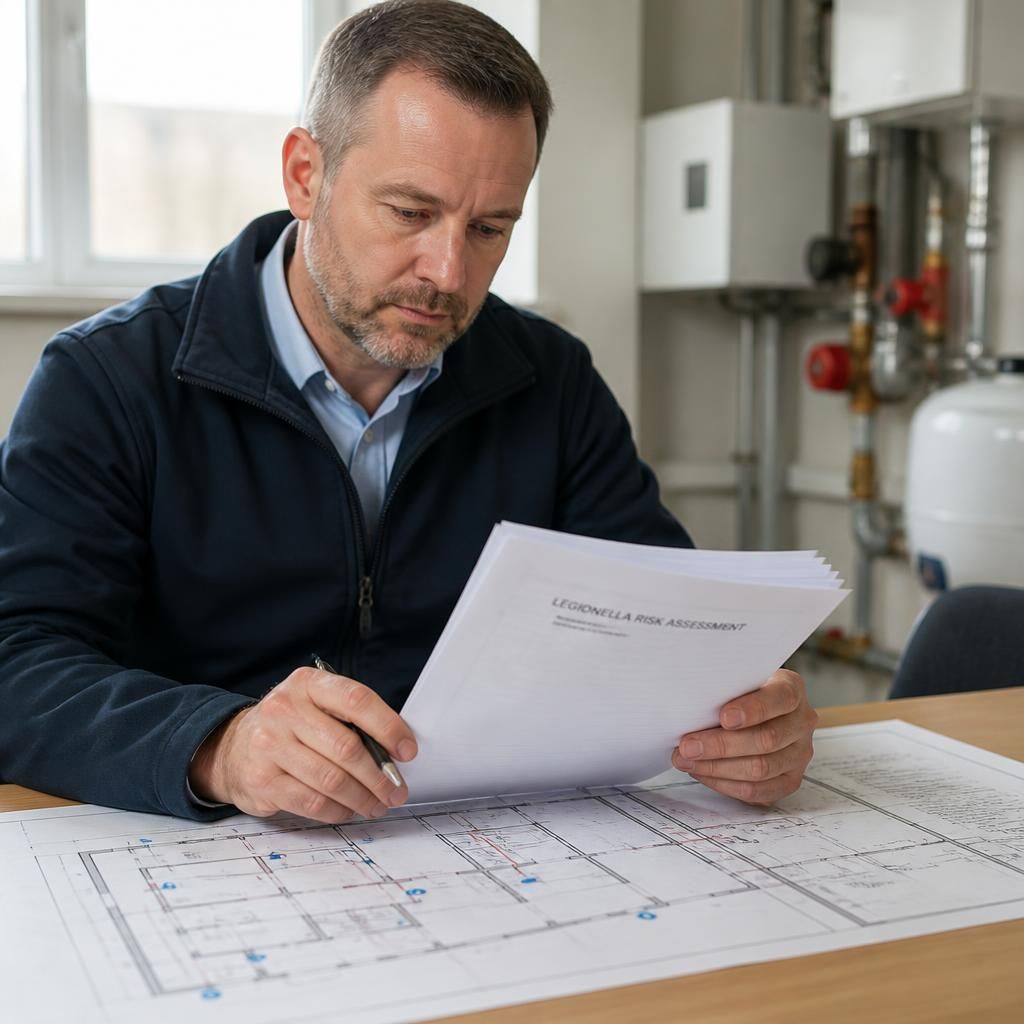
The party responsible for paying for a legionella risk assessment is not necessarily the party responsible for arranging it. Financial arrangements may be set out in a lease, facilities management contract or service agreement, but the organisation with control of the relevant premises or water system must still ensure that a suitable assessment is commissioned.
Contracts should therefore distinguish between the party funding the assessment, the party instructing the assessor and the party responsible for acting on the findings. Reviewing these arrangements before commissioning helps prevent gaps, particularly where a landlord, tenant and managing agent have different responsibilities within the same property.
Clarify who is responsible for arranging your legionella risk assessment
Discuss your premises and management arrangements with Blue Fish Water Management to clarify who should commission the assessment and what information the assessor will need.