
Does a legionella risk assessment require a site visit?
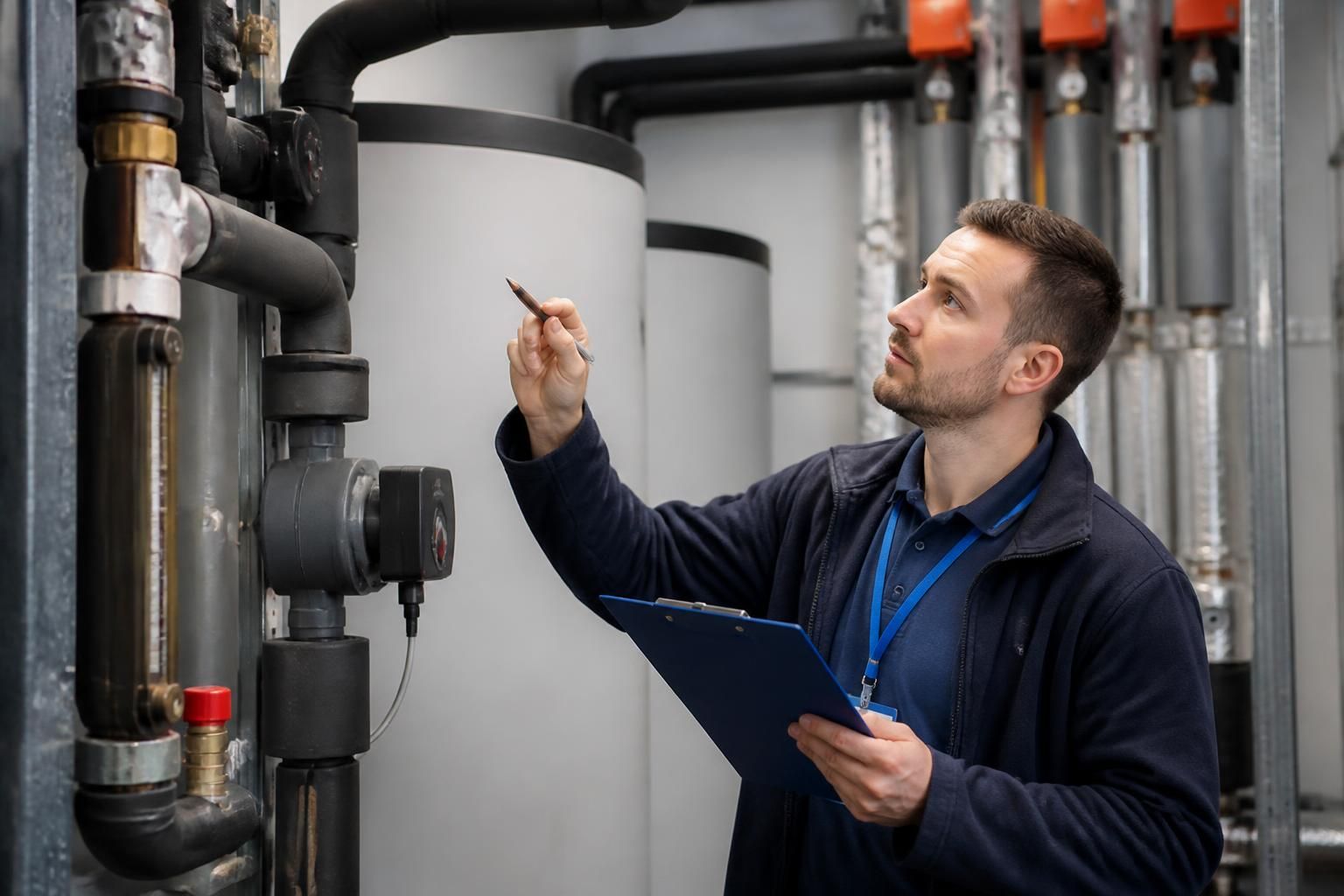
In most commercial, industrial and public-sector settings, a legionella risk assessment requires a site visit. The assessor needs to examine the actual water systems, understand how they are used, identify conditions that may encourage Legionella growth or spread, and verify whether existing control measures are suitable. A remote review can support the assessment by examining records and drawings, but it is not normally an adequate substitute for physical inspection.
There is no universal rule that every risk assessment must follow an identical inspection process. The extent of the site visit should reflect the complexity and risk of the premises. A straightforward installation may need a focused inspection, while a large or multi-building site may require access to plant rooms, storage tanks, calorifiers, distribution pipework and representative outlets across different areas.
During a visit, a competent assessor will typically consider:
- the type, condition and arrangement of hot and cold water systems;
- cold-water storage tanks, hot-water generation and secondary return arrangements;
- outlets such as taps, showers, baths and safety equipment;
- pipework that may create stagnant sections, redundant runs or dead legs;
- water temperatures and the effectiveness of temperature control;
- patterns of occupancy, water use and periods when parts of the system are unused;
- access, cleanliness, insulation, labelling and the condition of plant and components; and
- the competence, responsibilities and procedures used to manage the system.
The assessor will also review relevant information held by the dutyholder. This may include schematic drawings, asset registers, temperature records, flushing schedules, cleaning and disinfection certificates, maintenance reports, previous risk assessments, monitoring results and details of any incidents or remedial work. Documents help establish how the system is intended to operate, but the visit checks whether that documented arrangement matches the installation in practice.
Physical access is important because drawings and records can be incomplete or out of date. An inspection may reveal an unrecorded storage tank, an unused outlet, poorly insulated pipework, a low-use shower, restricted access to plant, or a control measure that is recorded but not being carried out. These findings can materially alter the risk assessment and the actions recommended.
A site visit does not automatically mean that water samples must be taken. Sampling and laboratory testing are separate activities that may be recommended where the circumstances justify them, such as suspected contamination, unexplained control failures or particular health-care or operational risks. Likewise, taking temperatures during an inspection does not replace a broader assessment of system design, use and management.
Remote work can still have a useful role. It may be appropriate for an initial document review, preparing for an inspection, clarifying information after a visit or checking whether previously identified actions have been addressed. A remote-only assessment might be considered for a genuinely simple and well-understood arrangement where the assessor can obtain reliable evidence and can justify the approach. The decision should be based on the system and the risks, not on convenience alone.
A further site visit is normally appropriate when the building or water system has changed, ownership or management responsibilities have changed, control measures have failed, there has been an incident, or the existing assessment no longer reflects the installation. It may also be needed when significant remedial work has altered the system. The assessment should remain suitable and sufficient for the risks present at the time it is completed.
For businesses commissioning an assessment, it is sensible to arrange access to all relevant plant and occupied areas, identify a person who understands the water systems, and gather available records before the assessor arrives. This reduces avoidable gaps in evidence and helps distinguish confirmed findings from matters that require further investigation.
Blue Fish Water Management Ltd combines on-site assessment with document review, water hygiene expertise and practical advice. Its legionella risk assessment work is intended to give businesses a clear account of the hazards identified, the controls already in place and the actions needed to manage the risks effectively.

A site visit is particularly important where water systems or management responsibilities are shared. In a leased building, multi-occupancy premises or property managed by several organisations, the assessment needs to distinguish which parts of the system each dutyholder controls and where responsibilities overlap.
The assessor can use the visit to establish whether tenants, landlords, facilities teams or contractors are responsible for activities such as temperature monitoring, flushing, maintenance and remedial action. This helps ensure that recommendations are assigned to the appropriate party rather than leaving gaps between different organisations.
Blue Fish Water Management Ltd can assess these operational interfaces as part of a practical legionella risk assessment, helping businesses understand not only the condition of the water system but also how its management responsibilities should be coordinated.
Discuss Your Legionella Risk Assessment Requirements
If you are planning a legionella risk assessment, discuss your premises and requirements with Blue Fish Water Management Ltd to establish the appropriate assessment scope. Contact the team to arrange an initial conversation.