
Which water systems require legionella control?
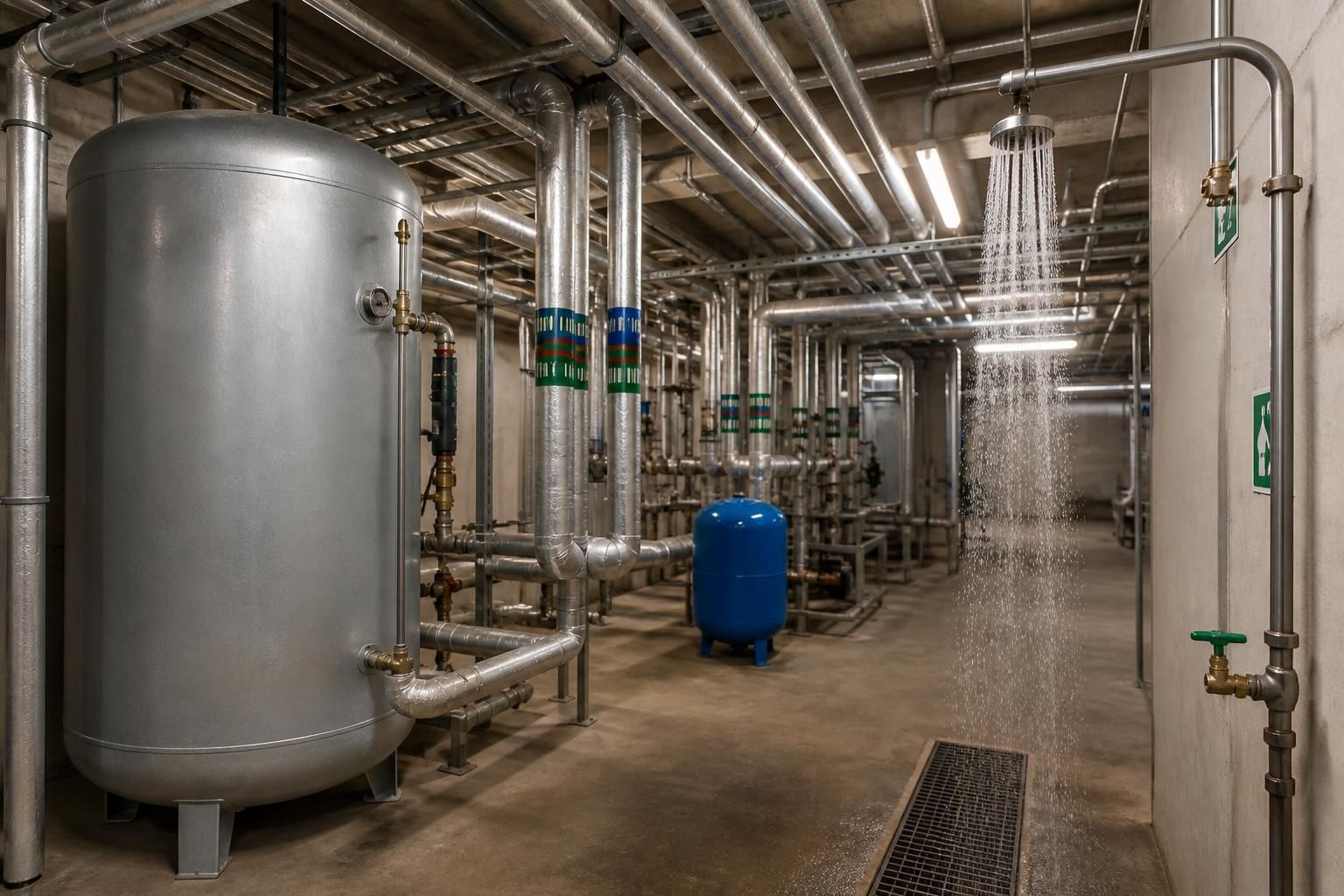
Water systems require legionella control when they could allow Legionella bacteria to grow and spread in contaminated water droplets or aerosols. The highest-risk systems usually store or recirculate water, operate within favourable growth temperatures, contain areas of low flow, or generate airborne spray. The level of control should be determined by a competent risk assessment, rather than by the system type alone.
In commercial and industrial premises, the systems most commonly considered within legionella control arrangements include:
- Hot and cold water services: This includes mains-fed distribution systems, stored cold water, hot water cylinders, calorifiers, primary circuits, secondary return systems and associated pipework. Risk can increase where water is stored for long periods, temperatures are poorly controlled, outlets are infrequently used or pipework contains redundant branches.
- Showers and spray taps: These outlets can create fine droplets that are readily inhaled. Facilities such as offices, hotels, schools, care settings, gyms, sports centres, hospitals and residential accommodation may therefore need controls covering showerheads, hoses, spray plates and their connecting pipework.
- Cooling towers and evaporative condensers: These systems use water and air movement to remove heat. If contaminated water becomes aerosolised, the system can present a significant risk beyond the immediate plant area. Their design, cleanliness, water treatment, monitoring and maintenance require particular attention.
- Spa pools and whirlpool baths: Warm, turbulent water and vigorous agitation can produce aerosols. This combination means that spa pools, hydrotherapy pools and similar installations require carefully managed operation, cleaning, disinfection and monitoring.
- Humidifiers and air-washing equipment: Equipment that sprays, atomises or otherwise disperses water into air can create a route for exposure. The water supply, internal surfaces, reservoirs and aerosol-producing components should be included in the assessment.
- Decorative water features: Fountains, cascades and indoor displays may pose a risk where water is recirculated and droplets or mist are produced. Their location, water temperature, stagnation, maintenance arrangements and proximity to people all affect the required controls.
- Misting and spray systems: Outdoor cooling misters, process sprays and other systems that create airborne droplets can require legionella precautions, particularly where water is stored or recirculated before being discharged through fine nozzles.
- Industrial and process water systems: Manufacturing, engineering, food-processing and other industrial sites may contain tanks, cooling circuits, wash-down systems, spray booths or other equipment capable of supporting bacterial growth or generating aerosols. The assessment should consider the whole process, including water sources, temperatures, circulation and exposure routes.
Storage and distribution arrangements often determine the risk more than the presence of hot or cold water itself. A tank with poor turnover, a calorifier with inadequate temperature control, a long unused branch or a disconnected outlet can create conditions in which bacteria multiply. Pipework that is oversized for actual demand may also experience low flow. These issues can occur in apparently conventional systems and should be identified through inspection and system monitoring.
Particular attention is needed for low-use outlets. Guest rooms, vacant offices, emergency showers, seasonal facilities, staff kitchens, seldom-used toilets and external taps may retain water for extended periods. Flushing an outlet without understanding the wider system may not address the underlying cause, especially if the branch is redundant or connected to a poorly circulating section of pipework. Where an outlet is no longer required, removing the redundant branch is often more appropriate than leaving it in place.
Systems serving people who may be more susceptible to infection require a proportionate but careful approach. This includes healthcare premises, care homes, sheltered accommodation, hospitals, some residential settings and facilities used by people with weakened immune systems or significant underlying health conditions. The consequences of exposure may be more serious in these environments, so the risk assessment should consider both the water system and the characteristics of the people using it.
Not every water system presents the same level of danger. A simple mains-fed cold water arrangement with frequent turnover and no aerosol-generating outlets may present a lower risk than a large stored-water system. However, lower risk does not automatically mean no control is needed. Changes in occupancy, alterations to pipework, periods of vacancy, faults in temperature control, or the introduction of showers and spray devices can change the risk profile.
Some systems are also outside the typical scope of a building’s main domestic water assessment but still need consideration. Examples include fire sprinkler testing arrangements, emergency drench showers, vehicle-washing equipment, irrigation systems, dental units, laboratory equipment and water supplied to specialist plant. The key questions are whether water can stagnate, whether temperatures support growth, whether nutrients or deposits are present, and whether the system can create inhalable droplets.
For non-domestic premises, the responsible person should arrange a suitable and sufficient legionella risk assessment and implement controls that reflect the findings. In the UK, duties under health and safety legislation and the principles set out in the Health and Safety Executive’s Approved Code of Practice L8 and HSG274 commonly apply to employers, landlords and those responsible for premises or water systems. The precise duty depends on the premises, system and management arrangements. Domestic owner-occupied homes are generally treated differently from workplaces and commercial premises, although landlords and providers of accommodation may have specific responsibilities.
A proper assessment should map the system from the incoming water supply through storage, heating, distribution and discharge. It should identify tanks, calorifiers, pumps, valves, control devices, outlets, dead legs, temperature zones and aerosol-generating equipment. It should also review usage patterns, vulnerable occupants, maintenance records, previous test results, water quality and any periods when the premises or part of the system has been unused.
Typical control measures may include maintaining appropriate temperatures, preventing stagnation, removing redundant pipework, cleaning and disinfecting tanks, keeping outlets and fittings clean, servicing equipment, managing low-use outlets and carrying out monitoring or sampling where the assessment indicates it is necessary. Testing is not a substitute for effective system management: a negative sample provides information about the sampled point at that time, but does not remove the need to control the conditions that allow Legionella to grow.
The practical answer is therefore broader than a list of named appliances. Any system that stores or recirculates water, creates aerosols, has sections of low flow, or combines favourable temperatures with susceptible users should be reviewed. The assessment should then define which parts require routine monitoring, cleaning, disinfection, maintenance, records and periodic reassessment.
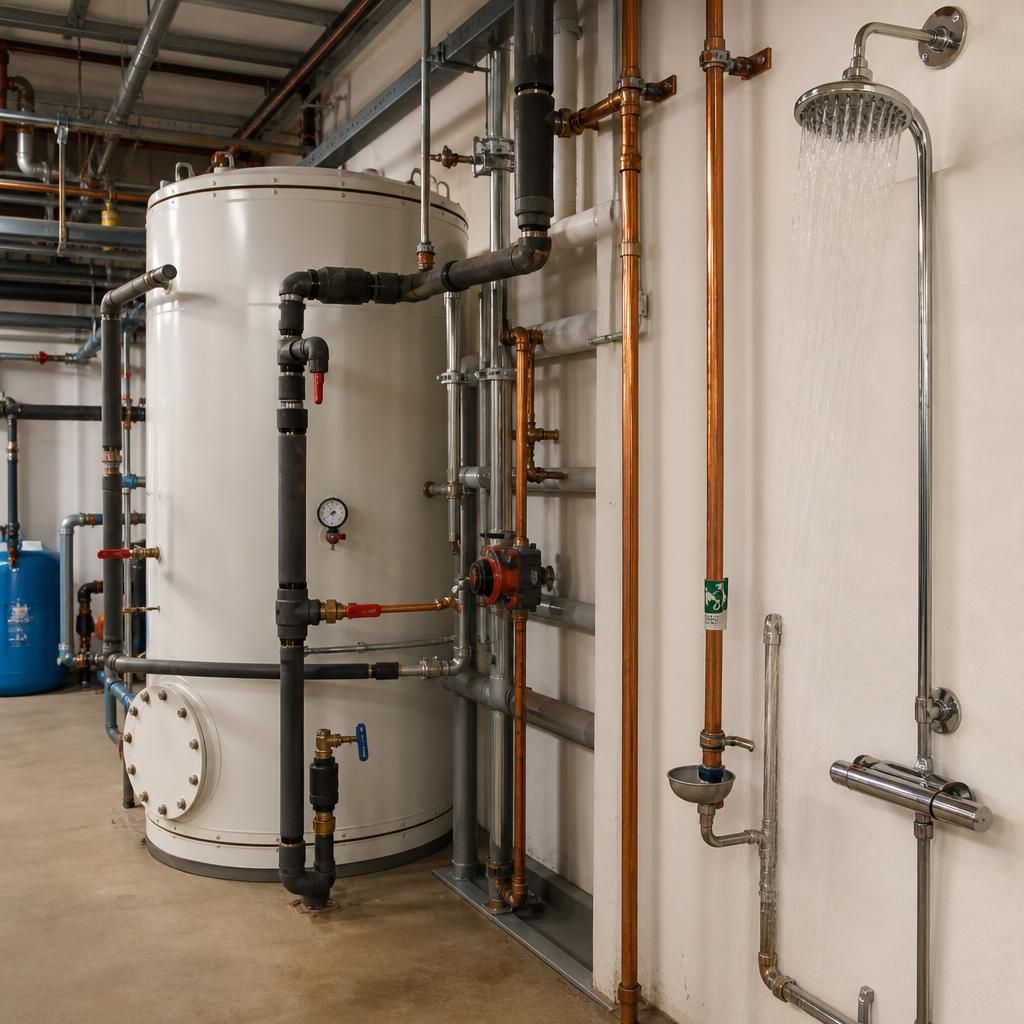
Temporary and recently altered water systems can require legionella control even when they are not part of a building’s established services. Construction welfare units, temporary accommodation, newly installed pipework and systems brought back into use after refurbishment may contain water that has been stored or left unused while the work is completed.
Before these systems are occupied or connected to an existing supply, their design, water use, outlets and commissioning arrangements should be reviewed. The responsible person should confirm that appropriate flushing, cleaning or disinfection has been completed where the assessment identifies a need, and that the system is included in ongoing monitoring after handover. A change to the system can alter the risk, so the legionella assessment should be updated rather than relying solely on previous records.
Assess which water systems require legionella control
If you need to determine which parts of your premises require legionella control, arrange a professional legionella risk assessment to review the system and its use. Blue Fish Water Management Ltd can provide practical advice to help define appropriate control measures.