
What happens if legionella control checks identify a water system deficiency?

A water system deficiency is a condition that could weaken legionella control, such as unsuitable temperatures, poor circulation, stagnation, excessive storage, defective components or inadequate management records. The finding is reviewed by a competent person to establish its significance, identify the underlying cause and determine what action is proportionate to the risk.
The first step is to define the deficiency accurately. A check may identify a physical issue, a monitoring failure, a procedural gap or a combination of these. For example, an outlet may be operating outside the intended temperature range, a rarely used branch may be allowing water to stagnate, or required temperature records may be incomplete. The finding should be linked to the relevant part of the water system rather than recorded as a vague statement that the system is “not compliant”.
- Physical deficiencies: dead legs, redundant pipework, incorrectly configured valves, damaged insulation, poor tank condition or inaccessible components.
- Operational deficiencies: inadequate flushing, irregular monitoring, ineffective temperature control or a failure to maintain appropriate hot and cold water conditions.
- Management deficiencies: unclear responsibilities, incomplete records, outdated schematics, missing procedures or insufficient staff instruction.
- Testing deficiencies: unsuitable sampling arrangements, missing results, inconsistent sampling or results that require investigation.
The responsible person should then consider the potential exposure and the people who may be affected. Risk is influenced by the type and complexity of the system, how often outlets are used, whether aerosols may be generated, the condition of the water infrastructure and the vulnerability of building users. A deficiency requiring attention does not necessarily mean that the premises must close or that an infection has occurred. It does mean that the existing control measures need to be examined and, where necessary, strengthened.
Immediate precautions depend on the nature of the finding. These may include restricting use of a particular outlet, preventing aerosol-generating activities, arranging temporary alternative facilities or increasing supervision of the affected control measure. Such steps should be based on the assessment rather than applied automatically to an entire building. If there is evidence of contamination, a significant loss of temperature control or a potential exposure involving vulnerable people, specialist advice should be obtained promptly and the issue escalated through the organisation’s health and safety arrangements.
Corrective work should address the cause as well as the visible symptom. Adjusting a thermostat may not resolve a deficiency if poor circulation, scale, faulty equipment or an incorrectly designed return pipe is preventing the system from achieving stable conditions. Remedial options can include removing redundant pipework, improving insulation, repairing or replacing components, modifying storage arrangements, restoring circulation, cleaning and disinfecting affected parts, or changing outlet-use and flushing procedures.
Each action should have a clear owner, priority and completion record. The action plan normally sets out:
- the location and description of the deficiency;
- the risk or control failure associated with it;
- the temporary precautions required before permanent work is completed;
- the remedial measure to be taken;
- the person or contractor responsible for the work;
- the evidence needed to confirm completion; and
- the date and method for reviewing whether the action has been effective.
Follow-up checks are important because completing an instruction is not the same as proving that control has been restored. Verification may involve repeat temperature measurements, inspection of tanks and pipework, confirmation that outlets are being used or flushed as intended, review of monitoring records, or further water sampling where appropriate. Samples should be interpreted alongside the condition and operation of the system; a laboratory result alone cannot demonstrate that every underlying control problem has been resolved.
Where sampling identifies legionella, the result should be assessed with the system information and the level of exposure in mind. The appropriate response may include investigating the cause, reviewing control measures, carrying out cleaning or disinfection, increasing monitoring and taking additional precautions. The action should be documented, including the reasoning behind the decision and any further checks required.
Once corrective measures have been completed, the risk assessment and written control scheme should be updated where the deficiency has changed the system, its operation or the way it is managed. Updated records may include revised schematics, asset information, monitoring instructions, flushing schedules, contractor reports, test certificates and evidence of staff training. If the deficiency reveals a recurring weakness, the organisation should review whether its inspection frequency, maintenance arrangements or staff competence remain suitable.
Deficiencies should remain visible until they are formally closed. A finding is normally considered closed only when the remedial action has been completed, the result has been checked, supporting evidence has been retained and the responsible person is satisfied that the control measure is working consistently. If work is deferred, the reason, interim controls and revised target date should be recorded rather than allowing the issue to disappear from routine reports.
For complex systems or findings that cannot be explained by routine checks, an independent legionella risk assessment, targeted survey, water testing or specialist remedial investigation may be appropriate. The purpose is to turn an isolated observation into a controlled corrective process, with evidence that the water system is being managed in accordance with its assessed risks.
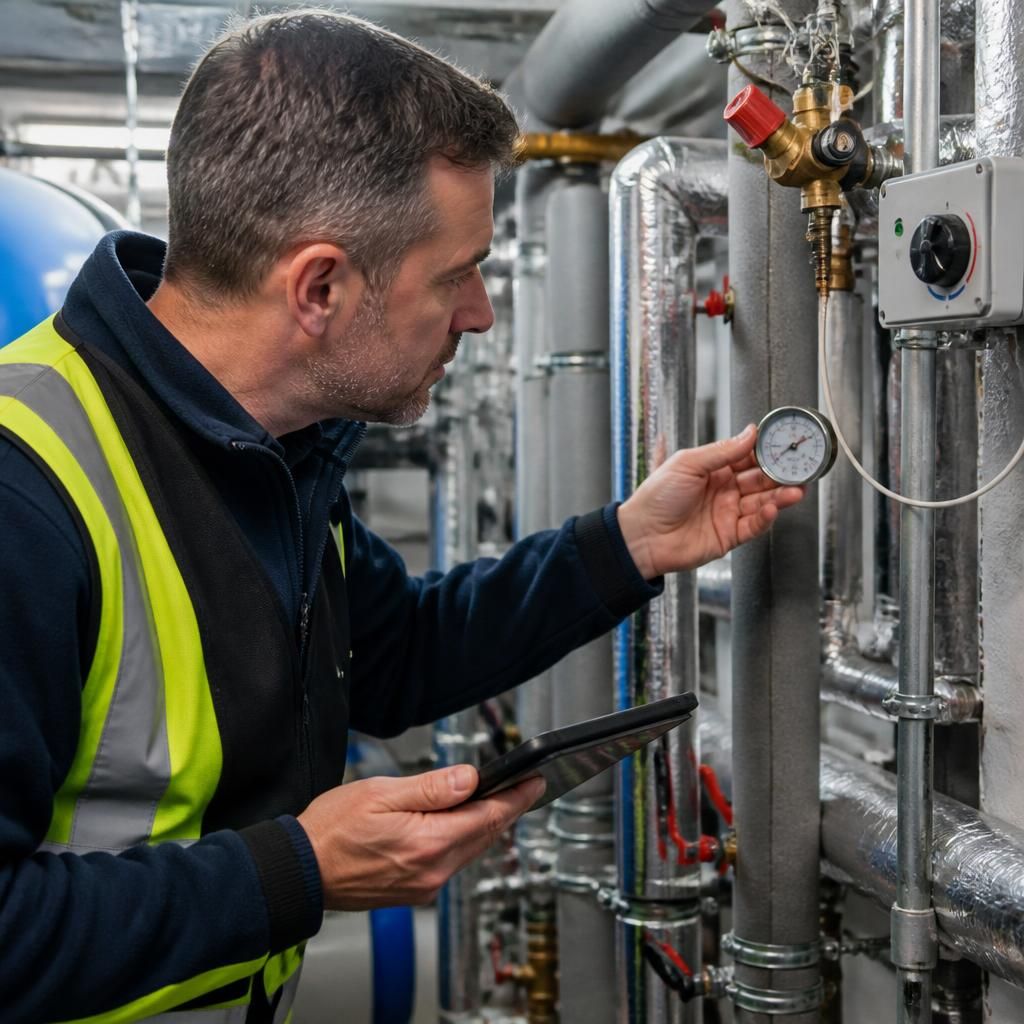
When a water system deficiency is identified, the key outcome is a documented decision about its significance and the action it requires. The responsible person should be able to show why the issue was prioritised, what control measure was affected, what was done to manage the risk and how the result was verified. This creates a clear record for internal review, compliance audits and future risk assessments, while helping ensure that minor observations are not confused with conditions requiring urgent intervention.
Need help resolving a legionella control deficiency?
If a legionella control check has identified a deficiency, contact Blue Fish Water Management Ltd to discuss the findings and the appropriate next step. Their team can help assess the issue and identify proportionate measures to support effective water system control.