
What happens after legionella testing identifies an issue?
When legionella testing identifies an issue, the result should be assessed against the system’s risk profile and followed by appropriate remedial action, such as cleaning, disinfection or changes to temperature control. The system should then be retested where necessary, with the findings, actions and ongoing monitoring recorded for compliance purposes.
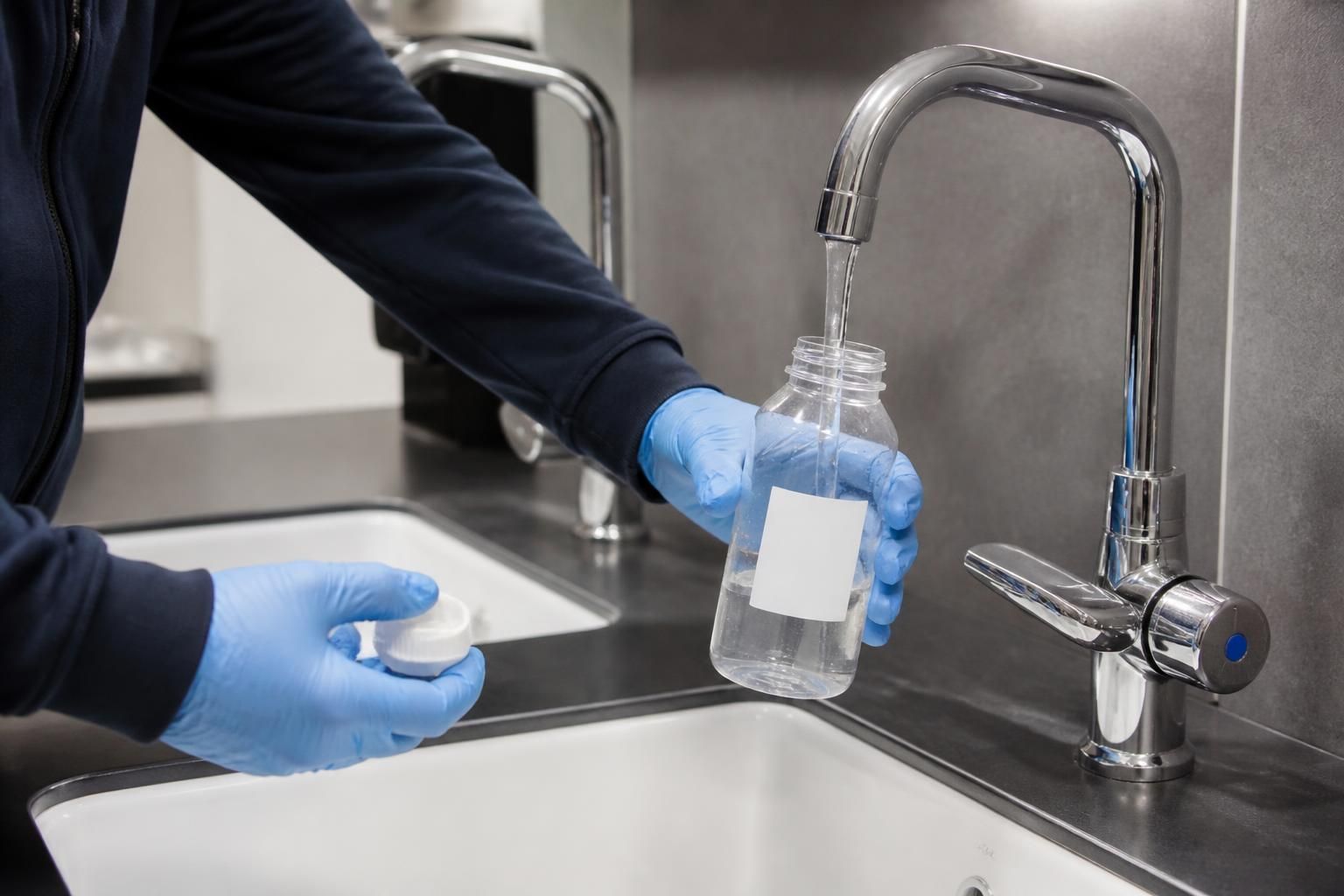
A concerning legionella result triggers a documented, risk-led response rather than an automatic conclusion that the entire water system is unsafe. The responsible person should establish what the result means in context, reduce any immediate exposure risk, identify the conditions that allowed the problem to arise, and verify that corrective measures have been effective.
1. Review the result in context
The laboratory report should be considered alongside the sample location, the type of outlet or system tested, the condition of the water system, previous results and the site’s legionella risk assessment. A single finding may indicate a localised problem, wider system contamination or a sampling issue; the result alone cannot determine the full extent of the risk.
The review should also consider who may be exposed. Healthcare settings, care environments, accommodation, workplaces with showers and premises used by people who are more vulnerable to Legionnaires’ disease may require a more cautious response. If the result is unclear, unexpected or associated with a significant potential exposure, competent technical advice should be obtained before deciding the next steps.
2. Put proportionate interim controls in place
While the cause and extent of the issue are being investigated, the responsible person may need to control access to affected outlets or suspend activities that create water droplets or aerosols. This could include restricting use of showers, spray taps, spa facilities or other outlets, depending on the system and the people exposed.
Any temporary measure should be practical and clearly communicated to staff, contractors and building users. It should not create a separate water hygiene problem through prolonged stagnation. Where a serious risk to health is suspected, the matter should be escalated through the organisation’s health and safety arrangements and to the relevant public health or regulatory body where appropriate.
3. Investigate the underlying cause
Corrective work should address why legionella was able to persist, not only remove contamination from the sampled outlet. An investigation may examine:
- hot and cold water temperatures at storage vessels, distribution points and outlets;
- low-use outlets, dead legs, redundant pipework and areas of stagnation;
- the condition and cleanliness of tanks, calorifiers and other plant;
- recirculation, balancing and flow problems;
- faulty thermostatic mixing valves, control equipment or monitoring arrangements;
- recent alterations, occupancy changes, shutdowns or maintenance work; and
- whether the written control scheme is being followed in practice.
This investigation can show whether the appropriate response is local cleaning, system-wide disinfection, engineering modification, improved flushing, removal of redundant pipework or a combination of measures. Remedial work should be planned and carried out by people with suitable competence for the system involved.
4. Update the control arrangements
The finding should be linked to the site’s written scheme or water safety plan. That may require changes to temperature checks, outlet flushing, cleaning schedules, sampling locations, contractor responsibilities or escalation procedures. If the incident exposes a weakness in the original assessment, the risk assessment and associated records should be amended rather than leaving the existing arrangements unchanged.
Responsibilities should be clear. The responsible person remains accountable for ensuring that action is taken, while engineers, maintenance teams, laboratories and specialist consultants should understand the specific tasks allocated to them. Staff who operate or maintain the system may also need additional instruction if the investigation identifies a procedural failure.
5. Verify the result after corrective work
Follow-up sampling should be based on the nature of the finding and the remedial work completed. The sampling plan may include the original outlet, nearby outlets and representative points elsewhere in the system so that the outcome is not judged from one location alone. Samples should be collected correctly, sent to a suitable laboratory and interpreted with the relevant operational information.
A satisfactory follow-up result is evidence about the condition of the system at the time of sampling; it is not a substitute for ongoing control. If results remain unsatisfactory, the business should revisit the investigation, check that the work was completed effectively and consider whether an unaddressed design, maintenance or management issue is continuing to support bacterial growth.
6. Keep a complete audit trail
Records should show the original laboratory report, the assessment of risk, decisions made, people notified, temporary controls, remedial work, follow-up samples and any changes to the water safety plan. Keep details of dates, locations, contractors, results and actions outstanding. These records demonstrate how the business responded and help future risk assessors identify recurring problems.
For organisations managing several premises or complex systems, reviewing incidents across sites can reveal common weaknesses in design, maintenance or contractor control. A legionella result should therefore feed into routine management review, not be treated as a standalone laboratory document.
Blue Fish Water Management can support businesses with the technical review, investigation, water hygiene controls, testing strategy and compliance records needed after an adverse finding. The appropriate response depends on the result, the system and the people who may be exposed, so actions should be proportionate, documented and verified by competent professionals.
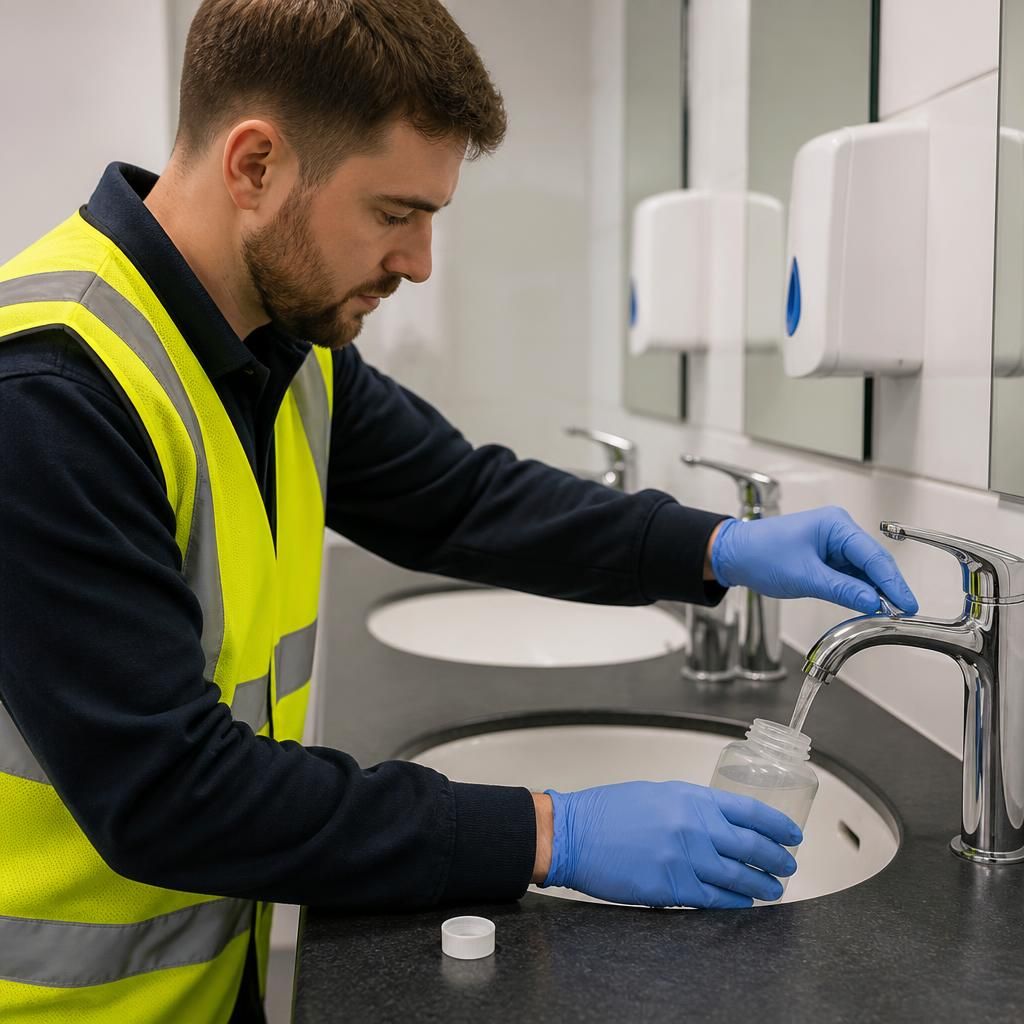
Closure of a legionella incident should be treated as a formal management decision, not simply the receipt of a later laboratory report. Before affected parts of the system return to normal use, the responsible person should confirm that the remedial work is complete, any required follow-up testing has been reviewed and the control measures needed to prevent recurrence are operating.
This provides a clear point at which restrictions can be lifted or further action authorised. It also separates completed corrective work from outstanding recommendations, so maintenance teams and building users are not given the impression that the issue has been resolved when important controls still require attention.
Get advice after legionella testing identifies an issue
Contact Blue Fish Water Management to discuss the next steps for your site after an adverse legionella test result and establish what further advice is appropriate.