
What does legionella awareness training cover?
Legionella awareness training covers the health risks associated with Legionella bacteria, how the bacteria can grow and spread in water systems, and the legal duties involved in managing those risks. It also explains practical prevention measures, monitoring requirements, reporting procedures and the actions employees should take to help maintain safer water systems.
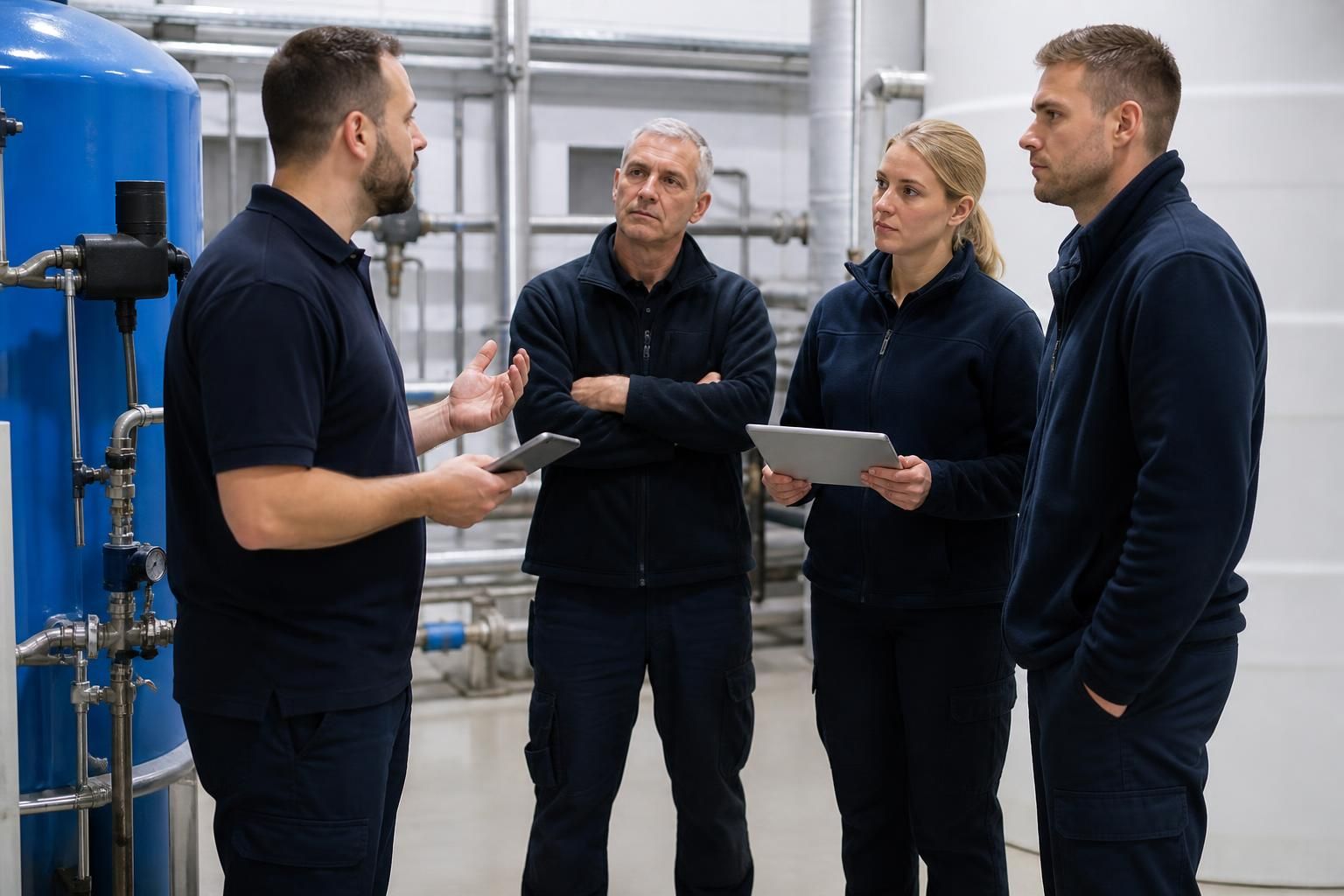
Legionella awareness training is introductory instruction for people whose work may affect the safety of a building’s water systems. It gives employees enough understanding to recognise relevant risks, follow site procedures and carry out their assigned responsibilities without treating them as water hygiene specialists.
The course content should be proportionate to the attendee’s role. A general employee may need to understand how everyday activities can affect water safety, while facilities staff, contractors and managers may require more detailed instruction on their specific duties. Training commonly covers:
- the purpose of the organisation’s legionella control arrangements;
- which people, areas and water systems fall within those arrangements;
- the responsibilities assigned to employees, managers, contractors and the person overseeing water hygiene;
- how site procedures apply to outlets, equipment and areas used during normal work;
- the importance of following written controls rather than making unapproved changes to a water system;
- how to recognise unusual conditions, defects or changes that may require escalation; and
- where to find relevant procedures, records and sources of further guidance.
Awareness training should also explain how work activities can influence the condition of a water system. For example, maintenance, refurbishment, changes to occupancy, alterations to outlets and periods of limited use may need to be managed through the organisation’s established controls. Employees should understand when they must seek instruction before starting work and when a task must be referred to a suitably competent person.
A useful course links general principles to the actual premises. Site-specific content may identify the types of water outlets present, restricted or higher-risk areas, access arrangements, isolation procedures and the records employees may be expected to complete. This helps prevent a gap between understanding the subject in theory and applying the organisation’s arrangements correctly.
Training may be delivered through a structured presentation, discussion, workplace briefing or a combination of methods. Practical examples and short knowledge checks can be used to confirm that attendees understand their role, rather than simply attending a session. More advanced instruction may be needed for people who manage control schemes, interpret technical information, coordinate contractors or make decisions about remedial work; awareness training does not replace that competence.
Organisations should keep suitable training records, including the attendee’s name, date, course content and any assessment or follow-up required. The need for refresher training should be considered when responsibilities change, procedures are revised, a person returns to a relevant role or an incident or review shows that understanding is insufficient. The training programme should therefore form part of the wider management arrangements for water safety, not operate as a one-off exercise.
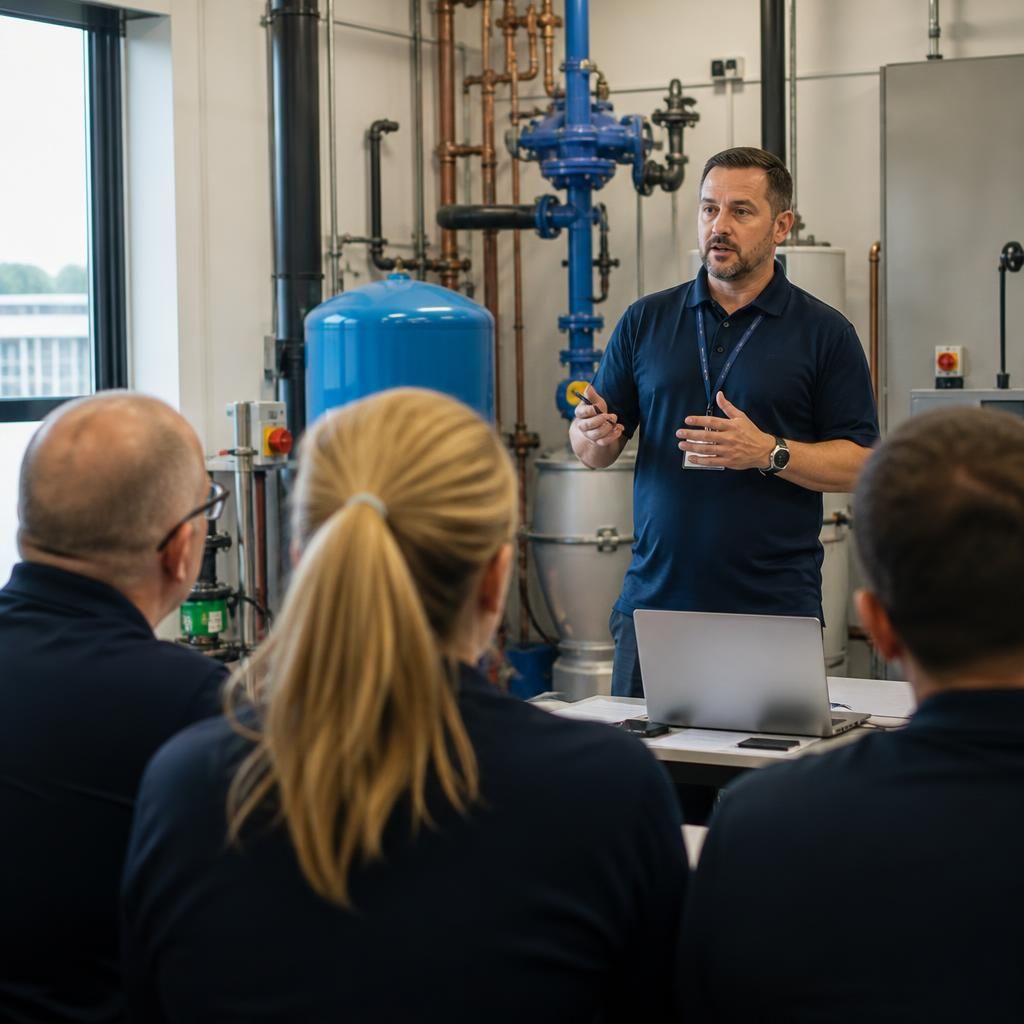
Legionella awareness training should explain why control measures matter by outlining how people can be exposed to contaminated water droplets or aerosols, and the serious respiratory illness that Legionella bacteria can cause. It should also identify situations that may increase risk, such as poorly maintained outlets, stagnant water and equipment that produces an aerosol. This context helps employees understand why they must report defects, avoid interfering with controls and follow instructions for flushing, cleaning, isolation or restricted use. Training may also explain the organisation’s procedure for reporting suspected exposure or illness, while making clear that health concerns should be referred to an appropriate medical professional.
Discuss your legionella awareness training needs
Discuss your legionella awareness training needs with Blue Fish Water Management Ltd to determine the appropriate scope and level of instruction for your organisation.