
When should a legionella risk assessment be reviewed?
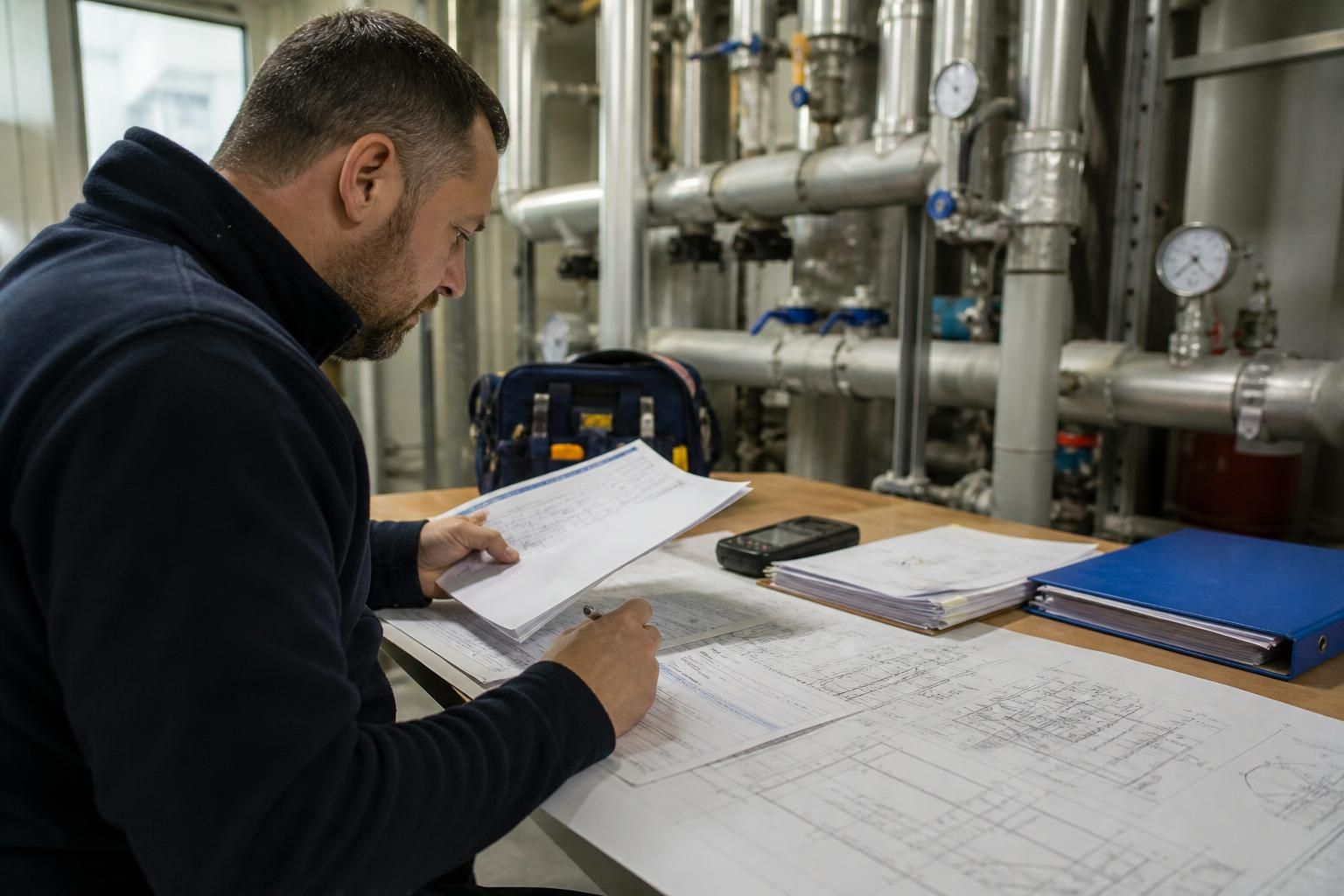
A legionella risk assessment should be treated as a live management document rather than a certificate that remains valid indefinitely. A review checks whether the assessment still accurately describes the water systems, people at risk, control measures and management arrangements in the premises. It should confirm that the findings remain reliable and identify any action needed to maintain effective control.
What a review should examine
The reviewer should compare the existing assessment with the current operation of the site. This normally includes checking:
- Whether all hot and cold water systems, outlets, storage vessels, showers, cooling systems and other relevant assets are still included.
- Whether systems have been removed, altered, extended, recommissioned or taken out of regular use.
- Whether the building’s occupancy, use or layout has changed in a way that affects exposure to aerosols or stagnant water.
- Whether groups who may be more susceptible to legionnaires’ disease are present, including older people, individuals with impaired immunity and people with certain underlying health conditions.
- Whether the nominated duty holder, responsible person, contractors and reporting lines are still correct.
- Whether written control schemes, inspection routines, temperature checks, cleaning arrangements and remedial procedures reflect what is actually being done.
- Whether monitoring records, laboratory results, incidents, complaints or failed control checks suggest that the assessment’s conclusions need reconsideration.
A review should not be limited to checking the date on the front of the document. It should test the assumptions behind the assessment. For example, an outlet described as infrequently used may now be regularly occupied, while a storage tank or section of pipework may have developed conditions that were not present when the original assessment was completed.
Events that require particular attention
Certain changes should prompt a targeted review before the next planned review point. These include refurbishment, extensions, changes to pipework, installation of new water equipment, alterations to hot water generation, changes in water demand and prolonged periods of partial or complete building closure. A change in landlord, managing agent, duty holder or maintenance contractor can also affect how responsibilities are controlled and recorded.
Changes in the people using a building may be equally important. A premises converted to healthcare, supported living, residential accommodation, hospitality or another use involving vulnerable occupants may require the risks to be reconsidered. The same applies where work patterns change, parts of a building become vacant, or facilities that were previously used intermittently become more heavily used.
Monitoring results and incidents
Evidence from routine monitoring should feed into the review process. Repeated temperature failures, poor flushing records, defects in thermostatic mixing arrangements, inadequate cleaning or unsatisfactory water testing results may indicate that the control scheme is not operating as intended. A single abnormal result may require investigation and proportionate action; repeated or unexplained findings should lead to a more thorough examination of the assessment and the underlying system.
Any confirmed or suspected case of legionnaires’ disease associated with the premises, or an unusual cluster of illness, should be treated as a significant reason to reassess the risks. The investigation should consider whether the source, exposure routes and existing controls were correctly identified, and whether additional remedial measures are required.
Who should carry out the review?
The duty holder remains responsible for ensuring that the assessment is suitable and sufficiently up to date. A competent person may carry out the work, provided they have the knowledge, experience and ability to assess the relevant water systems and risks. More complex premises, extensive systems or substantial changes may require specialist input rather than an administrative update by someone unfamiliar with the installation.
The person reviewing the assessment should have access to current schematic drawings, asset information, maintenance records, monitoring logs, water test results and details of recent building or system changes. Where the physical system differs from the drawings or written description, those discrepancies should be resolved rather than carried forward.
What should happen after the review?
The outcome should be recorded clearly. A review may conclude that the assessment remains suitable, that specific sections need updating, or that a new assessment is necessary. It should identify actions, responsible persons and target dates, while retaining evidence of decisions and completed remedial work.
It is useful to distinguish a document review from a full reassessment. A document review may confirm that the existing evaluation remains accurate after routine checks. A significant alteration, a previously unrecognised hazard or evidence that controls are ineffective may require a fresh site assessment, updated schematics and a revised written control scheme.
Keeping the assessment aligned with the current water system helps the responsible person demonstrate that legionella risks are being actively managed. Blue Fish Water Management Ltd can support organisations with risk assessments, water system reviews, monitoring, testing and compliance advice tailored to the way their premises operate.

A legionella risk assessment does not have a fixed expiry date. The appropriate review interval should reflect the complexity of the water systems, the building’s use and the vulnerability of occupants. A straightforward, stable system may follow the organisation’s planned review cycle, while complex premises or higher-risk environments may justify more frequent scrutiny.
The planned date should be recorded within the management arrangements, with earlier review triggers clearly understood by those responsible for water safety. This avoids treating the assessment as valid simply because its scheduled review date has not arrived, particularly where new information raises doubt about the adequacy of existing controls.
Discuss your legionella risk assessment review
Discuss your legionella risk assessment review with Blue Fish Water Management Ltd to establish the most appropriate next step for your premises.