
What does legionella testing reveal about water system control?
Legionella testing reveals whether the organism is present in sampled water and provides evidence of how effectively temperature control, monitoring and other safeguards are working. Results can identify hidden risks or changes in system performance, but must be interpreted alongside the water system’s risk assessment, control records and sampling conditions.
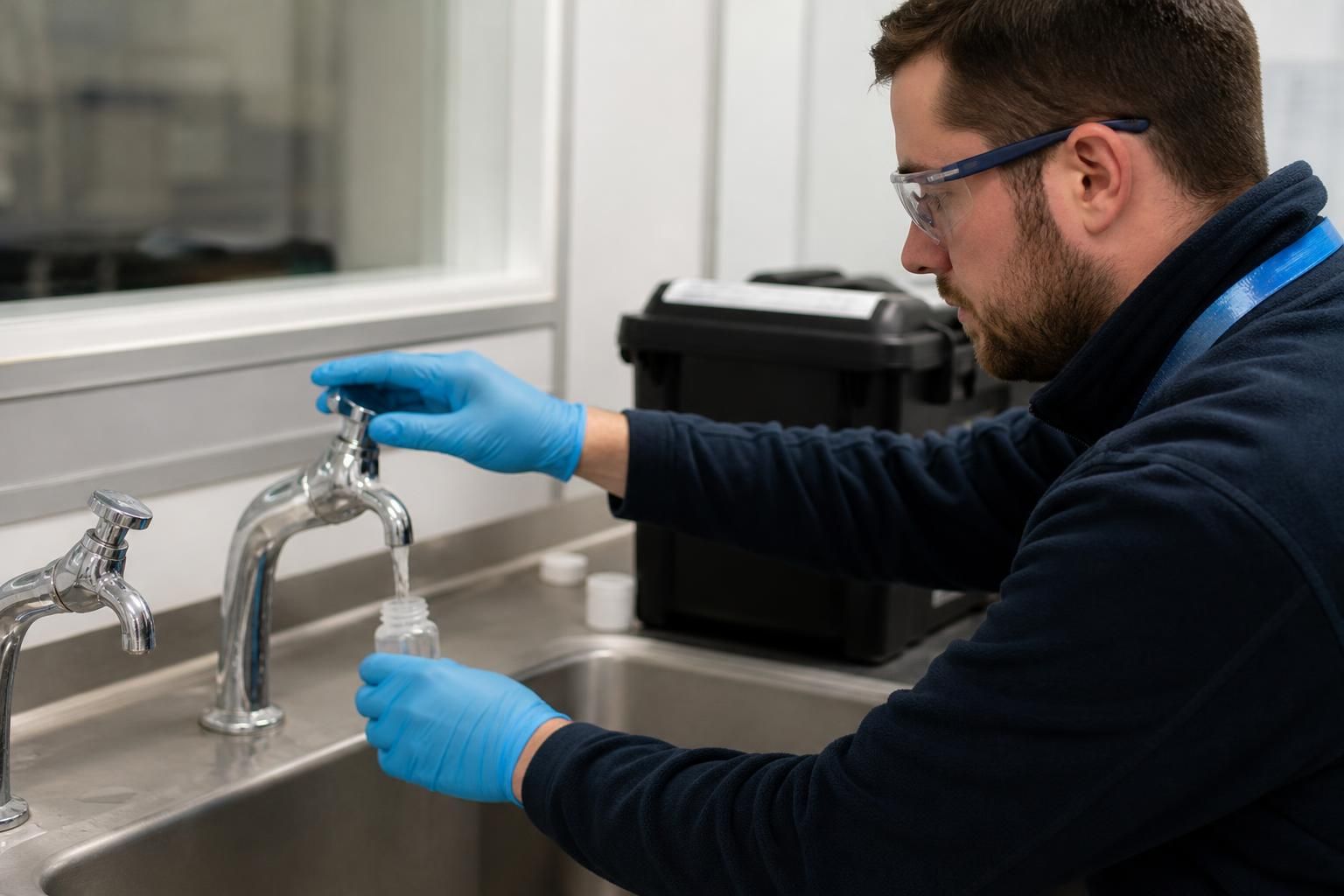
Legionella testing provides microbiological evidence about whether a water system is supporting or suppressing Legionella growth. It can identify contamination at particular outlets or system locations, indicate the level and type of Legionella detected, and expose differences between parts of the system. However, a laboratory result is one part of the control picture rather than a standalone declaration that a system is safe or compliant.
The result may reveal whether control measures are being applied consistently. For example, contamination in a storage vessel, return loop or infrequently used outlet can point to local conditions that are not being managed in the same way as the main distribution system. Those conditions may include inadequate circulation, poor turnover, vulnerable pipework, sediment or biofilm. Comparing results from several sampling points can help identify whether the issue is isolated or more widely distributed.
Testing can also show whether control has changed over time. A sequence of results from the same locations may identify a developing trend, recurring contamination or a change following remedial work. A single negative sample does not demonstrate that Legionella is absent from every part of the system: the sample represents the water collected from a specific point at a specific time. Sampling plans therefore need to reflect the system design, its risk profile and the locations where exposure could occur.
The meaning of a result depends on how the sample was collected and what information accompanies it. A useful interpretation considers:
- the outlet or component sampled, including whether it was a sentinel outlet, storage vessel, calorifier, return or low-use section;
- whether the sample was taken as a routine, investigative or post-remedial sample;
- the water temperature and operating condition at the time of sampling;
- whether the outlet had been used, flushed or disinfected before collection;
- the Legionella species identified and the reported concentration;
- the condition of the system, including deposits, scale, corrosion, dead legs and areas of stagnation; and
- the relationship between the result and previous records, risk assessments and maintenance activity.
This context matters because the same laboratory finding can have different implications in different systems. A result from a poorly used outlet may indicate a localised problem, whereas similar findings across multiple points may suggest a broader failure in system management. Testing may also detect contamination where routine temperature checks appear satisfactory, showing that temperature records alone do not describe every condition within a complex water system.
Testing can reveal weaknesses in the practical operation of control measures, rather than simply identifying a laboratory problem. Repeated findings may prompt investigation into whether outlets are being used as intended, whether flushing arrangements are effective, whether monitoring covers the relevant parts of the system, or whether maintenance has altered the original design. It may also indicate that a control measure is documented but not being carried out consistently.
A positive result does not, by itself, establish the source of contamination or determine the correct remedial response. The responsible person should consider the result alongside the risk assessment and the characteristics of the premises, including the people who may be exposed and the way water systems are used. Depending on the circumstances, further investigation, additional sampling, cleaning, disinfection, engineering work or changes to operational controls may be appropriate. The response should be proportionate to the evidence and recorded clearly.
Good testing records allow an organisation to demonstrate how results were assessed and what followed. They should link the laboratory report to the sampling location, date, sampler, system conditions, relevant control records and any corrective action. Where work is undertaken, follow-up testing can help establish whether the intervention changed the conditions that led to the finding. It should not be treated as a substitute for continuing monitoring and management.
For businesses, the main value of legionella testing is therefore diagnostic. It can confirm contamination, identify areas requiring closer attention, reveal variation within a system and provide evidence for reviewing control arrangements. Its findings are most useful when interpreted by someone who understands both the laboratory report and the physical water system, rather than assessed in isolation from the wider legionella management process.

The reliability of legionella testing also depends on sample integrity. Collection, labelling, storage and transport must preserve the sample in a condition suitable for analysis; delays, contamination or incorrect identification of the sampling point can make the result difficult to interpret. The laboratory report should therefore be read alongside the sampling record, including the collection time, location and handling details.
This helps distinguish a meaningful finding from a result affected by weaknesses in the sampling process. If the result does not align with the system conditions or previous evidence, the appropriate response may be to verify the sampling information and investigate further rather than draw an immediate conclusion about the whole water system.
Discuss what your legionella testing results reveal
Need help interpreting what your legionella testing results mean for ongoing water system control? Discuss the findings with Blue Fish Water Management Ltd to identify appropriate next steps within your compliance arrangements.