
What does a landlord’s legionnaires disease check involve?
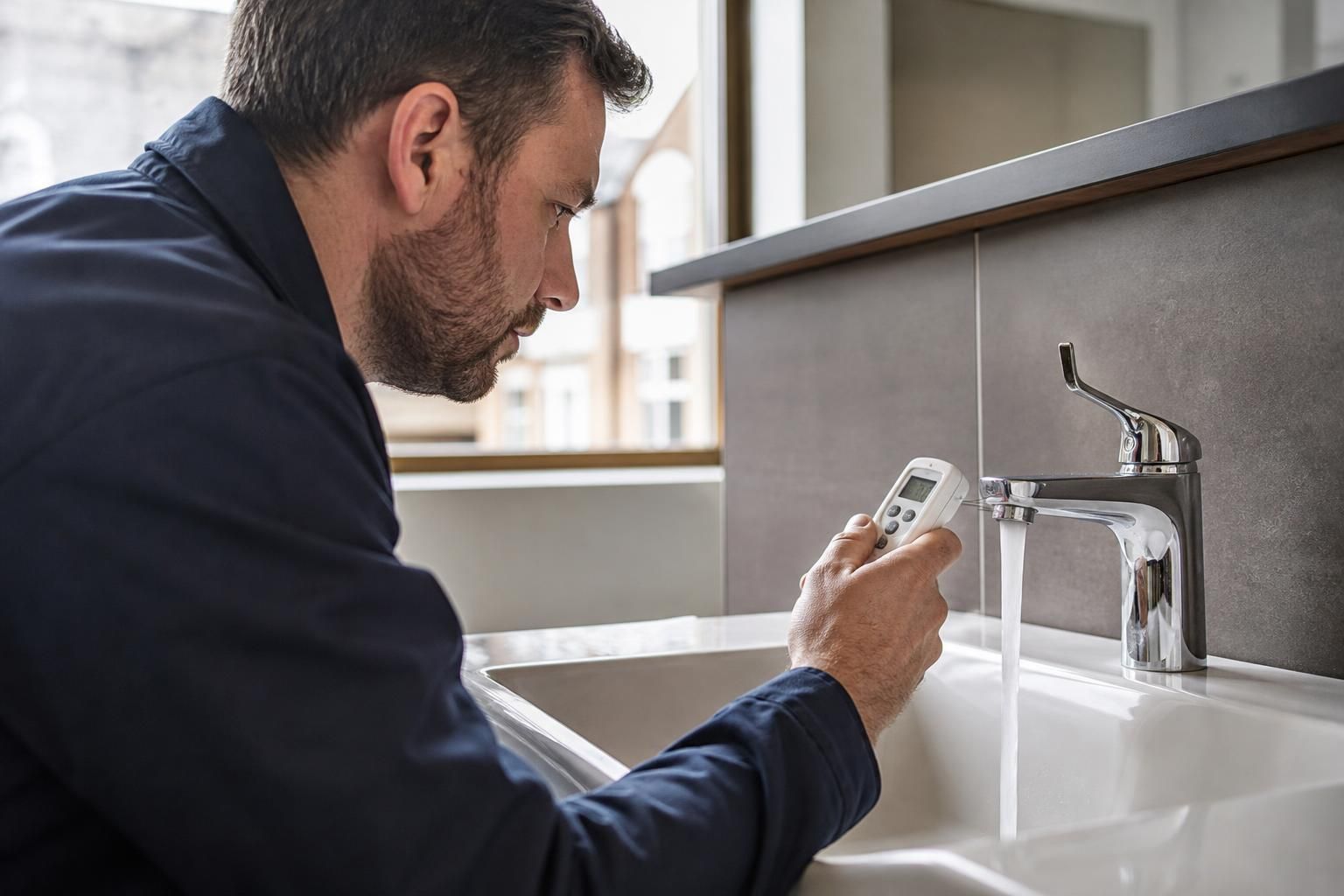
A landlord’s Legionnaires’ disease check is a structured review of the property’s water systems, management arrangements and control measures. It determines whether conditions exist that could allow Legionella to multiply, identifies who is at risk, and sets out the actions needed to control that risk.
It is more than a visual inspection or a single water sample. The person carrying out the check will normally consider how the system is designed, how it is used, how well it is maintained and whether existing precautions are suitable for the property. The scope should reflect the type of accommodation and its water systems, rather than applying the same checklist to every rental property.
The assessment commonly includes:
- Reviewing the water system: identifying cold-water storage tanks, hot-water cylinders, boilers, showers, taps, thermostatic mixing valves, pipework and other outlets that may be relevant to Legionella control.
- Looking for conditions that support bacterial growth: this can include water being stored at unsuitable temperatures, poor circulation, stagnant sections of pipework, little-used outlets, redundant pipework or areas where deposits and contamination may develop.
- Considering how the property is occupied: the assessor may review the number and type of occupants, periods when the property is empty, patterns of water use and whether anyone may be particularly vulnerable to Legionnaires’ disease.
- Checking management arrangements: this includes examining who is responsible for temperature checks, cleaning, maintenance, dealing with defects and keeping records. Responsibilities should be clear where a landlord, managing agent, tenant or contractor has a role.
- Reviewing available records: previous assessments, inspection reports, maintenance records, temperature logs, cleaning certificates and any earlier sampling results can help show whether controls have been implemented consistently.
Temperature checks are an important part of the process. Cold water should be assessed to establish whether it is remaining suitably cool, while hot-water storage and distribution should be checked to determine whether temperatures are being controlled appropriately. Measurements may be taken at relevant outlets and storage points, alongside observations about how quickly temperatures stabilise. The precise checks depend on the system design and the risks identified.
The assessor will also consider whether outlets are used regularly. A rarely used shower or tap can allow water to remain stagnant, particularly in an unoccupied property or a room that is seldom accessed. Practical controls may include introducing a flushing routine, removing unnecessary outlets or pipework, improving insulation, correcting temperature problems, cleaning and disinfecting components, or arranging repairs.
Water sampling is not automatically required for every rental property. It may be recommended where the assessment identifies uncertainty, elevated risk, a complex system, persistent control problems or a need to verify that remedial work has been effective. Where samples are taken, they should be sent for suitable laboratory analysis. UKAS-accredited water testing can provide a reliable basis for interpreting the result, but a laboratory result should be considered alongside the condition and operation of the whole system.
Following the inspection, the landlord should receive a written assessment or report. This should describe the systems considered, the significant findings, existing controls, any shortcomings and the actions recommended. It should also make clear whether further monitoring, sampling, maintenance or remedial work is needed, and identify the person responsible for each action.
A useful report should lead to a working control scheme, not simply be filed away. The landlord or managing agent should implement the recommendations, retain evidence of completed work and ensure that routine checks continue. Records might include temperature readings, flushing logs, servicing documents, cleaning records, sampling reports and details of corrective action.
The check should be reviewed when the property or its use changes, after significant plumbing or heating work, when monitoring identifies a problem, or when the existing assessment is no longer an accurate description of the system. A competent legionella risk assessor can help landlords establish the appropriate level of assessment, testing and ongoing control for each property.
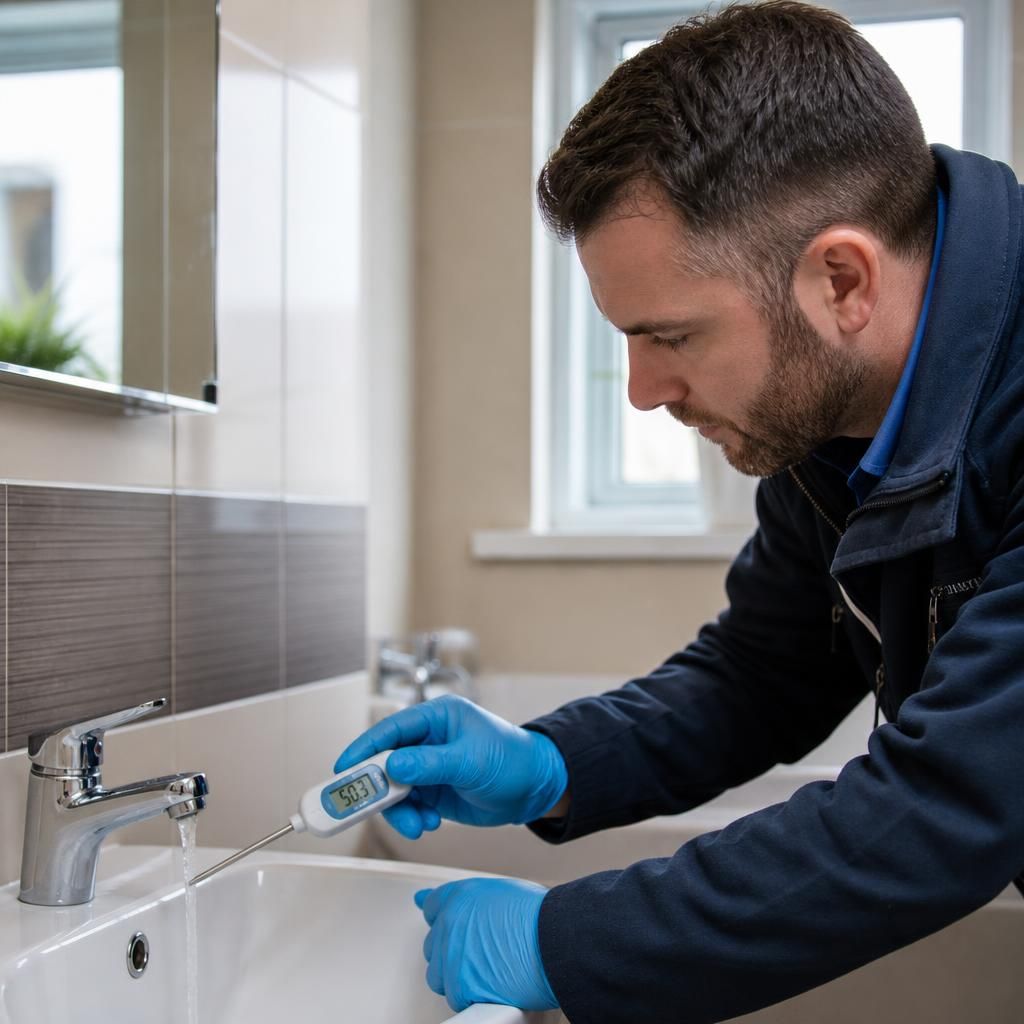
A landlord’s Legionnaires’ disease check assesses the possibility of exposure to contaminated water droplets; it does not test tenants for infection. The assessor therefore gives particular attention to outlets that can create aerosols, such as showers and spray taps, and considers whether their condition, use and maintenance could increase exposure risk.
The findings should help the landlord decide which controls are proportionate for the property. These may include keeping higher-risk outlets in suitable condition, giving occupants practical instructions for reporting faults or prolonged non-use, and arranging specialist advice where the system cannot be adequately controlled through routine management.
Discuss Your Landlord’s Legionnaires’ Disease Check
If you need to clarify the appropriate scope for a rental property, discuss the findings of an existing assessment or plan proportionate follow-up work, speak to Blue Fish Water Management Ltd about your landlord’s legionnaires’ disease check.