
How often should landlords repeat legionnaires disease checks?
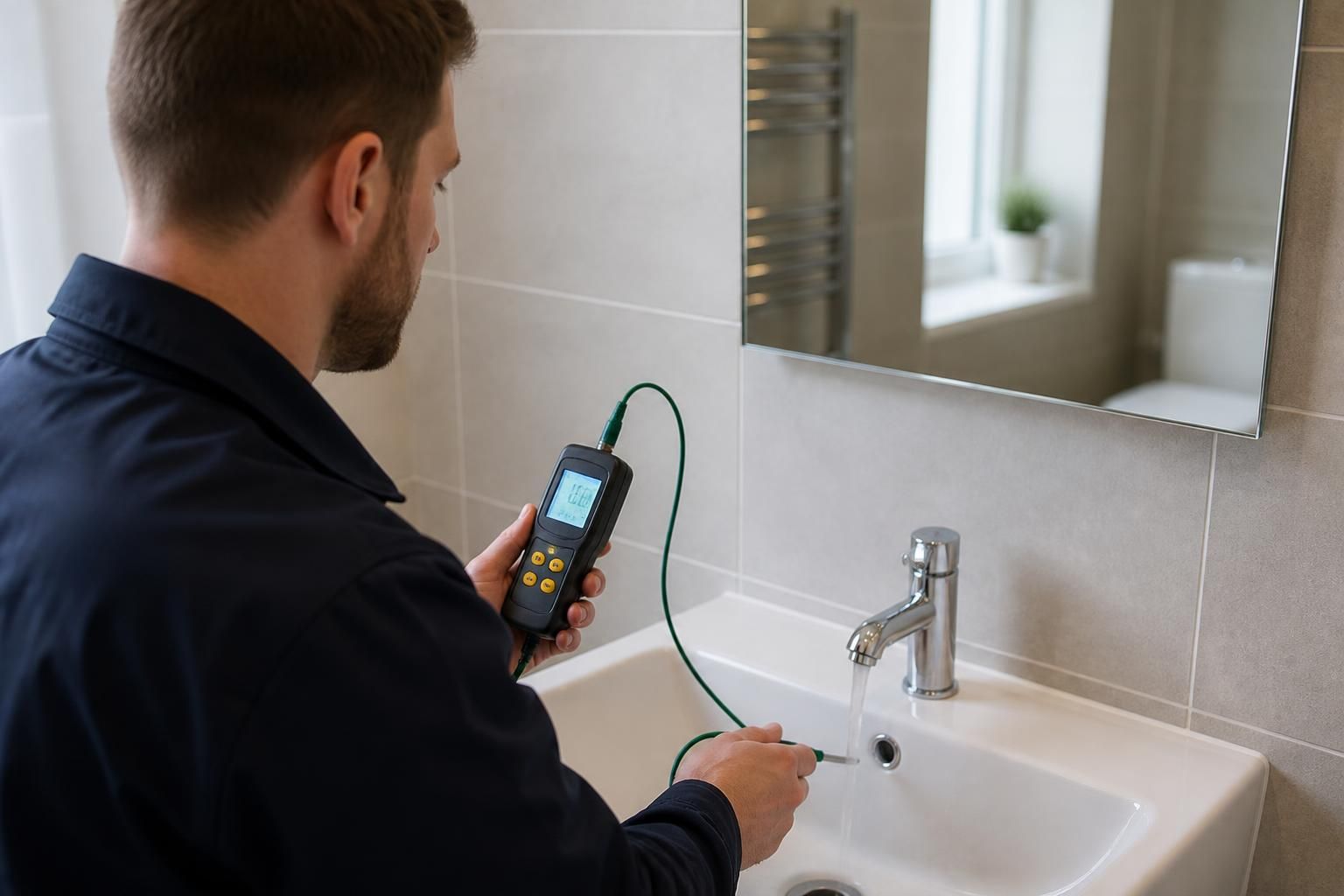
The appropriate interval for a landlord’s legionnaires’ disease checks depends on the risk assessment, the complexity of the water system and how reliably control measures are being maintained. A periodic review is necessary, but it should sit alongside routine monitoring rather than replace it. The purpose is to identify conditions that could allow Legionella to grow and spread before they create a health risk for tenants, visitors or contractors.
A landlord should consider the following checks as separate but connected activities:
- Risk assessment review: confirms whether the original assessment still reflects the property, water systems, occupants and management arrangements.
- Routine control monitoring: checks that measures such as hot-water temperatures, cold-water temperatures, outlet use, cleaning and flushing are being completed as required.
- Inspection and maintenance: identifies defects such as redundant pipework, poorly insulated tanks, scale, corrosion, leaks or outlets that are rarely used.
- Legionella sampling: may be appropriate where the risk assessment identifies uncertainty, vulnerable occupants, complex systems or signs that control measures may not be effective.
There is no universal testing schedule that applies to every rental property. A simple domestic hot and cold-water system may require a different monitoring arrangement from a property with stored water, multiple outlets, showers, communal facilities, little-used rooms or a more complicated distribution system. Sampling should therefore be based on the findings of the assessment and interpreted alongside temperature records, maintenance information and the condition of the system.
Checks should be brought forward when anything changes that could affect water safety. Examples include:
- installation of a new boiler, cylinder, tank, shower or other water appliance;
- alterations to pipework or changes that create longer, unused runs;
- a property being empty for a period, followed by reoccupation;
- a change in the number or type of occupants, particularly where people may be more vulnerable to Legionnaires’ disease;
- changes to cleaning, maintenance or letting arrangements;
- repeated temperature failures, poor flushing records or evidence of stagnation;
- a complaint, illness concern, suspected exposure or confirmed case associated with the premises; and
- discovery of defects such as dead legs, faulty thermostatic controls, damaged insulation or contaminated storage tanks.
After a property has been vacant, water outlets should be managed before normal use resumes. Standing water can allow conditions to deteriorate, particularly where showers and taps have not been used. The required approach depends on the system and the length of vacancy, but may include flushing, cleaning, disinfection or further investigation. A landlord should not assume that simply turning on an outlet is sufficient where there are wider signs of contamination or poor control.
Routine monitoring is most useful when it is recorded consistently. Records should identify the date of each check, the outlet or component examined, the result, the person who carried it out and any corrective action. Where a result is outside the required control range, the record should show what was done and whether a follow-up check confirmed that the issue had been resolved. Keeping these records helps demonstrate that the landlord’s arrangements are active rather than relying only on an old assessment.
Sampling is not a substitute for controlling the system. A negative sample provides information about the sample taken at that time, but it does not remove the need to manage temperatures, stagnation, cleanliness, maintenance and outlet use. Conversely, a positive or inconclusive result does not by itself explain the cause. It should prompt a review of the system, the sampling method and the control measures, with remedial action proportionate to the risk.
Landlords should also check that responsibility is clear where a managing agent, maintenance contractor or other party carries out the work. Delegating a task does not remove the need to know whether it was completed, what the findings were and whether outstanding actions have been closed. The written assessment and control scheme should state who monitors the system, who reviews records and who escalates problems.
For a property with a straightforward system and effective records, the next review can normally follow the interval set by the risk assessment. Where the system is complex, occupied by people at increased risk, subject to repeated failures or undergoing change, more frequent professional input may be justified. A competent water hygiene specialist can help landlords assess whether routine monitoring is adequate, whether sampling is appropriate and what remedial work is needed.
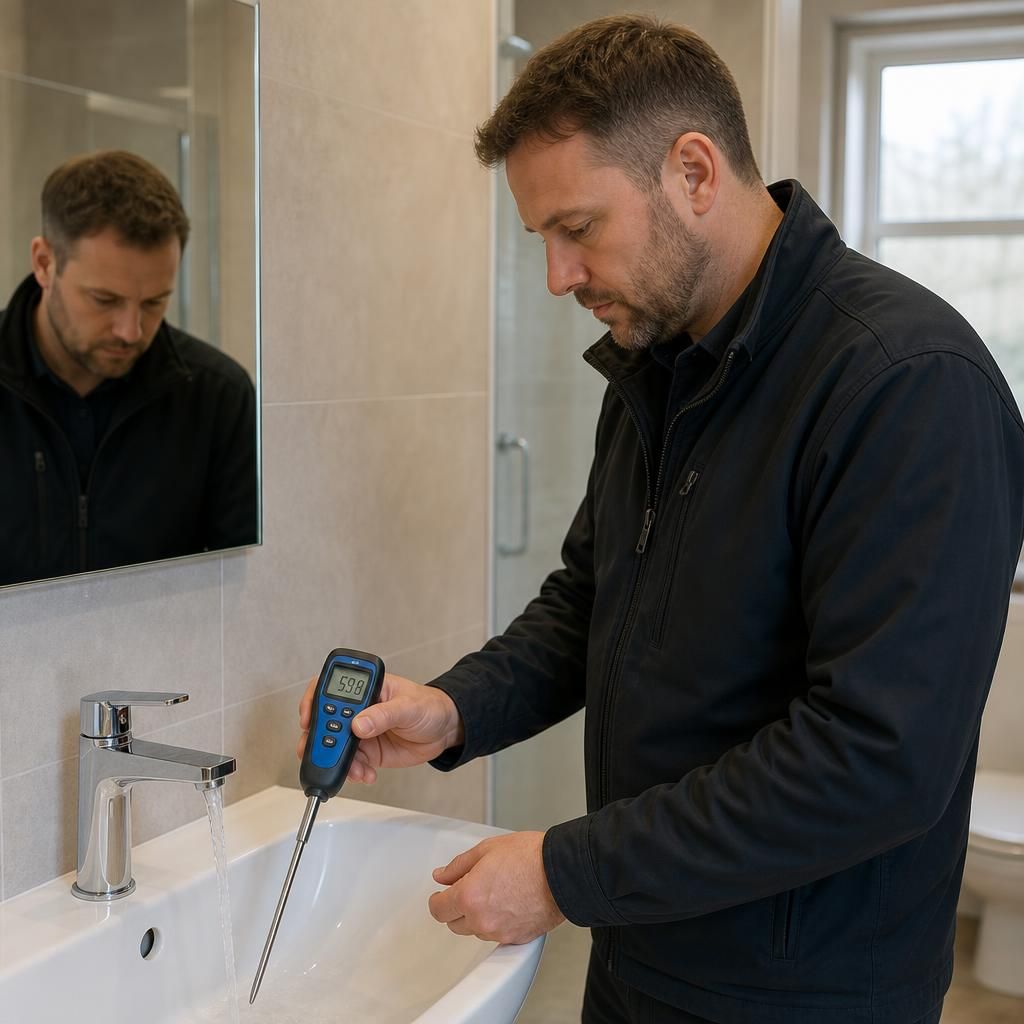
Landlords with several rental properties should not automatically apply one legionnaires’ disease check schedule across the whole portfolio. Each property needs to be considered on its own system, occupancy and control arrangements, because a date that is suitable for one building may not be suitable for another.
Keep the reason for the chosen review interval with the property’s written assessment and control scheme. This makes it clear when the next formal review is due, which routine checks apply in the meantime and what circumstances would require the assessment to be reconsidered sooner.
Review your landlord legionella check schedule
If you need to confirm whether your landlord legionella check schedule remains appropriate, speak to Blue Fish Water Management Ltd about reviewing the property’s risk assessment and control arrangements. Their specialists can help identify whether further monitoring, sampling or remedial work is needed.