
Do landlords need legionella testing for every rental property?
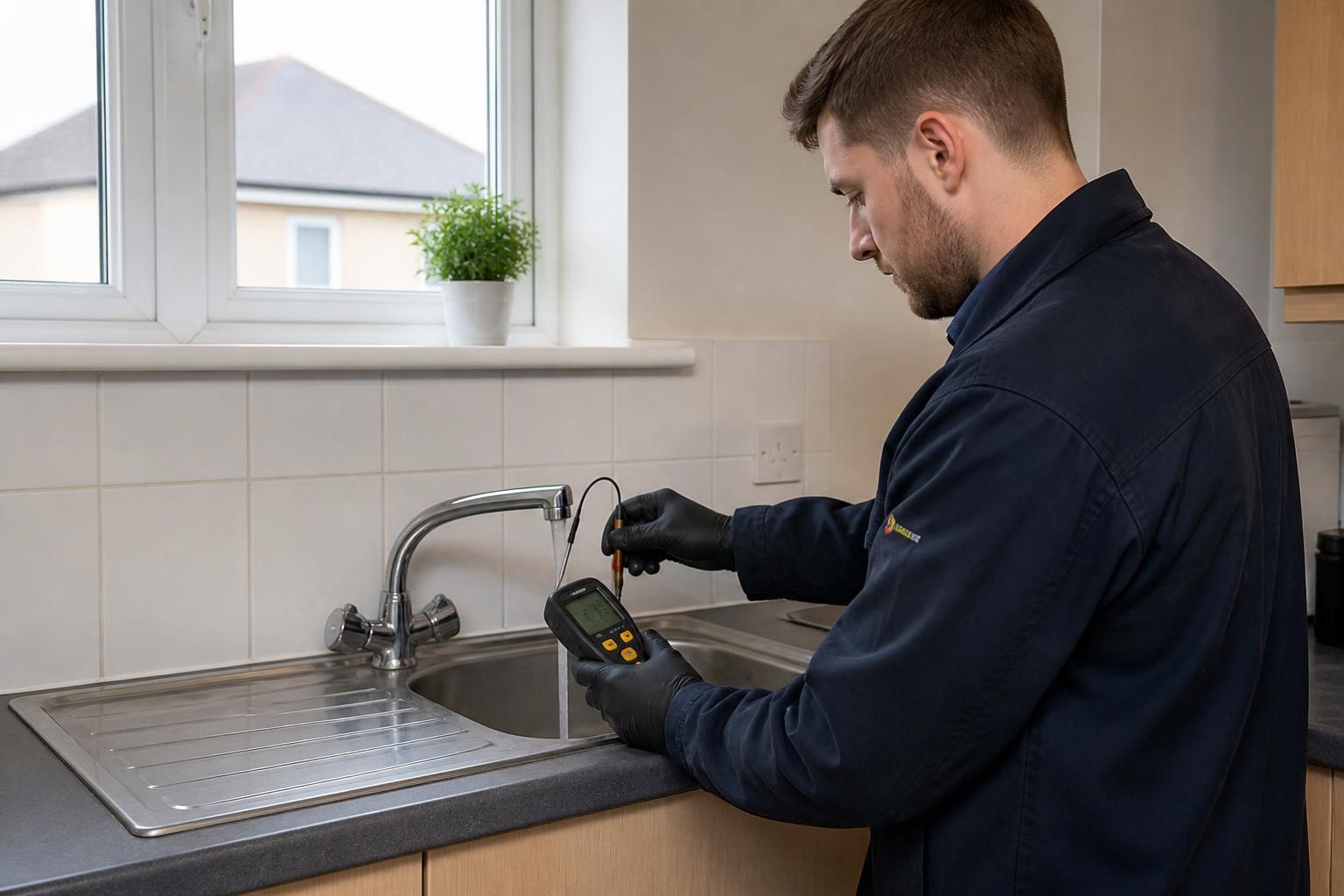
The need for legionella sampling depends on the property’s assessed risk, not simply on the fact that it is rented out. Each rental property should have a proportionate assessment of its hot and cold water systems, with control measures selected to address the hazards identified. Sampling becomes appropriate where the assessment shows that temperature control, system design, usage patterns or other measures do not provide enough assurance.
A landlord or other responsible person should consider the characteristics of the water system rather than applying the same testing programme to every property. Relevant factors include:
- stored hot water, cold-water tanks or other outlets that can allow water to remain stagnant;
- long or little-used pipe runs, infrequently occupied rooms and outlets that are rarely flushed;
- water temperatures that are not being maintained or monitored effectively;
- complex systems, communal facilities or systems serving several dwellings; and
- occupants who may be more vulnerable to serious illness from legionella exposure.
A straightforward, regularly used domestic system may be managed through appropriate temperature controls, routine checks, cleaning and flushing, without routine laboratory sampling. That conclusion should be supported by the risk assessment and by records showing that the controls are being maintained. It should not be assumed merely because a property is small or has a single tenant.
Testing is more likely to be justified in a property with a storage tank, shared hot-water system, communal outlets, persistent low temperatures, evidence of stagnation or a history of water hygiene problems. Samples may also be taken after remedial work, when monitoring identifies an ongoing concern, or where illness is suspected and public health or medical professionals advise investigation. A negative sample does not replace ongoing control: legionella levels can change as system conditions change.
Landlords should retain the risk assessment, monitoring records, maintenance information, flushing schedules, sampling results and details of corrective action. The records should show why testing was or was not selected and what happened when results fell outside the expected range. A competent water hygiene specialist can help interpret results, since the significance of a sample depends on the type of outlet, the system’s condition and the controls already in place.
The assessment should be reviewed when the property changes, occupancy patterns alter, the water system is modified, control readings become unsatisfactory or a concern is reported. A portfolio-wide template may assist with administration, but it should not remove the need to account for meaningful differences between individual properties.
Where sampling is indicated, use a suitable laboratory and a sampling plan that reflects the system’s risk. Blue Fish Water Management Ltd provides legionella risk assessments, UKAS-accredited water testing, monitoring and remedial support for landlords and other responsible organisations. The appropriate objective is not to test indiscriminately, but to demonstrate that the water system has been assessed, controlled and reviewed on a defensible basis.
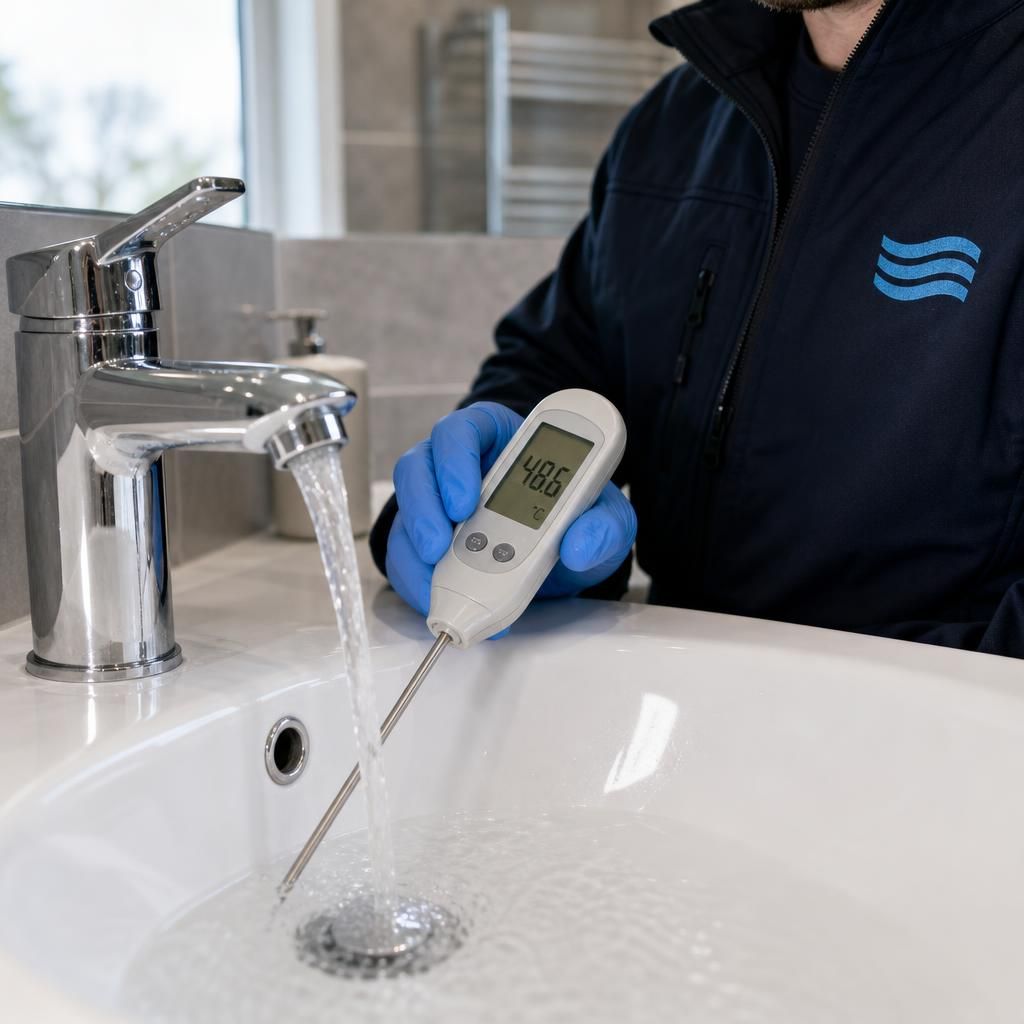
Where legionella sampling is justified, testing does not usually mean taking a sample from every tap in the property. A suitable sampling plan identifies representative outlets and any locations that present a particular concern, based on the system’s layout, water temperatures, usage and history. In a property with shared or more complex plumbing, the scope may need to cover different parts of the system rather than relying on a single outlet.
This distinction matters because one result cannot automatically describe every outlet or prove that the system will remain safe. Results should be interpreted alongside the assessment and control records, with further investigation or corrective action where the findings do not provide sufficient assurance. The landlord should therefore retain the sampling plan as well as the results, so it is clear why particular outlets were selected and how the findings informed the wider management of the rental property.
Discuss your rental property’s legionella risk
If you are unsure whether a rental property’s water system requires legionella sampling, discuss its circumstances with Blue Fish Water Management Ltd. Their specialists can help landlords determine whether a risk assessment or further investigation is the appropriate next step.