
Can a landlord carry out a legionella risk assessment themselves?
Yes, a landlord can carry out a legionella risk assessment themselves if they are competent to identify and evaluate the risks and produce a suitable, sufficient assessment. For complex water systems, limited knowledge or uncertainty about the required controls, using a qualified professional is the safer way to support compliance with UK health and safety guidance.
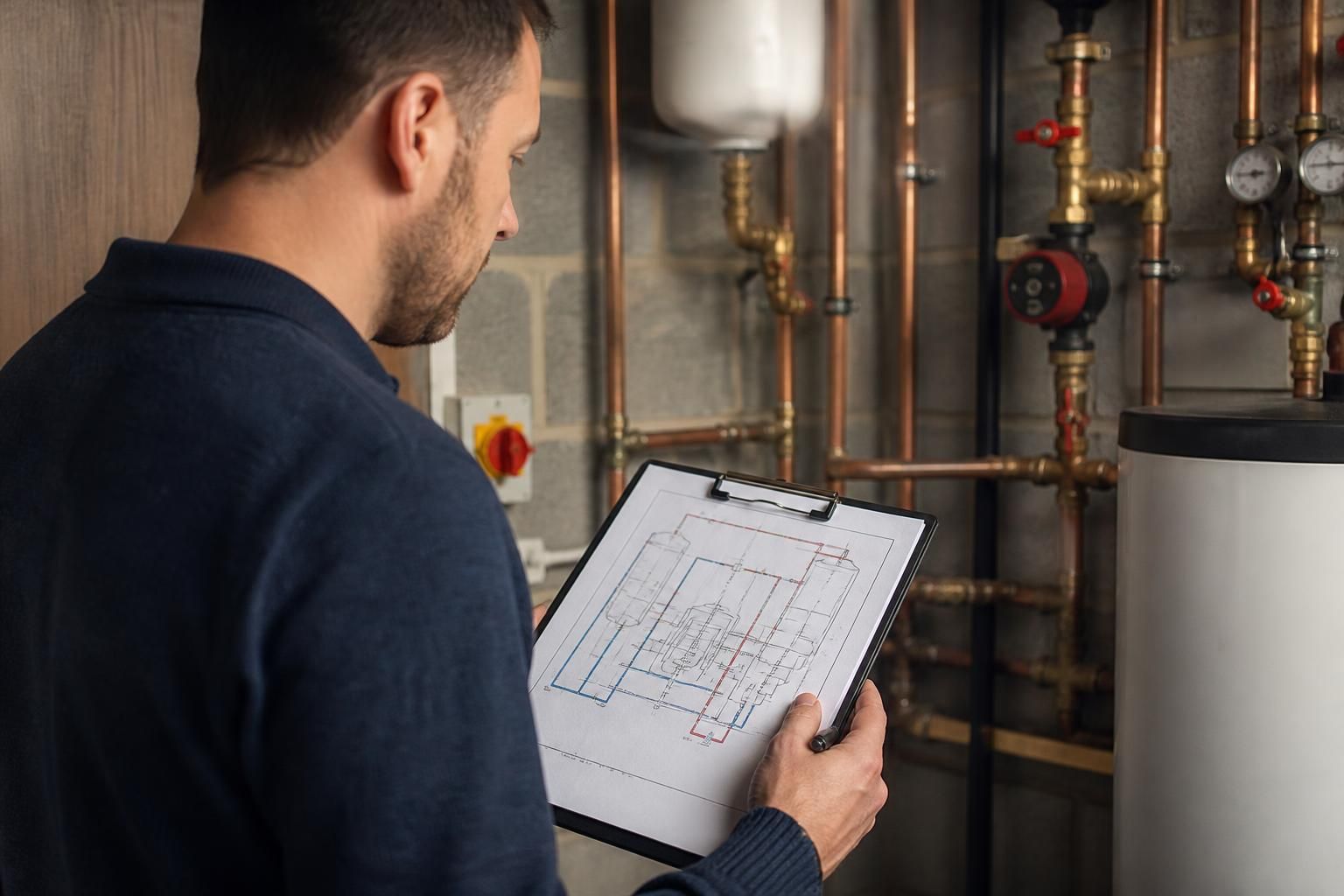
A landlord may complete the assessment personally where they can demonstrate suitable competence and have enough knowledge of the property’s water systems, occupants and potential exposure routes. The assessment must be suitable and sufficient: it should identify foreseeable risks, decide what controls are necessary and provide a documented basis for managing those risks. Being the property owner does not, by itself, make someone competent to assess legionella risk.
In the UK, the relevant duties depend on the type of premises, the landlord’s level of control and the people who may be exposed. The Health and Safety at Work etc. Act, the Management of Health and Safety at Work Regulations and the Control of Substances Hazardous to Health Regulations may all be relevant in commercial or managed premises. The Health and Safety Executive’s Approved Code of Practice L8 and associated HSG274 guidance explain the principles for controlling legionella in water systems. Different legislation and regulatory guidance may apply in Northern Ireland, so the applicable jurisdiction should be confirmed.
What competence involves
Competence is more than downloading a template or recording that a property has a hot and cold water supply. A person carrying out the assessment should understand:
- how legionella can grow and spread in hot and cold water systems;
- the design, operation and condition of the systems serving the premises;
- how temperature, stagnation, poor circulation, scale, sludge and corrosion affect risk;
- the people who could be exposed, including residents, workers, visitors and anyone more vulnerable to serious illness; and
- which control measures are proportionate and how they will be monitored.
They should also be able to recognise when information is incomplete or when a specialist, engineer or laboratory is needed. A landlord who understands a straightforward domestic installation may not have the same competence for a communal system, storage tank, calorifier, spa pool, care setting or premises with multiple outlets and complex distribution pipework.
What a self-completed assessment should cover
A useful assessment should describe the system rather than simply assign a low, medium or high rating. It should normally record the source of the water, storage and heating arrangements, distribution pipework, outlets, little-used areas and any areas where water may remain at unsuitable temperatures. It should identify dead legs, redundant pipework, faulty thermostatic mixing valves, damaged insulation and other conditions that could increase risk.
The document should also identify who is responsible for each control. Depending on the findings, controls may include maintaining appropriate hot and cold water temperatures, flushing infrequently used outlets, keeping tanks and components in good condition, removing redundant pipework and arranging cleaning or disinfection where necessary. Each action should have an owner and a timescale, with evidence retained to show that it has been completed.
Where monitoring is required, the landlord should specify what is checked, how it is checked, the acceptable result and what happens when a reading or inspection is unsatisfactory. Water sampling may be appropriate in particular circumstances, but a test result does not replace a properly considered assessment of the system and its management.
When professional input is advisable
Using an independent, suitably qualified assessor is advisable where the landlord lacks practical water-system knowledge, cannot inspect all relevant parts of the installation or is uncertain about the required controls. Professional input is particularly important for shared residential systems, larger commercial premises, buildings with vulnerable occupants, systems incorporating stored water or secondary circulation, and properties with a history of remedial work or suspected contamination.
An external assessment is not automatically adequate simply because someone else completed it. The landlord or duty holder should check the assessor’s experience, qualifications, insurance, scope of inspection and reporting method. The assessor should have access to relevant records and be given enough time to inspect the installation, speak to responsible personnel and explain any limitations.
Keeping the assessment current
A risk assessment is not a one-off document. It should be reviewed when the water system, building use, occupancy or responsible personnel change, and after significant maintenance, refurbishment or remedial work. It should also be revisited if monitoring identifies repeated failures, if tenants report concerns or if there is reason to believe the original assessment no longer reflects the installation.
The landlord remains responsible for ensuring that identified controls are implemented, even when the assessment has been delegated to a contractor. Keeping the assessment, schematic information, monitoring records, maintenance documentation, training records and completed corrective actions together makes it easier to demonstrate that the risks are being actively managed. Where the system or circumstances are beyond the landlord’s knowledge, a specialist legionella risk assessment can provide a more reliable basis for the control scheme and ongoing compliance.

There is no single qualification that automatically makes someone competent to complete every landlord legionella risk assessment. Equally, attending a short course or using a standard template does not, by itself, demonstrate that the assessment is suitable. Competence depends on whether the person has the knowledge and practical ability to assess the particular water system and make sound decisions about its control.
For that reason, a landlord considering self-assessment should be able to explain why their experience is appropriate for the property and recognise the limits of their knowledge. Where that explanation is difficult to provide, independent professional input is a more defensible option than relying on paperwork that does not reflect the installation.
Discuss your landlord legionella risk assessment
If you are unsure whether a self-completed assessment would be suitable for your property, discuss the system and its management arrangements with Blue Fish Water Management Ltd. Their team can advise on the appropriate scope of a landlord legionella risk assessment and whether professional input is appropriate.