
Can a legionella risk assessment be reviewed without a site visit?
Yes, a legionella risk assessment can sometimes be reviewed remotely using current records, system information, monitoring results and details of any changes. However, a site visit is essential where the physical condition, configuration or use of the water system cannot be reliably confirmed from documentation, or where significant changes or risks have been identified.
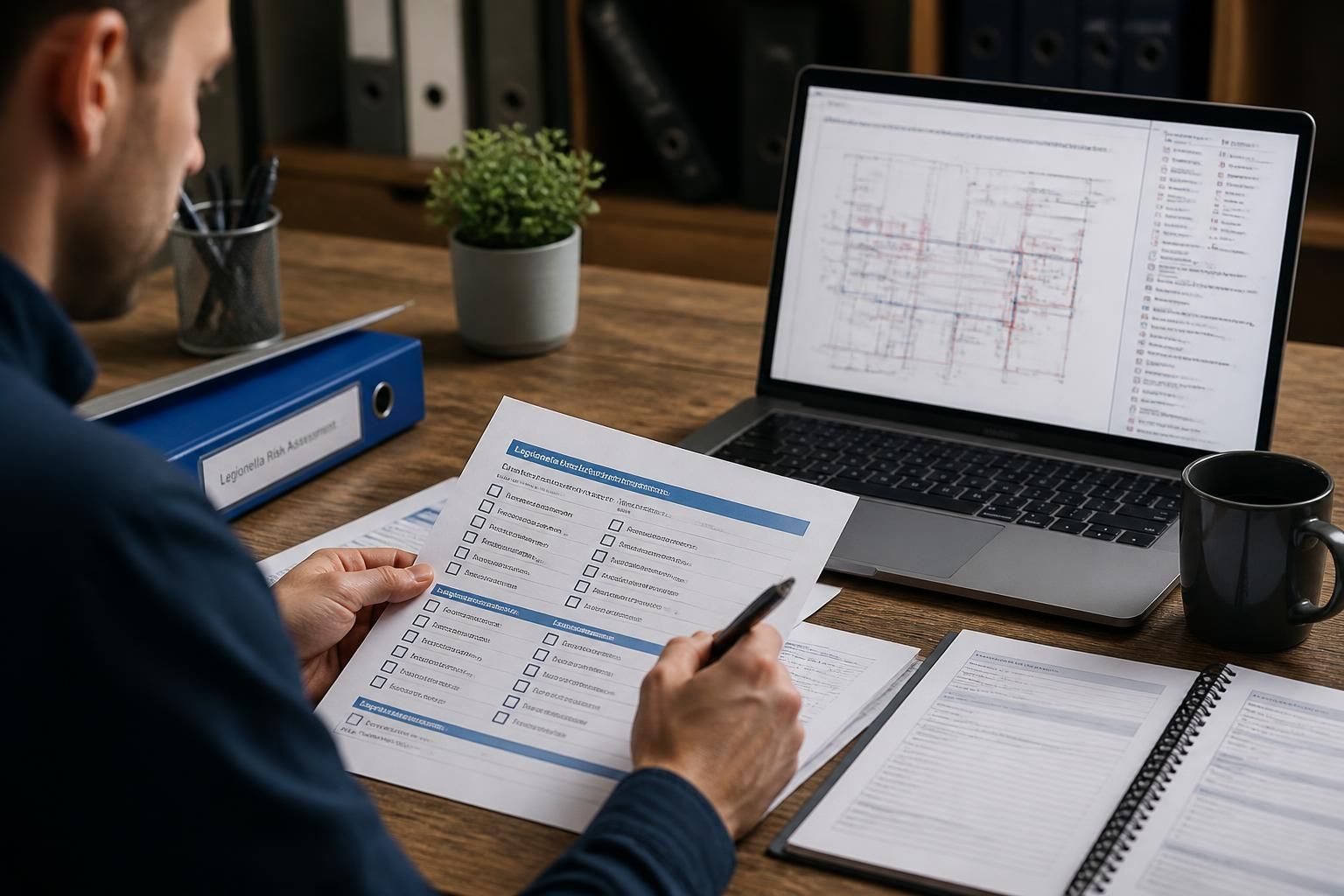
A remote review is a document-based check that an existing legionella risk assessment still reflects the water systems, management arrangements and risks at a premises. It may support ongoing compliance where reliable, recent evidence is available, but it must be carried out by a competent person and remain suitable and sufficient for the circumstances.
UK health and safety law does not prescribe a fixed method for every review or require every review to be completed through a physical inspection. The dutyholder must be able to demonstrate that legionella risks have been properly assessed and are being controlled. A remote review is therefore acceptable only where the available information enables the assessor to make a sound professional judgement.
A desk-based review will normally examine evidence such as:
- the current legionella risk assessment and its scope;
- schematic drawings, asset registers and descriptions of hot and cold-water systems;
- records of temperature monitoring, inspection, cleaning, disinfection and flushing;
- water testing results and any investigation of unsatisfactory findings;
- records of remedial work, maintenance and changes to plant or pipework;
- occupancy, usage and management information for the premises; and
- previous recommendations, action plans and evidence that actions have been completed.
The reviewer may also need photographs, videos, plant-room information, contractor records and answers from people who manage or use the system. These sources can help establish whether the documented control scheme remains appropriate and whether previous recommendations have been addressed.
Remote review is more likely to be appropriate where the assessment is already based on a clear understanding of the installation, the system has not materially changed, monitoring records are complete, and responsible staff can confirm how the system is operated. It can be useful for checking whether information remains current between more detailed assessments or for identifying matters that need further investigation.
However, documents do not always show the condition or configuration of a water system accurately. A site inspection is normally needed where drawings are missing or unreliable, assets cannot be identified with confidence, access or use has changed, or there is uncertainty about dead legs, storage tanks, blending valves, outlets, pipework or temperature control. Physical verification is also important where records are incomplete, monitoring has been inconsistent, control measures have failed, or there has been a suspected or confirmed legionella incident.
A visit should also be considered where the premises has changed in a way that could affect exposure. Examples include alterations to hot-water services, refurbishment, a change from normal to low occupancy, newly installed equipment, a change in vulnerable occupants, or a change in how outlets and areas are used. In these circumstances, relying solely on an earlier assessment may leave important hazards outside the review.
The person carrying out the review should record its scope, the information considered, any limitations and the reasons for concluding that a remote approach was sufficient. If evidence cannot be verified, the limitation should not be treated as confirmation that the system is safe. The appropriate response may be to request further records, arrange targeted inspection, or complete a full site-based assessment.
A remote review should result in a clear decision rather than simply an administrative update. The outcome may be that the existing assessment remains suitable, that specific sections require amendment, or that a new assessment and site visit are necessary. Any actions should identify what must be done, who is responsible and how completion will be evidenced.
For a dutyholder, the key test is whether the review provides a reliable and current understanding of the system and its risks. A desk-based process can form part of a proportionate review programme, but it should not be used to avoid inspecting conditions that cannot be established from records. Where uncertainty remains, a site visit is the safer and more defensible basis for maintaining legal compliance.
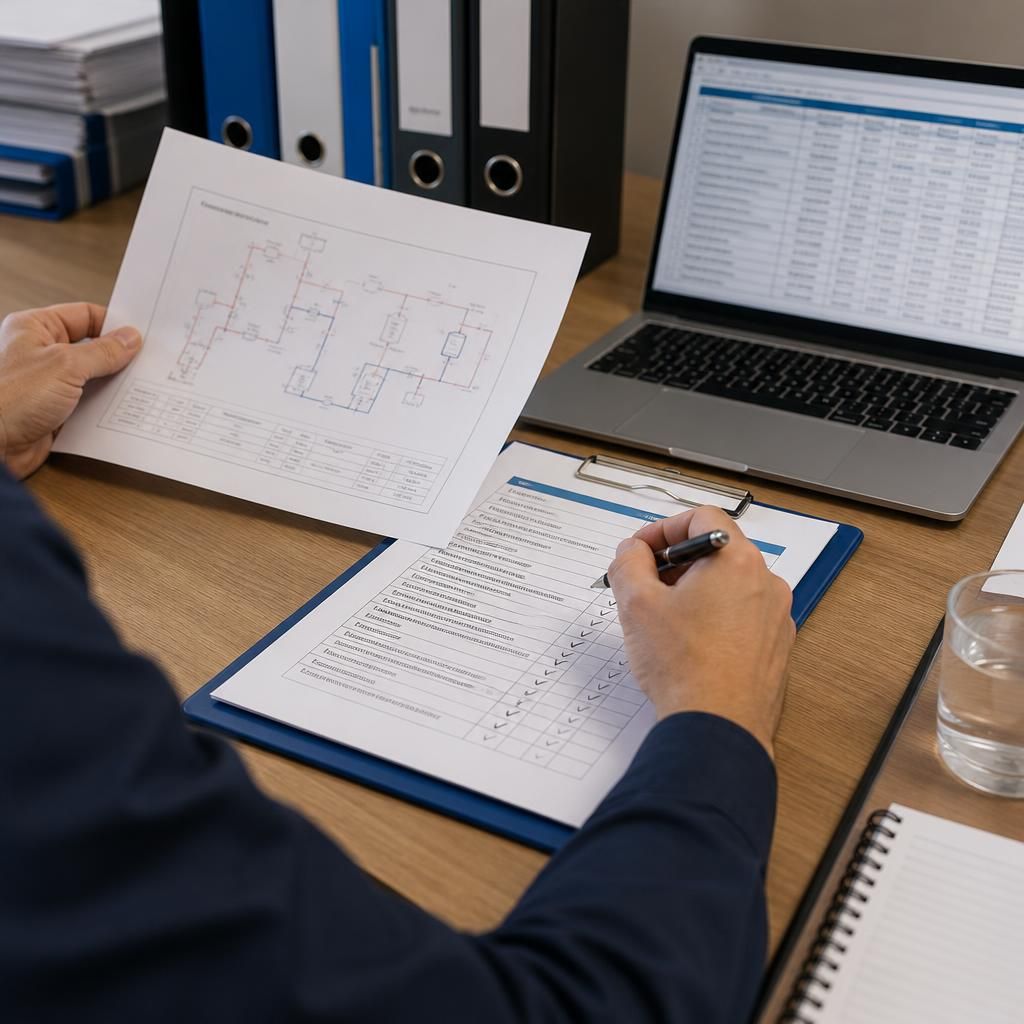
A desk-based review is generally an update to an existing legionella risk assessment, not a substitute for assessing a water system for the first time. The assessor needs a reliable baseline showing how the system is arranged, operated and controlled before deciding whether later evidence is sufficient for remote review.
For a new premises, newly acquired site or system without a dependable current assessment, a site-based assessment will usually be needed to establish that baseline. Subsequent reviews can then compare records and reported changes against the original findings, provided the system and its management arrangements remain adequately understood.
Request Advice on a Legionella Assessment Review
Discuss the available evidence for your premises with Blue Fish Water Management Ltd to establish whether a remote review is appropriate or a site assessment is needed.