
What should a written scheme include under L8?
Under L8, a written scheme should set out how legionella risks will be controlled in the water systems covered by the risk assessment. It should describe the systems and responsibilities, control measures, monitoring requirements, inspection and maintenance arrangements, action to take when control limits are exceeded, and the records that must be retained.

A written scheme under L8 is a site-specific document that explains how an organisation will prevent or control legionella in the water systems identified by its risk assessment. It should be detailed enough for the people carrying out the work to understand what must be controlled, how the controls are verified, and what to do if they are not effective.
The document should begin by defining its scope. This normally includes the premises covered, the water systems and plant included, any parts of the system excluded, and the relationship between the written scheme and the current legionella risk assessment. A clear system description is important where a building has several separate supplies, storage tanks, calorifiers, secondary returns, showers, cooling equipment or infrequently used outlets. Drawings, schematics or asset schedules can be included or referenced so that relevant components can be identified easily.
It should also explain the management arrangements. This means naming the duty holder, responsible person and other people with defined tasks, rather than referring only to a department or job title. The scheme should show who is authorised to carry out checks, take samples, arrange remedial work, review results and escalate concerns. Where specialist contractors are used, it should state what they are expected to do and how their work is checked by the responsible person. Delegating a task does not remove the organisation’s overall responsibility for ensuring that the arrangements are suitable and implemented.
Control parameters should be stated in measurable terms. For hot and cold water systems, the scheme may specify temperature targets, sampling points, flushing arrangements and other criteria selected for the particular design and risk profile. Common L8 principles include storing hot water at a temperature that controls legionella growth, maintaining hot water distribution at an appropriate temperature, and keeping cold water suitably cool. The document should identify the relevant limits for the site, the instruments and methods to be used, and the point at which a result requires investigation or action. Generic wording such as “check temperatures regularly” is unlikely to provide enough direction.
For each control activity, include practical operating instructions such as:
- which outlets, tanks, calorifiers, thermostatic mixing valves and other assets are included;
- how often each check or task is completed and by whom;
- where readings are taken and how equipment is verified or calibrated;
- how little-used outlets and areas of low flow are identified and managed;
- how cleaning, disinfection, flushing and other maintenance tasks are carried out;
- how faults, isolation, alterations or loss of control are reported; and
- how work is managed after refurbishment, commissioning, shutdown or a change in system use.
The scheme should account for circumstances that can increase risk. These may include periods when parts of a building are unoccupied, changes in occupancy, vulnerable occupants, changes to water demand, dead legs, stagnation, inadequate circulation, plant failure or work that introduces contamination. It should explain what precautions apply in those situations and who decides whether a system can be returned to normal operation.
Action levels need to be unambiguous. The written scheme should distinguish between a routine deviation, a significant loss of control and an event requiring urgent escalation. It should set out who investigates, whether affected equipment or outlets are isolated, when additional sampling or disinfection is considered, and who must be informed. Decisions should be based on the risk assessment, the nature of the system and competent professional judgement; a laboratory result should not be considered in isolation from the condition and operation of the water system.
Competence requirements should be recorded as part of the arrangements. The scheme can specify the knowledge, training, supervision or experience required for people undertaking temperature checks, inspections, sampling, cleaning, disinfection and remedial work. It should also identify how competence is maintained when staff, contractors, plant or procedures change.
Finally, the document should include document control. Record its owner, approval date, version, review triggers and links to the supporting risk assessment, drawings, asset register and maintenance procedures. A review is needed when the water system, building use, responsible personnel or control arrangements change, and when monitoring or investigation shows that existing precautions may no longer be adequate. The written scheme should remain a working document that reflects the system in operation, not a generic statement prepared once and left unchanged.
In practice, a suitable scheme allows an independent reader to answer five questions: which systems are covered, what could allow legionella to grow, which controls prevent that, how will the organisation know they are working, and what happens when they are not. If those answers depend on undocumented knowledge held by one individual, the scheme is likely to need more detail.
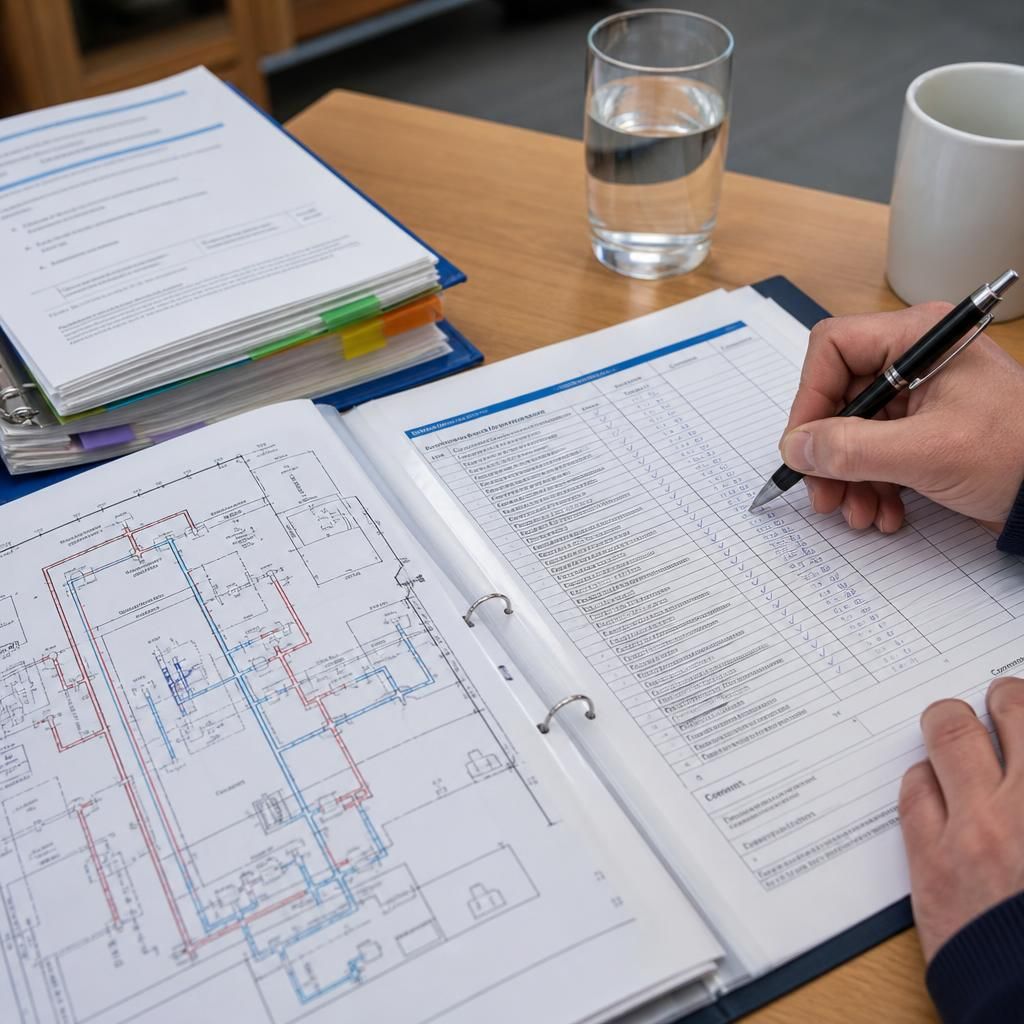
A written scheme is most effective when it converts the risk assessment into clear, usable instructions for the people managing and maintaining the water system. Rather than functioning as a policy statement, it should provide a practical route from each identified risk to the control activity, the evidence required and the decision to be made if the control is not completed or does not meet its stated requirement.
For example, the scheme can be supported by task sheets or schedules that identify the relevant asset or outlet, the required method, the acceptance criteria and the person responsible for sign-off. This format helps staff distinguish between routine work, incomplete work and an abnormal result. It also makes exceptions visible: a missed task, inaccessible outlet, failed component or unavailable monitoring point should be recorded with the reason, interim control and follow-up action.
Keeping these instructions linked to asset identifiers, system drawings and maintenance procedures reduces the risk of work being carried out on the wrong part of a complex installation. It also gives the responsible person a practical basis for checking whether the scheme is being followed and whether its instructions remain suitable for the system in use.
Discuss your L8 written scheme with a specialist
Discuss your L8 written scheme with Blue Fish Water Management Ltd if you need an independent view on whether it reflects your water systems, responsibilities and control arrangements.