
How often should L8 control measures be reviewed?
L8 control measures should be reviewed regularly at a frequency determined by the risks within the water system, and whenever a significant change, incident, monitoring result or identified weakness could affect legionella control. The review should confirm that the written scheme, monitoring arrangements and remedial actions remain suitable and effective.

L8 control measures should be reviewed at an interval proportionate to the risks presented by the water system. UK guidance does not prescribe one universal review period for every organisation. A formal review should be scheduled in the written scheme, with the risk assessment, control measures and monitoring arrangements reconsidered sooner if circumstances change or evidence suggests that control is not effective. HSE guidance gives two years as an example of a regular risk-assessment review interval, rather than a fixed rule that applies to every site.
The review should consider whether the arrangements described in the written scheme still reflect the actual system. This includes checking:
- the current design, layout and use of hot- and cold-water systems;
- the identity and condition of storage vessels, calorifiers, pipework, outlets, showers and other relevant equipment;
- the temperatures, flushing arrangements and other operational controls being applied;
- monitoring frequencies, control limits, test methods and escalation procedures;
- the competence, responsibilities and training of people carrying out monitoring and remedial work; and
- whether actions raised by previous reviews, inspections or test results have been completed and verified.
A scheduled review is not a substitute for routine monitoring. Temperature checks, sentinel outlet checks, flushing records, inspection findings and test results should be assessed as they are produced. Regular monitoring can reveal deterioration before the next formal review is due. Trends such as repeated borderline readings, increasingly frequent corrective actions or recurring failures at particular outlets may justify bringing the review forward.
Some events require an immediate reassessment rather than waiting for the planned date. Typical triggers include alterations to the water system, changes in building occupancy or use, periods of low or irregular use, equipment replacement, changes to responsible personnel, prolonged shutdown, an outbreak or suspected case of legionellosis, and significant failures in monitoring or maintenance. A change that appears minor in isolation can still affect risk if it alters water temperature, stagnation, access for cleaning or the operation of control equipment.
Organisations should also review controls after an unfavourable monitoring result or an unsuccessful corrective action. The review should establish whether the result was isolated, whether the sampling or measurement process was reliable, and whether the underlying cause has been addressed. If the same issue recurs, simply repeating the original action may not be sufficient; the written scheme, control limits, responsibilities or monitoring frequency may need revision.
The person carrying out the review should have suitable knowledge of the system and legionella control. Where the system is complex, high-risk or substantially changed, competent specialist input may be appropriate. The reviewer should be able to distinguish between a document that has been signed and a control measure that is operating effectively in practice.
Each review should be documented. The record should identify the date, scope, person responsible, information considered, findings, required actions, deadlines and the date for checking completion. Where no changes are needed, that conclusion should still be recorded with the reasons for it. If the review identifies amendments, the revised risk assessment, written scheme, drawings, schedules and monitoring instructions should be issued to the people who use them.
A practical review programme therefore has several layers: continuous operational checks, periodic assessment of monitoring trends, and a documented formal review at the interval set for the site. This approach keeps the review frequency linked to the system's risk profile while ensuring that significant developments are dealt with when they occur, not deferred until the next scheduled date.
For organisations managing multiple premises, a consistent review procedure can help, but the resulting interval should still reflect each building and water system. A standard calendar alone may overlook differences in occupancy, system complexity, vulnerability of users, usage patterns and previous control performance. An appropriately maintained review record provides evidence that the arrangements remain current and that decisions about review frequency are risk-based.
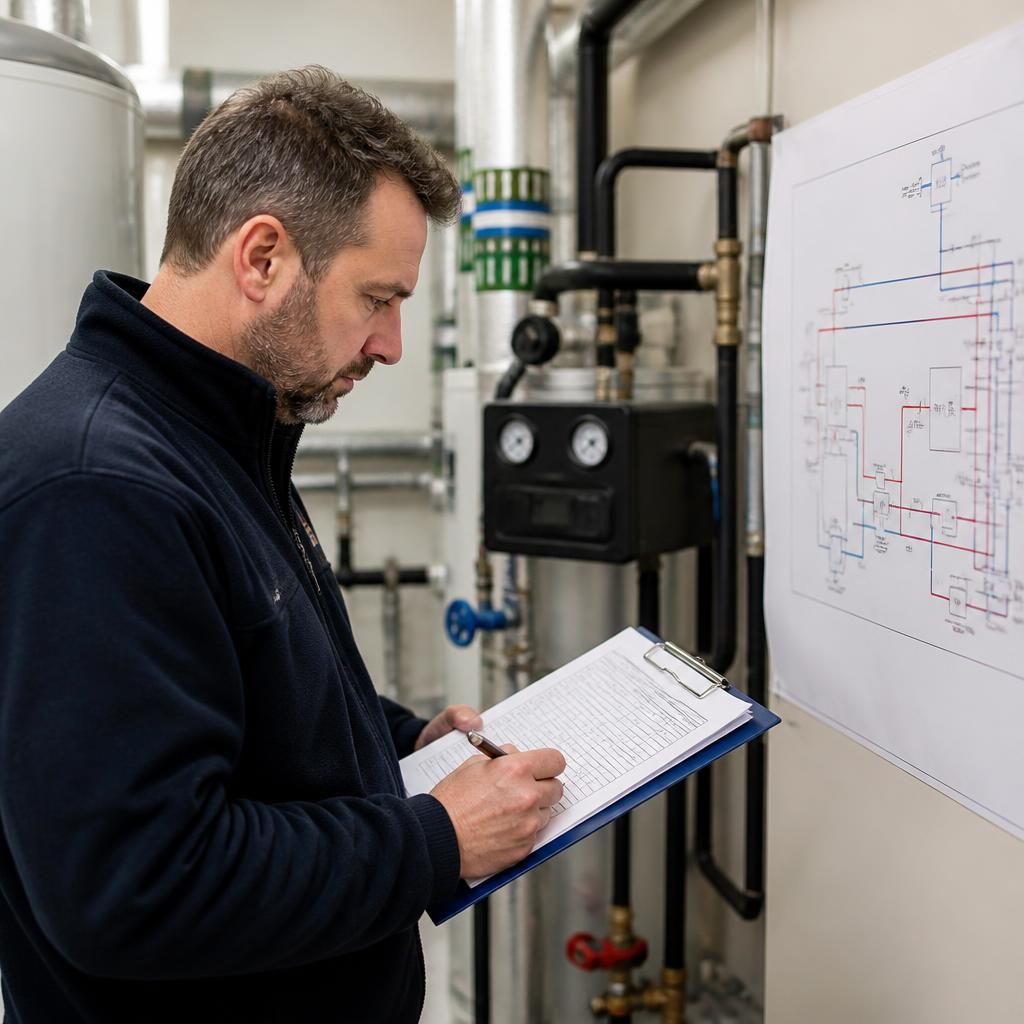
Where legionella monitoring or maintenance is carried out by a contractor, the organisation should review the control arrangements as well as the contractor’s reports. Responsibility for managing the risk remains with the duty holder, so a completed service visit or satisfactory-looking report does not, by itself, demonstrate that the written scheme is suitable.
A useful review should check whether:
- the contractor has access to current system information, including changes to outlets, plant and occupancy;
- the work completed matches the tasks and frequencies specified in the written scheme;
- abnormal readings, missed tasks and unresolved defects are clearly reported and escalated;
- recommendations identify an owner and a completion date; and
- the organisation has verified that significant corrective work was completed effectively.
This governance check helps identify gaps between the arrangements documented for the site and the controls actually being delivered. It is particularly important where different parties are responsible for monitoring, maintenance, sampling and remedial work, because unclear interfaces can allow an issue to remain unresolved even when each party has completed its own limited task.
Review your L8 control measures
If you need to assess whether your L8 review arrangements remain appropriate, Blue Fish Water Management Ltd can provide practical support with legionella risk assessments, compliance audits and water hygiene controls. Contact the team to discuss the requirements of your organisation and water system.