
Who is responsible for applying HSG274 guidance?
Responsibility for applying HSG274 rests with the person who has control of the premises or water system, such as an employer, landlord, facilities manager or managing agent. They must ensure legionella risks are assessed and controlled, appointing a competent person to provide support where necessary while retaining overall responsibility for effective management.
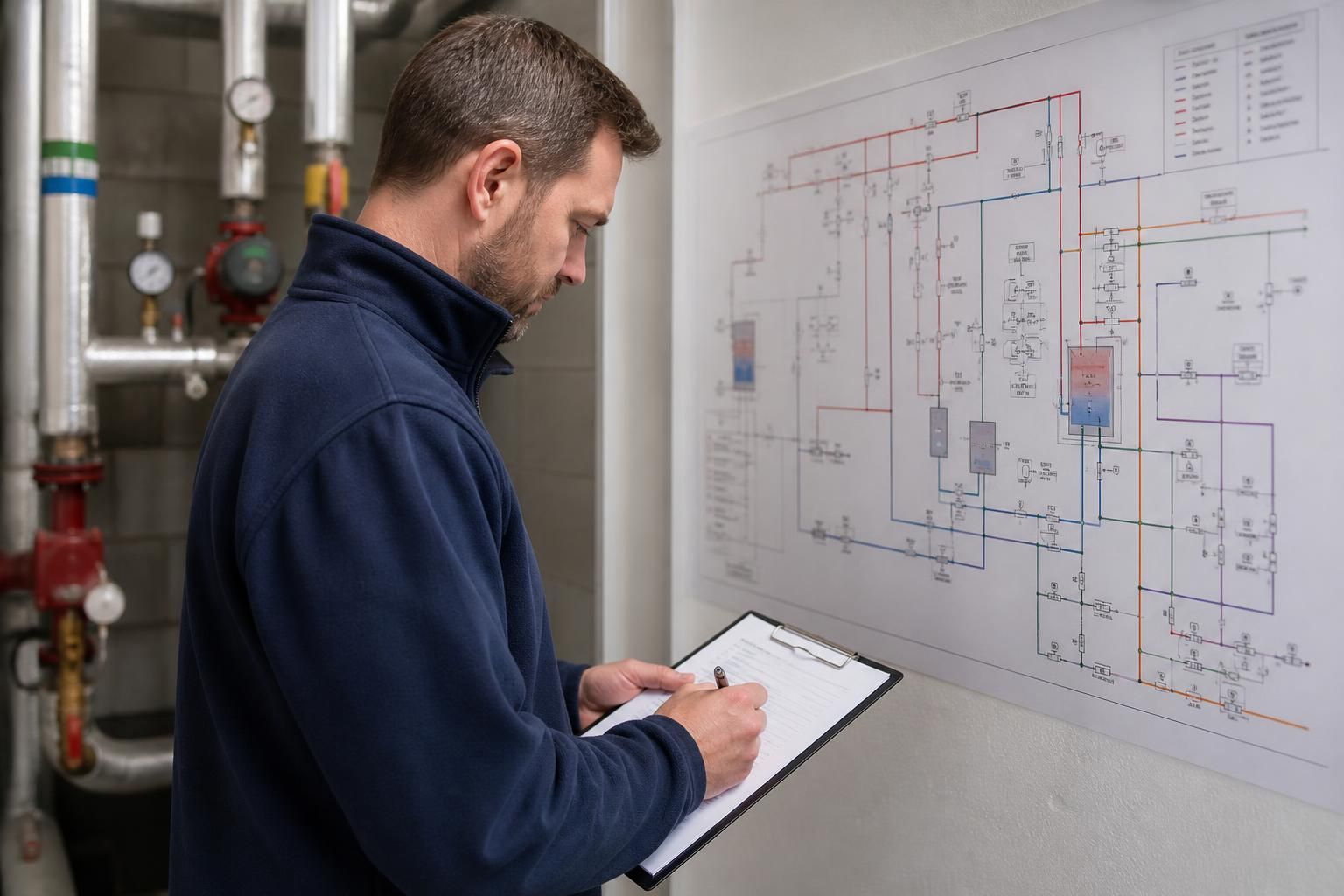
Responsibility for applying HSG274 sits with the dutyholder who can control the premises, water systems or relevant work activities. In practice, this is usually the employer, building owner, landlord, facilities management provider or managing agent, depending on the arrangements in place. The responsible party must organise a suitable legionella control scheme and ensure that decisions are implemented, monitored and reviewed.
HSG274 is practical guidance supporting the control of legionella risks. It explains how to identify conditions that may allow legionella to grow and spread, including unsuitable water temperatures, low or intermittent use, stagnant water, scale, corrosion and poorly maintained components. The dutyholder should use the guidance to inform the risk assessment and control measures rather than treating it as a document that can be filed without action.
Where several organisations share control of a building or system, their responsibilities should be defined in writing. For example, a landlord may retain responsibility for central plant and incoming water services, while a tenant or facilities management provider controls outlets, local equipment and day-to-day operation. Each party needs enough information to manage the part of the system under its control, and arrangements should cover how risks, defects, monitoring results and changes are communicated.
The responsible person’s role commonly includes:
- making sure a suitable and sufficient legionella risk assessment is completed and kept current;
- identifying all relevant water systems, storage vessels, outlets, associated equipment and vulnerable areas;
- appointing people with suitable competence to carry out assessments, monitoring, cleaning, disinfection, sampling or remedial work;
- ensuring control measures are put into operation, including temperature management, flushing, cleaning and maintenance where appropriate;
- checking that monitoring and corrective actions are completed at the required intervals;
- providing suitable information, instruction and training for employees or contractors whose work affects water hygiene; and
- retaining records that demonstrate how the control scheme has been managed.
Delegating a task does not remove the dutyholder’s need to exercise appropriate oversight. A contractor may complete a risk assessment, take samples or service equipment, but the person with control should check that the work is suitable for the system and that recommendations are acted upon. Competence involves more than holding a certificate: it includes relevant knowledge, practical experience, understanding of the system and the ability to recognise when specialist advice is needed.
Employers also have responsibilities towards employees and others who may be affected by their activities. In workplaces, this includes considering how water systems are operated and maintained, how contractors are managed, and whether people who may be particularly susceptible to legionella require additional consideration. In residential or mixed-use property, contractual arrangements may allocate particular tasks, but they should not create gaps where nobody is clearly responsible for a system or risk control.
Responsibility should be reconsidered when a building changes use, water services are altered, occupancy patterns change, equipment is installed or removed, or monitoring identifies a failure in control. A review may also be needed where maintenance arrangements change or where a risk assessment no longer reflects the system as it exists. These checks help ensure that HSG274 is being applied to the actual condition and operation of the water system.
Evidence of effective management normally includes the current risk assessment, schematic details or asset information, monitoring results, maintenance and disinfection records, training or competency information, contractor reports, records of faults and the actions taken to correct them. Records should be sufficiently clear for the dutyholder to verify that controls are working and for another competent person to understand the basis for decisions.
Blue Fish Water Management Ltd supports organisations by providing legionella risk assessments, UKAS-accredited water testing, compliance audits, system monitoring, training and remedial works. These services can help a dutyholder obtain specialist information and address identified issues, while responsibility for arranging and overseeing the overall control scheme remains with the organisation or person who has control of the relevant premises or water system.

The person responsible for applying HSG274 must have sufficient authority and resources to put controls into practice. This includes being able to arrange inspections, approve remedial work, instruct relevant staff and obtain information from contractors or building users. A technically competent adviser can identify risks and recommend action, but cannot replace the organisation’s responsibility to make decisions and provide the means to implement them.
For clear accountability, the dutyholder should record who has been appointed, what authority they have, which systems they oversee and who must be informed when a control fails. This makes it easier to escalate defects and demonstrate that responsibility has been actively managed.
Discuss your HSG274 responsibilities with our specialists
If you are reviewing your organisation’s HSG274 arrangements, speak to Blue Fish Water Management Ltd about the practical steps needed to clarify and document responsibilities.