
Does HSG274 apply to every type of water system?
No. HSG274 covers many water systems that could create a risk of Legionnaires’ disease, but its relevance depends on the system type and the potential for exposure to legionella. The applicable section—covering hot and cold water systems, evaporative cooling systems, or other risk systems—should be identified through a suitable risk assessment.
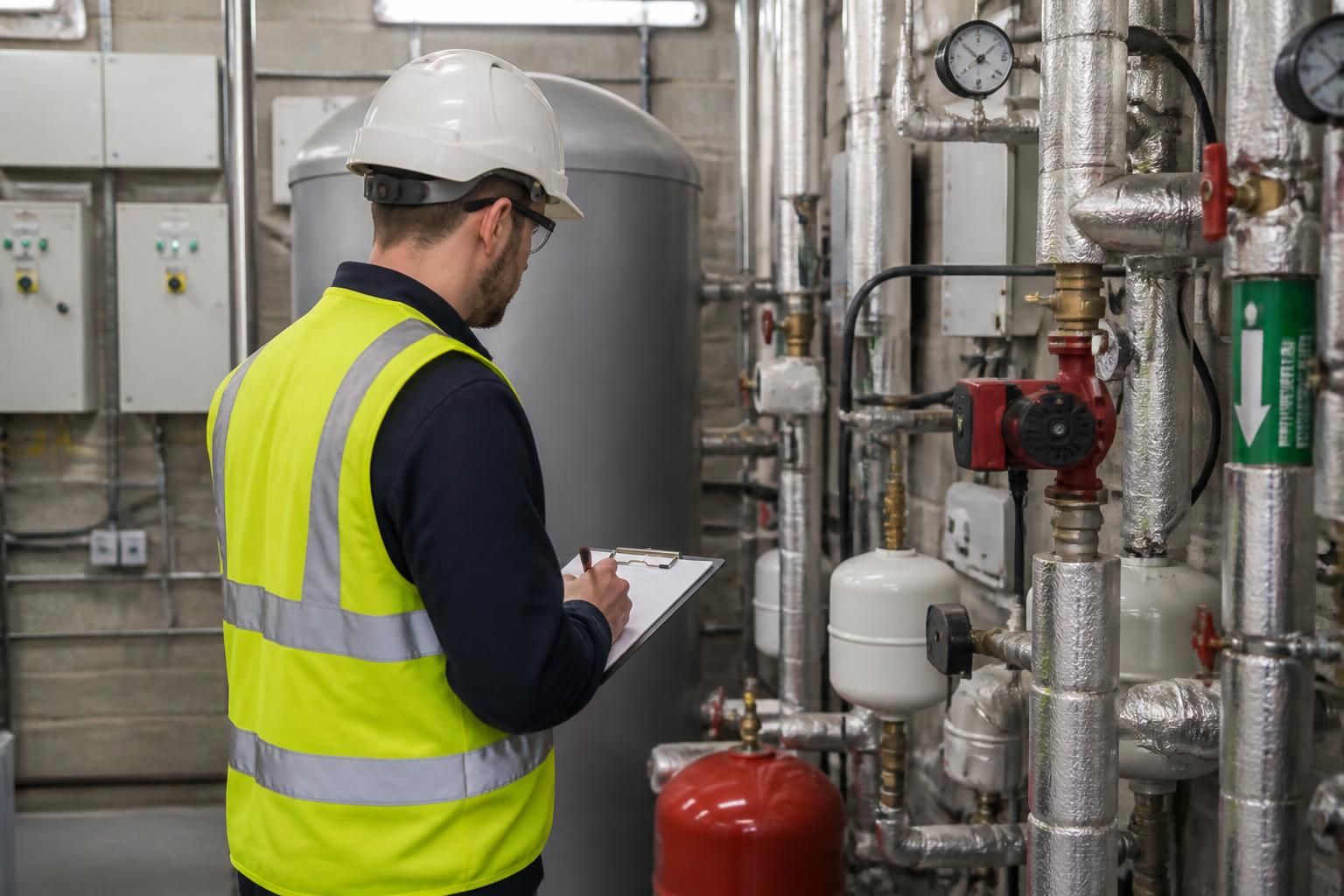
HSG274 does not apply in the same way to every water system. It is a set of technical guidance documents that helps dutyholders assess and control the risk of Legionnaires’ disease in systems where water conditions and exposure could allow legionella to grow or become airborne. The relevant guidance depends on the system’s design, operation and use.
HSG274 is divided into three parts:
- Part 1: evaporative cooling systems, including cooling towers and evaporative condensers. These systems can generate contaminated aerosols, so their design, treatment, monitoring and maintenance require specific controls.
- Part 2: hot and cold water systems. This includes systems found in commercial premises, healthcare settings, residential buildings, industrial facilities and other workplaces. Storage tanks, calorifiers, pipework, showers, taps and secondary circulation systems may all need consideration.
- Part 3: other risk systems. This covers systems and equipment that do not fit neatly within the first two parts but may still create exposure, such as spa pools, whirlpool baths, industrial processes, vehicle wash systems, humidifiers and water features where aerosols or contaminated droplets could be produced.
The presence of a water system does not automatically mean that every detailed recommendation in HSG274 applies. A risk assessment should establish whether the system can support legionella growth and whether people could be exposed. Important factors include water temperature, water storage, stagnation, low-use outlets, dead legs, system complexity, aerosol generation, maintenance arrangements and the vulnerability of the people who may come into contact with the water.
For example, a straightforward domestic cold-water installation with regular use may present a different risk profile from a large building with storage tanks, extensive pipework and infrequently used outlets. Similarly, a decorative water feature may require different controls from a cooling tower, even though both can produce airborne droplets. A healthcare or care setting may also require more cautious controls because occupants can be particularly susceptible to infection.
Some systems may fall within more than one area of consideration. A building could have a hot and cold water system alongside a cooling tower, spa pool or process-water installation. Each system should be identified separately, with controls matched to its specific hazards. Treating an entire site as one system can overlook differences in temperature control, water turnover, aerosol production and maintenance requirements.
HSG274 is also relevant to smaller or less conventional systems where the risk is not immediately obvious. Equipment such as showers, spray taps, humidification units and pressure washers can create aerosols, while rarely used outlets and stored water can provide conditions for bacterial growth. The assessment should therefore consider how the water is used, not only what the equipment is called.
Where a system is outside the main examples in HSG274, that does not necessarily mean it can be ignored. The principles of identifying hazards, assessing exposure, implementing control measures, monitoring performance and reviewing arrangements can still help determine an appropriate approach. The person responsible should obtain competent advice where the system is unusual, technically complex or subject to changing use.
In practice, determining which HSG274 guidance applies usually involves:
- identifying every water system and associated equipment on the premises;
- recording how each system is supplied, stored, heated, circulated and used;
- identifying conditions that could encourage legionella growth or create aerosols;
- considering who could be exposed, including employees, contractors, visitors, residents, patients or other building users;
- selecting controls that reflect the system’s actual risks rather than applying generic measures; and
- documenting the assessment, responsibilities, monitoring, maintenance and review arrangements.
HSG274 should therefore be used as targeted technical guidance rather than as a checklist that applies identically to every installation. A suitable and sufficient legionella risk assessment should explain which parts are relevant, which systems have been considered, why particular controls are necessary and when the assessment should be revisited.
For organisations managing multiple sites or mixed-use premises, specialist support can help map the water systems to the appropriate HSG274 guidance. Blue Fish Water Management Ltd provides legionella risk assessments, water testing, compliance audits, system monitoring, training and remedial works for domestic, industrial and commercial environments across the UK. The purpose is to develop practical controls that reflect the systems present and the level of exposure they may create.
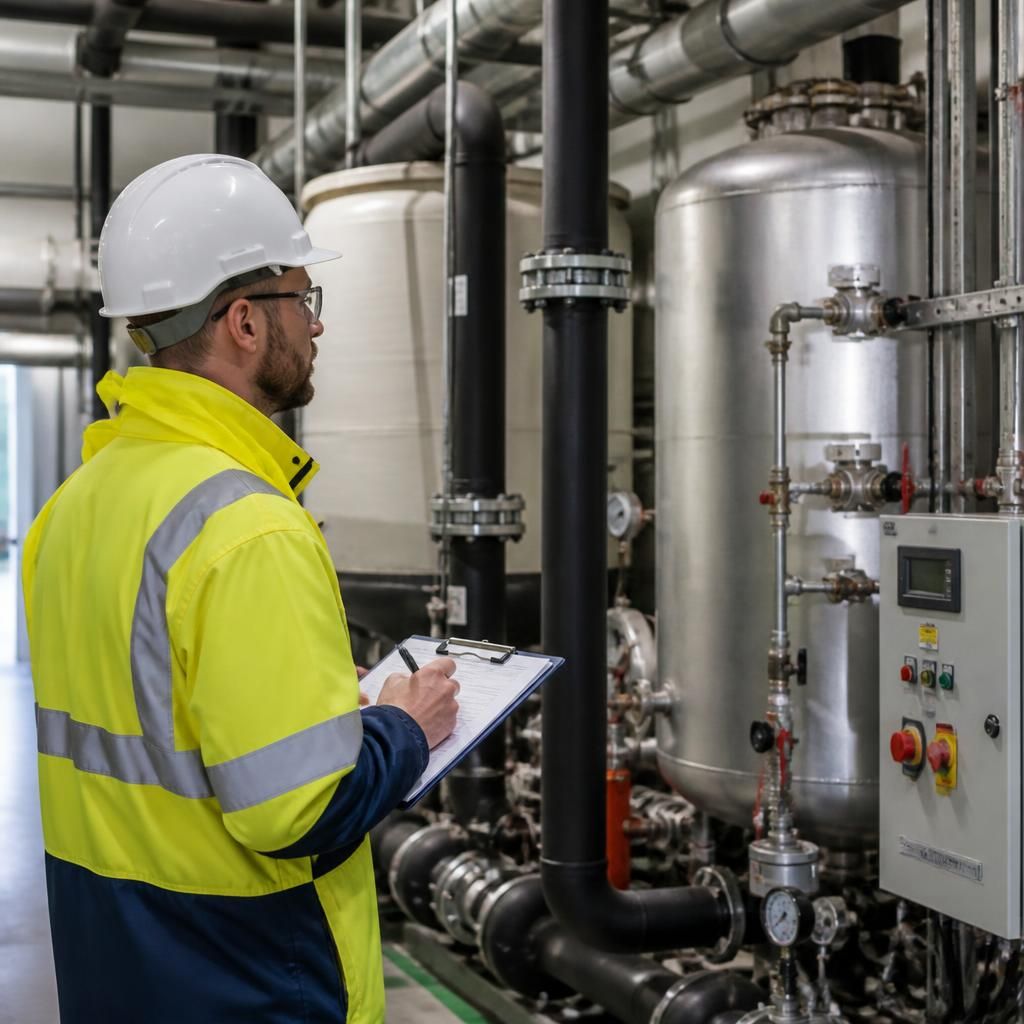
HSG274 does not require every recommendation to be applied identically to every installation. Its guidance should be used proportionately: the dutyholder should be able to explain why selected control measures are suitable for the system and the people who may be exposed.
Where a recommendation is not practicable or does not fit an unusual design, that decision should be recorded alongside the assessment, the alternative measure adopted and the evidence used to support it. This creates a clear audit trail and shows that the system has been managed deliberately rather than excluded from consideration simply because it does not match a standard example.
Discuss which HSG274 guidance applies to your water systems
Discuss your water systems with Blue Fish Water Management Ltd to identify the HSG274 guidance and control measures relevant to your premises.