
Which standards guide a commercial legionella risk assessment?
A commercial legionella risk assessment is guided primarily by the Health and Safety Executive’s Legionnaires’ disease: The control of legionella bacteria in water systems (L8) and its associated technical guidance. BS 8580-1 also sets requirements for legionella risk assessment in water systems, supporting a consistent and suitably documented approach.
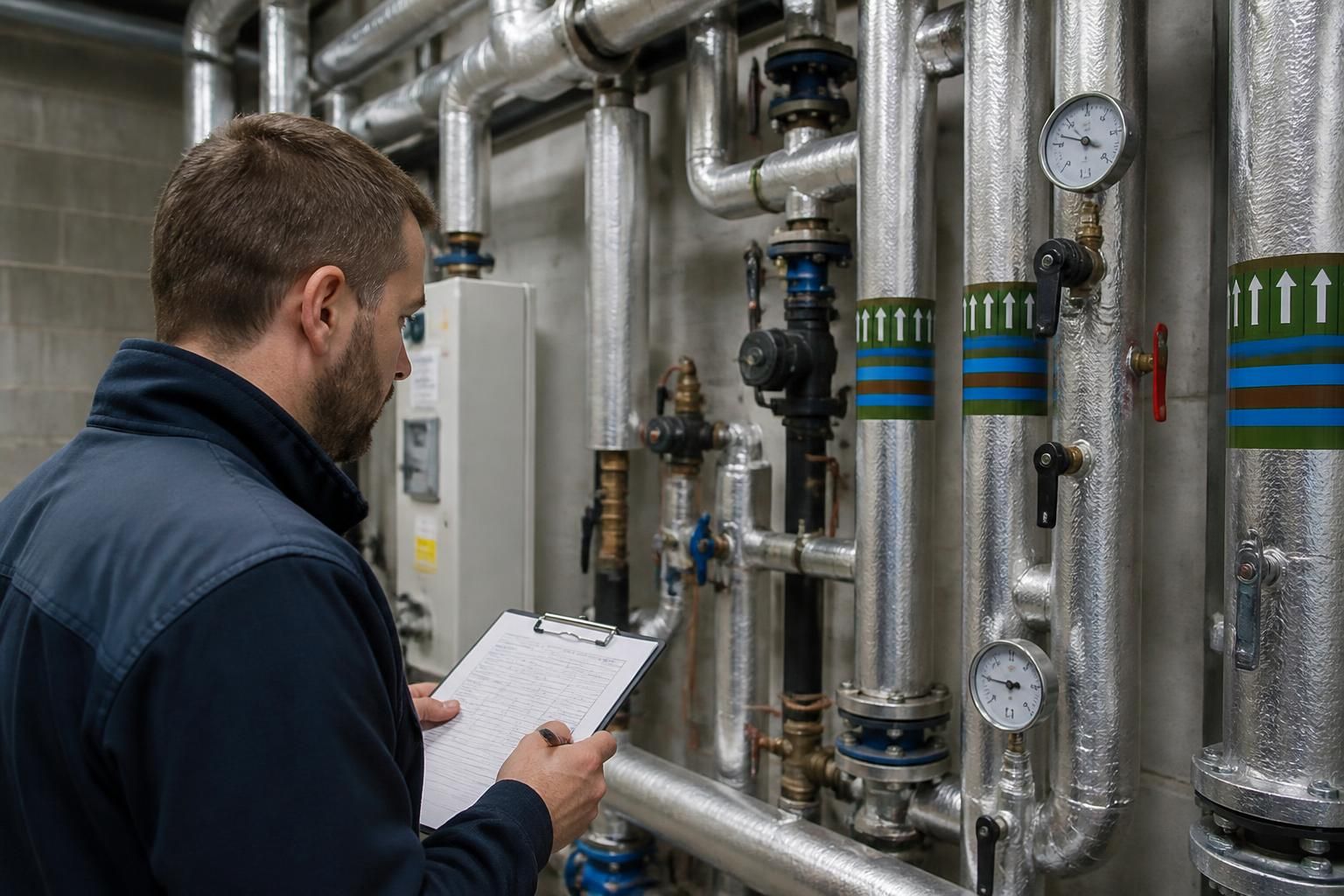
A commercial legionella risk assessment should be based on a combination of statutory duties, recognised guidance and relevant technical standards. The assessor uses these sources to identify where Legionella bacteria could grow or spread, determine who may be exposed, and specify controls that are proportionate to the water system and the people using it.
The main legal framework
The assessment sits within an employer’s wider duties under the Health and Safety at Work etc. Act 1974. The Control of Substances Hazardous to Health Regulations 2002 (COSHH) are particularly relevant because Legionella bacteria are a biological agent that can cause disease. COSHH requires employers and other dutyholders to assess exposure risks, prevent or adequately control exposure, maintain suitable control measures and provide appropriate information, instruction and training.
The Management of Health and Safety at Work Regulations 1999 also support the process. They require suitable and sufficient assessment of workplace risks, arrangements for implementing preventive measures, competent assistance and cooperation where more than one organisation has responsibilities for the premises or water system.
These laws establish duties rather than prescribing a single assessment format. The technical detail comes from approved guidance and recognised standards.
HSG274 technical guidance
HSG274 expands on the principles in the L8 framework and gives practical guidance for different types of water system. Its parts address evaporative cooling systems, hot and cold water systems, and other risk systems such as spa pools. An assessor can use the relevant part to consider matters including:
- system design, configuration and points of use;
- water temperatures, circulation and areas of low or no flow;
- storage vessels, tanks, calorifiers, showers, taps and flexible hoses;
- dead legs, redundant pipework, infrequently used outlets and contamination risks;
- cleaning, disinfection, inspection, monitoring and maintenance arrangements; and
- the susceptibility and likely exposure of people using the premises.
HSG274 is guidance rather than a replacement for site-specific judgement. The assessor must establish how the actual system operates and explain why the recommended controls are appropriate to that system.
BS 8580-1
BS 8580-1 provides a structured code of practice for risk assessments relating to Legionella control in water systems. It supports consistency in the way an assessment is planned, carried out, recorded and reviewed. In practical terms, it helps ensure that the report identifies the system boundaries, relevant hazards, exposed groups, existing controls, control deficiencies and further actions.
The standard also supports clearer allocation of responsibilities. A useful assessment should make it apparent who owns or manages each part of the water system, who carries out routine monitoring and maintenance, and who is responsible for closing any outstanding actions. BS 8580-1 should be used alongside legal duties and technical guidance, not as a standalone substitute for them.
Other standards and guidance that may apply
The core references are supplemented by other documents where the building, system or sector makes them relevant. Examples include:
- BS 7592, which provides guidance on sampling for Legionella bacteria in water systems. It is relevant where sampling is required by the control strategy, investigation or verification process.
- CIBSE guidance, including TM13, which can assist with the design, operation and management of building services that affect legionella risk.
- Health Technical Memoranda, particularly HTM 04-01, where the premises form part of the healthcare sector and require the additional controls applicable to healthcare water systems.
- Water fittings and plumbing requirements, including the applicable Water Fittings Regulations or Scottish Byelaws, where design, installation, backflow protection and prevention of stagnation affect the risk profile.
Sector-specific guidance may impose a more detailed approach than would normally be needed in a standard office, retail premises or general industrial building. The assessor should therefore establish the building’s use before selecting the reference documents.
How the standards are applied in an assessment
A competent assessor normally works through the water system from source to outlet rather than assessing isolated fixtures. The process should establish:
- which water systems and assets are included;
- how water is supplied, stored, heated, distributed and used;
- where conditions could support bacterial growth or aerosol production;
- which people could be exposed, including employees, visitors, residents, contractors and vulnerable occupants;
- which controls already exist and whether they are being implemented effectively;
- what monitoring, inspection, cleaning, maintenance and sampling records are available; and
- what corrective actions are needed, with responsibilities and priorities clearly stated.
The final report should contain enough evidence for the responsible person to understand the findings and manage the control scheme. This may include schematic drawings, asset registers, temperature records, photographs, sampling information, maintenance records and details of areas that were inaccessible or not operating normally during the inspection.
Competence, records and review
Standards do not remove the need for professional competence. The person undertaking the assessment should have suitable knowledge of water systems, Legionella control, relevant legislation and the limitations of the inspection. A laboratory report or a temperature check cannot, by itself, replace a full assessment of system design, use and management.
The assessment should be reviewed when there is a significant change to the water system, building use, occupancy or control arrangements. It should also be revisited after refurbishment, changes to plant, prolonged shutdown, an incident involving Legionella, or evidence that existing controls are not effective. The responsible person should retain the assessment and supporting records as part of the wider water safety management system.
In summary, the appropriate benchmark is not one document in isolation. Legal duties define the responsibility to control risk; L8 and HSG274 provide the principal practical framework; BS 8580-1 supports a consistent assessment method; and additional standards apply where sampling, healthcare, building services or plumbing arrangements require them.
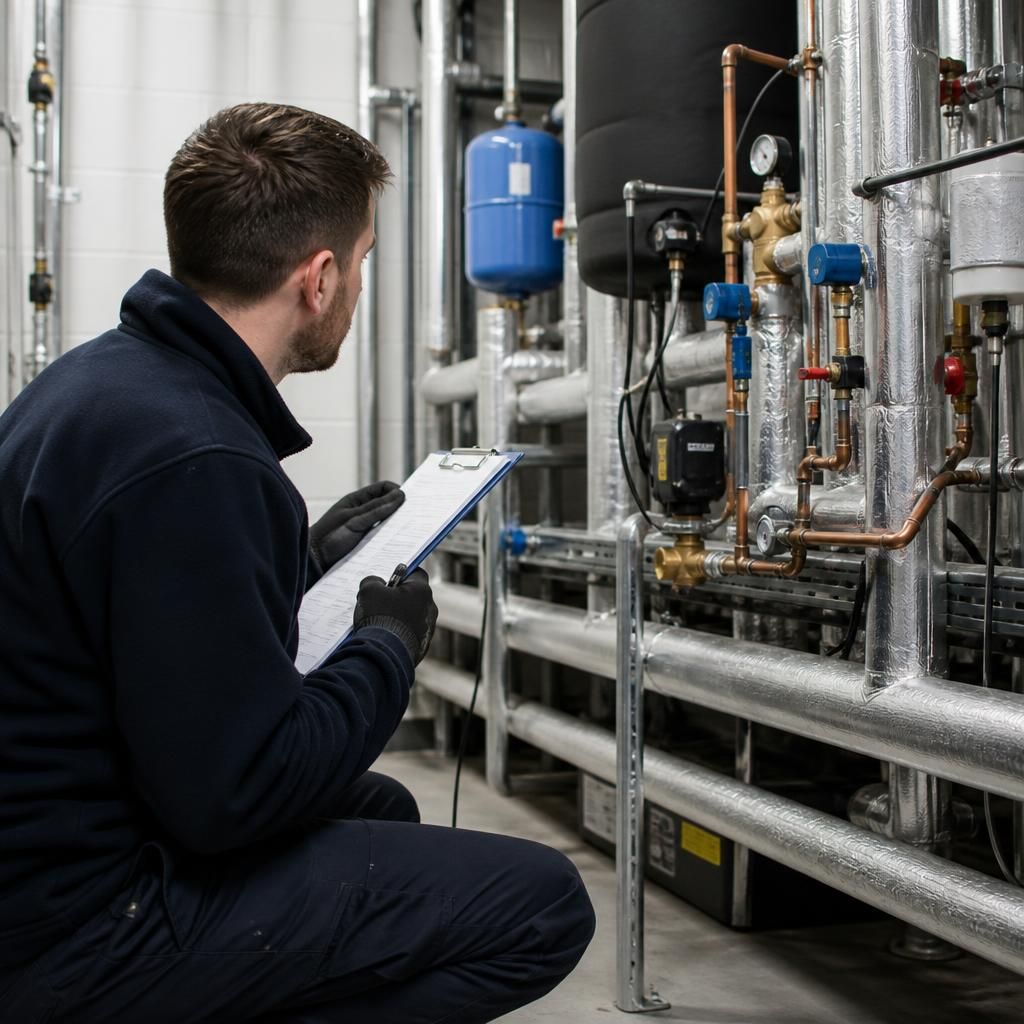
The standards guide the assessor’s reasoning; they do not turn a commercial legionella risk assessment into a simple checklist. A report should explain how each significant finding relates to the system’s design, operation, use and control arrangements. For example, identifying a low-use outlet is only useful when the assessment also considers whether it is flushed, monitored, removed from service or contributing to stagnant pipework.
This makes the report actionable for the dutyholder. Recommendations should distinguish between an immediate control concern, a weakness in routine management and a longer-term engineering improvement. The relevant standard or guidance can support that judgement, but the report should still state the evidence observed on site, the risk it creates and the control decision required.
Discuss the standards for your commercial legionella risk assessment
Discuss your commercial water system with Blue Fish Water Management Ltd to identify the standards and guidance relevant to your premises. Their team can advise on the scope and information needed for a suitable legionella risk assessment.