
How long does a commercial legionella risk assessment take?

A commercial legionella risk assessment may be completed during one planned site visit for a straightforward, single-site premises, while larger or more complex arrangements require additional inspection, consultation and reporting. The assessor’s time on site is only part of the timescale: preparation, access arrangements, information review, technical evaluation and production of the final report also need to be allowed for.
The assessment can usually be organised more efficiently when the responsible person provides relevant information in advance. Useful records may include:
- existing legionella risk assessments and written control schemes;
- water system schematics, asset registers and commissioning information;
- records of temperature checks, cleaning, disinfection and maintenance;
- previous sampling results or remedial works; and
- details of occupancy, vulnerable users, seldom-used outlets and changes to the premises.
Access has a direct effect on the practical timescale. The assessor may need to reach plant rooms, tanks, calorifiers, outlets, showers, storage areas and other parts of the water system. Restricted areas, unavailable keys, occupied rooms or plant that cannot be safely accessed can prevent a complete assessment and lead to a further visit.
Building use also matters. A workplace with a relatively simple hot and cold water system is generally less demanding to assess than premises containing several buildings, healthcare-related facilities, accommodation, industrial processes, cooling systems, swimming or spa facilities, or extensive little-used outlets. A multi-site assessment may be planned in stages so that each location, system and responsible person is considered properly.
It is also important to distinguish the risk assessment from associated water hygiene work. Water sampling, tank inspections, cleaning, disinfection, remedial plumbing and ongoing monitoring may be recommended after the assessment, but they are separate activities with their own scope and timescales. Sampling is not automatically required simply because an assessment is being carried out; its suitability depends on the identified risks and the control approach.
After the inspection, the assessor must evaluate the findings and produce a report that is useful to the organisation, rather than merely recording observations. A complete report should identify relevant hazards, existing controls, deficiencies, recommended actions, priorities and responsibilities. The time needed for this stage depends on the number and significance of findings, the clarity of the available evidence and whether technical issues need further clarification.
Where an assessment identifies an immediate concern or a significant gap in control, the responsible person should not wait for a routine review cycle before considering appropriate action. The risk assessor can explain the finding, identify proportionate control measures and indicate whether further investigation or remedial work is needed. Implementing those measures is separate from completing the assessment itself.
Blue Fish Water Management can help organisations define the scope, review available evidence and coordinate the assessment with related water hygiene services. Before requesting a timescale, a business should provide the number and type of premises, details of the water systems, available records, site access arrangements and any known concerns. This allows the proposed work to reflect the actual scope rather than relying on a generic estimate.
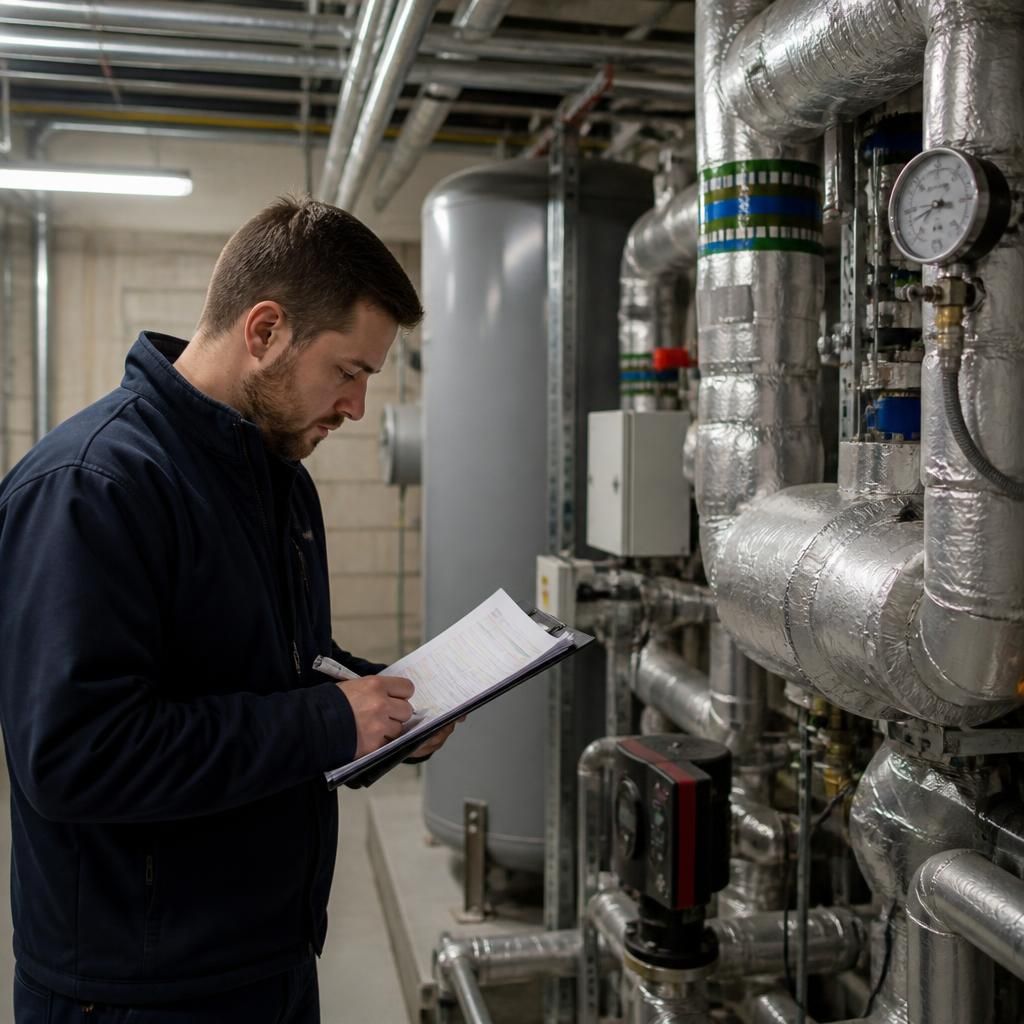
A realistic timescale should be broken down by activity rather than expressed as a single number. Ask the assessor to distinguish the expected time for document review, site inspection, technical evaluation and report preparation, and to identify any assumptions behind the estimate. This makes it clearer which elements relate to the assessment itself and which would require separate follow-up work.
The estimate should also state what could change the scope. For example, discovering additional water systems, incomplete asset information or inconsistencies between records and site conditions may require further investigation. A scope-based estimate is therefore more useful than a standard duration applied to every commercial premises.
Discuss your commercial legionella risk assessment requirements
Discuss your commercial legionella risk assessment requirements with Blue Fish Water Management, including the premises, systems and documentation involved. This will help establish an appropriate scope for the assessment.