
What does a commercial legionella risk assessment cover?

A commercial legionella risk assessment is a structured examination of the water systems, equipment, management arrangements and people associated with a workplace or other non-domestic premises. Its purpose is to determine how Legionella could be introduced, multiply or spread, how people might be exposed, and what controls are required to keep the risk under control.
The assessment normally covers the following areas:
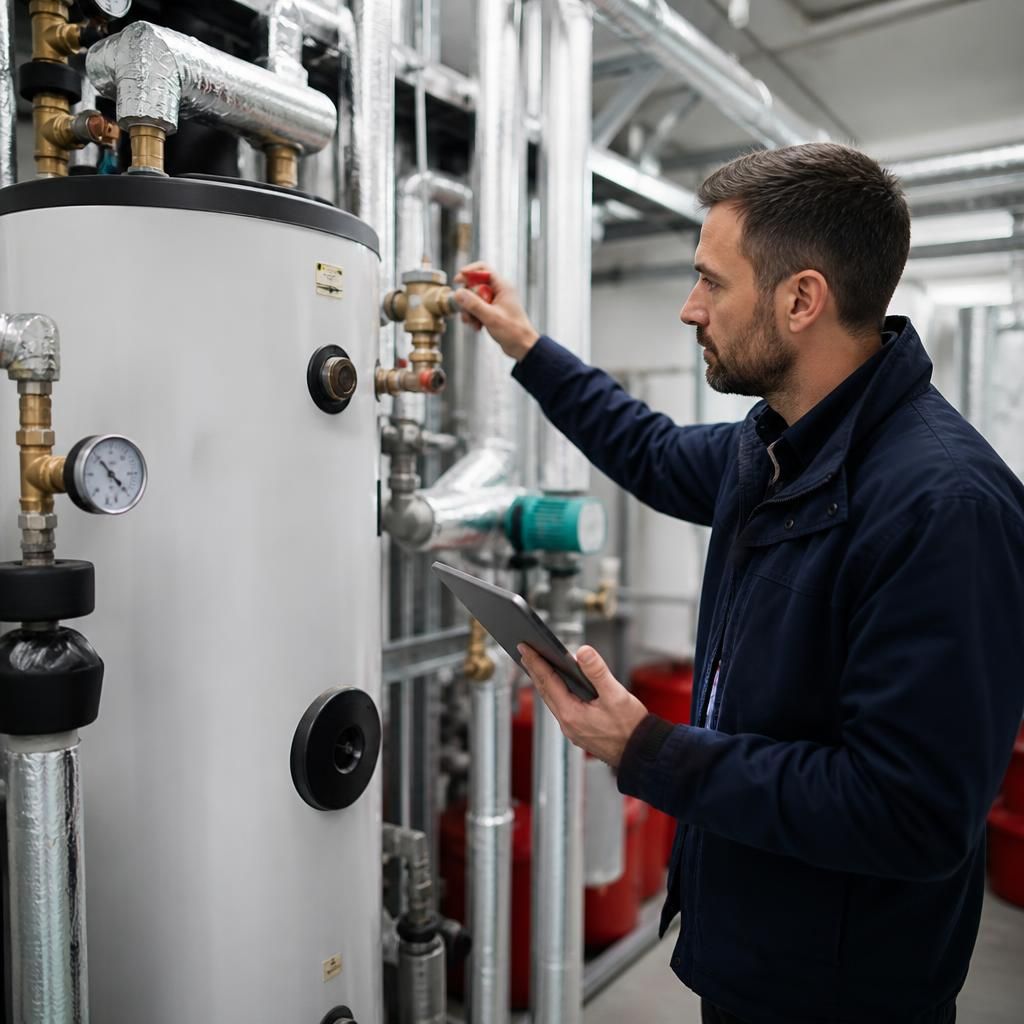
- Water system identification: all hot and cold water services are identified, including incoming mains supplies, storage tanks, calorifiers, hot-water generators, distribution pipework, outlets, showers, taps and specialist equipment connected to the water system.
- System design and condition: the assessor considers whether the system is correctly designed, accessible for inspection and maintenance, and operating as intended. Corrosion, scale, sludge, poor insulation, damaged components, redundant pipework and cross-connections may increase risk.
- Temperature control: the assessment reviews whether water is being stored, distributed and delivered in a way that limits conditions favourable to bacterial growth. It may consider temperature measurements at relevant parts of the system, recovery after use and whether temperature control could create a scalding risk.
- Stagnation and low-use areas: infrequently used outlets, long pipe runs, dead legs, capped branches, oversized storage and periods of low occupancy are examined because stagnant water can undermine otherwise effective controls.
- Use of the premises: the assessor considers how the building operates, including occupancy patterns, water demand, seasonal changes, shutdowns, refurbishment and any areas that are difficult to access or routinely overlooked.
The assessment also considers the people who may be exposed to contaminated aerosols or fine water droplets. This includes employees, contractors, visitors, residents, patients, guests or other building users, depending on the premises. Particular attention may be needed where people are more susceptible to illness, such as those with weakened immune systems or certain underlying health conditions. The assessment should explain which groups may be at risk and how exposure could occur, rather than simply listing occupants.
Management and control arrangements are an important part of the scope. The assessor reviews who has responsibility for the water systems, whether duties have been clearly allocated, and whether those responsible have suitable knowledge, instruction and authority. Existing procedures may be checked alongside records of temperature monitoring, flushing, cleaning, disinfection, maintenance, remedial work, incidents and previous assessments. Where duties are shared between an occupier, landlord, managing agent, facilities provider or contractor, the assessment should help clarify the boundaries between those parties.
Site findings are usually supported by available documents, such as water-system schematics, asset registers, maintenance records, previous sampling results and information about changes to the building. A site survey remains important because drawings and records may not reflect alterations, concealed pipework or equipment that has fallen out of use. Where information is incomplete, that uncertainty should be recorded and addressed through further investigation rather than treated as evidence that no risk exists.
A written assessment should set out the significant findings in a form that can be acted upon. It will commonly record:
- the systems and assets inspected;
- the hazards and conditions identified;
- the groups potentially exposed and the routes of exposure;
- the controls already in place and their suitability;
- any gaps in monitoring, maintenance, training or records;
- recommended remedial actions, with appropriate priorities; and
- the arrangements for ongoing review and management.
The recommendations may include removing redundant sections of pipework, improving insulation, repairing or replacing defective components, correcting temperature or flow problems, increasing access for maintenance, revising flushing arrangements, cleaning or disinfecting parts of the system, or obtaining further specialist investigation. The appropriate action depends on the system and the findings; an assessment should not prescribe treatment without considering the cause of the risk.
A risk assessment is not the same as routine monitoring, water sampling or remedial work. It establishes the risk profile and the controls needed, while separate activities may be required to verify performance, investigate an abnormal result or correct a defect. Sampling can provide useful evidence in particular circumstances, but a satisfactory sample does not remove the need to understand the design, condition and management of the whole system.
For businesses, the completed document should be usable as part of the wider water-safety arrangements and aligned with applicable UK health and safety duties and recognised guidance, including the relevant HSE guidance for the control of legionella. It should be reviewed when there are significant changes to the water system, building use, occupancy, control measures or management responsibilities, and whenever an incident or new information indicates that the existing assessment may no longer be reliable.
Blue Fish Water Management can support commercial clients with legionella risk assessments, water-system reviews, compliance advice, monitoring and remedial recommendations. The depth of the assessment should reflect the complexity of the premises and the potential consequences of exposure, rather than relying on a standard checklist alone.
A commercial legionella risk assessment also considers water systems that can create aerosols, not only conventional hot and cold-water services. Where present, this may include cooling towers, evaporative condensers, spa pools, decorative fountains, humidifiers and other equipment capable of releasing contaminated droplets into the air.
For each relevant system, the assessment should examine how it operates, who may be exposed, how aerosols could be generated and whether suitable cleaning, disinfection, inspection and monitoring arrangements are in place. The level of detail should reflect the system’s design and use; a rarely operated decorative feature will require a different review from equipment that continuously serves a busy workplace.
Discuss your commercial legionella risk assessment
If you need to confirm whether your existing assessment remains suitable for your premises, discuss your requirements with Blue Fish Water Management.