
When is a legionella risk assessment required?

A legionella risk assessment is a legal health and safety requirement for an organisation or individual with control over premises, work activities or water systems where people could be exposed to Legionella. The duty applies to assessing and controlling the risk; it does not depend on an outbreak occurring or on a particular type of building being used.
Under the Health and Safety at Work etc. Act and the Management of Health and Safety at Work Regulations, employers and other duty holders must assess risks to employees and others affected by their activities. The HSE’s Approved Code of Practice L8 and associated technical guidance explain how this duty applies to legionella. Similar duties apply in Scotland, Wales and Northern Ireland through the relevant health and safety legislation and guidance.
The person responsible for the assessment is usually the employer, building owner, landlord, managing agent, facilities manager or another person who has control of the premises or water systems. More than one duty holder may be involved. For example, a property owner, managing agent and occupier may each have responsibilities that should be clearly allocated in contracts and operating procedures.
A legionella assessment should be arranged where a water system could create conditions for bacterial growth and exposure. Common examples include:
- Hot and cold water systems serving offices, factories, warehouses, hotels, residential buildings or public premises.
- Cooling towers, evaporative condensers and other systems that can generate contaminated aerosols.
- Showers, spa pools, whirlpool baths, humidifiers, air washers and similar equipment.
- Water systems in healthcare, care, educational, leisure and hospitality environments.
- Buildings with infrequently used outlets, storage tanks, complex pipework, low water turnover or temperatures that allow bacterial growth.
- Premises where occupants or workers may be particularly vulnerable, including healthcare settings and some care environments.
The assessment is also needed before a new or altered system is put into service where the design, operation or use could affect legionella risk. Changes such as a refurbishment, extension, change of occupancy, installation of additional outlets, modifications to temperature controls or alterations to water storage can invalidate previous findings. A system should not be treated as adequately assessed simply because the building has been assessed in the past.
Reoccupation after a prolonged closure is another important trigger for review. Stagnant or lightly used systems may require specific checks and control measures before normal use resumes. The assessment should consider what happened during the closure, whether outlets were flushed or isolated, whether temperatures remained controlled and whether any parts of the system require cleaning, disinfection or other remedial action.
A review is also appropriate when:
- A legionella sample is positive or unexpected results indicate that existing controls may not be effective.
- A suspected or confirmed case of legionnaires’ disease is associated with the premises or water system.
- There has been a failure of temperature control, disinfection, monitoring or maintenance.
- Water usage patterns have changed, including areas becoming vacant or only occasionally occupied.
- New information identifies an overlooked water system, outlet or vulnerable group.
- Responsibility for the premises or water system has transferred to another organisation.
There is no single review interval that is suitable for every building. The assessment must be reviewed regularly and whenever there is reason to believe it is no longer valid. The review frequency should reflect the complexity of the system, the level of exposure, the vulnerability of occupants and the quality of existing control measures. A simple system with consistent use may need a different review programme from a large, multi-building site with cooling equipment and several water services.
The assessment should be suitable and sufficient rather than a generic document. It normally records the water systems present, sources of risk, people who may be exposed, existing precautions, monitoring arrangements, responsible persons and further actions required. It should identify dead legs, redundant pipework, storage vessels, temperature risks, aerosol-generating outlets and areas of low turnover. Where the organisation employs five or more people, significant findings must generally be recorded, although written records are useful for demonstrating control in any business.
The person carrying out the assessment must have the necessary competence, knowledge and experience. Competence involves understanding legionella, water systems, risk control and the particular premises being assessed. A certificate or short course alone does not necessarily demonstrate that someone can assess a complex system. Where specialist knowledge is not available internally, an independent competent assessor may be appointed, while the duty holder remains responsible for ensuring that the work is appropriate and acted upon.
A risk assessment does not remove the need for ongoing control. It should lead to a written control scheme covering responsibilities, temperature management, flushing, cleaning, inspection, sampling where justified, incident procedures and record keeping. Employees or contractors who carry out monitoring and maintenance should receive suitable information, instruction and training.
Domestic landlords should not assume that legionella duties apply only to commercial premises. The extent of the assessment depends on the type of accommodation, the water system, the landlord’s control and the foreseeable risk to residents. Landlords with simple domestic systems still need to consider and control the risk, while larger residential buildings, supported housing and accommodation with shared or stored water systems may require a more formal documented assessment.
In practice, the correct time to arrange an assessment is before a relevant system is operated, when responsibility for it is accepted, after significant changes or closure, and whenever existing controls may no longer reflect actual conditions. Blue Fish Water Management Ltd provides legionella risk assessments, water testing, compliance audits, monitoring and remedial support for organisations that need to establish or review their water safety arrangements.
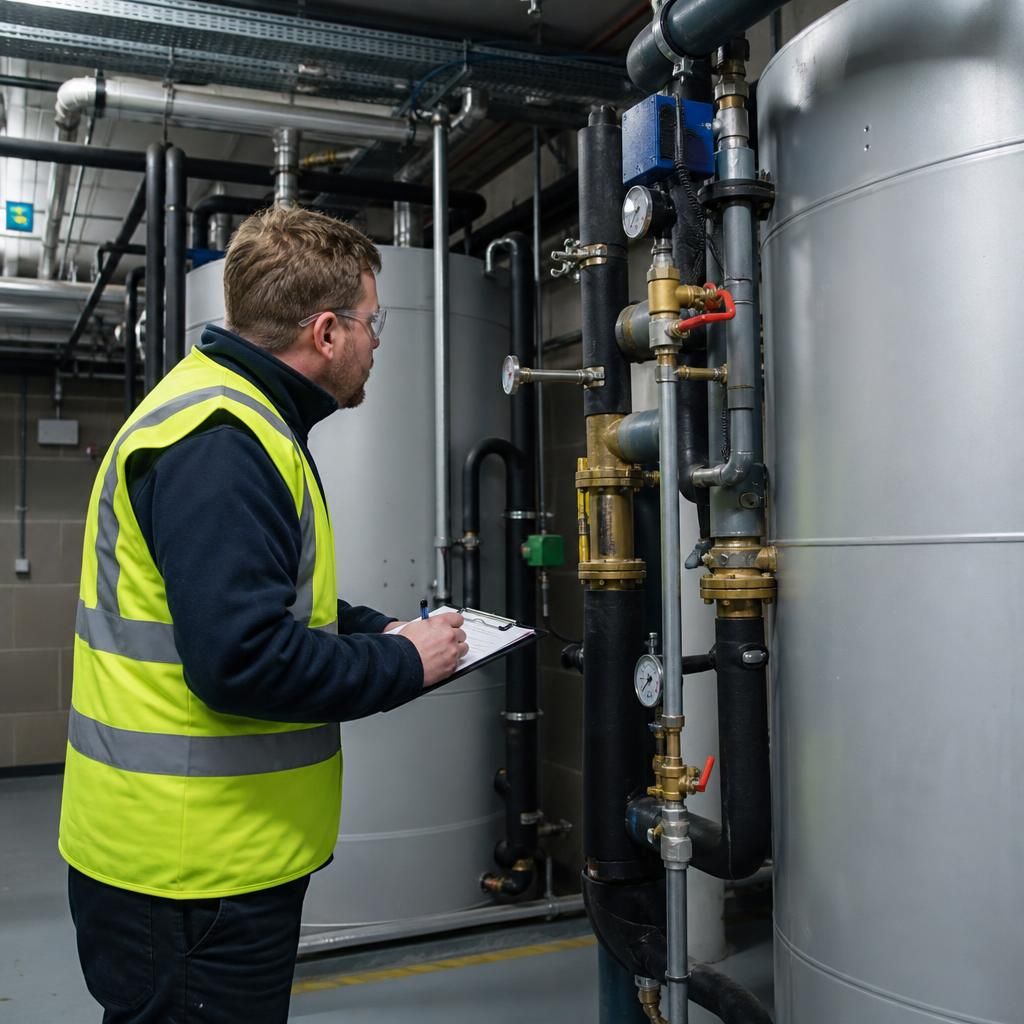
Businesses taking on leased or managed premises should establish their legionella responsibilities before relying on the existing water safety arrangements. A landlord’s assessment may not cover the occupier’s activities, changes in water use, additional equipment or the way employees and visitors are exposed.
The incoming organisation should confirm which water systems it controls, obtain the current assessment and control records, and check that they reflect the premises as actually used. If the information is incomplete, outdated or unsuitable for the activities carried out, a new or revised legionella risk assessment is required rather than treating the landlord’s documentation as sufficient.
Discuss your legionella risk assessment requirements
If you are unsure whether your premises or water systems require a new or updated legionella risk assessment, discuss the circumstances with Blue Fish Water Management Ltd. They can help you identify the appropriate next steps for your organisation’s water safety arrangements.