
What happens after a positive legionella test?
A positive legionella test means that Legionella bacteria have been detected in a water sample and that the system requires prompt, proportionate control action. A competent person should assess the result, investigate the source, apply appropriate remedial measures such as cleaning and disinfection where necessary, arrange follow-up testing, and update the water safety records and risk assessment.
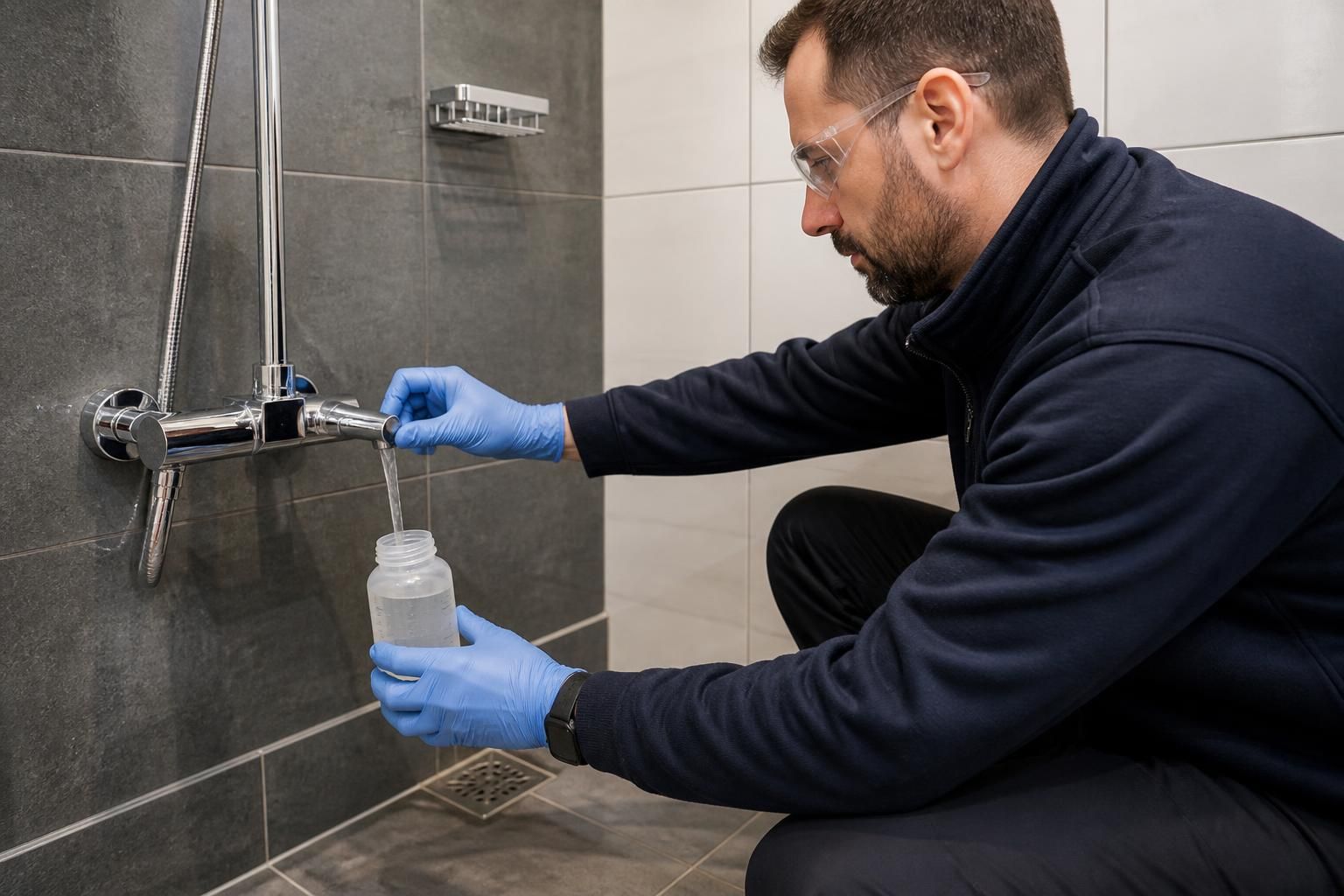
After a positive legionella test, the result must be interpreted by the responsible person alongside the sampling location, bacterial level, system use, existing controls and the vulnerability of people exposed. A positive sample does not by itself prove that anyone has contracted Legionnaires’ disease, nor does it necessarily mean that every part of the water system is contaminated. It does indicate that the control arrangements need to be reviewed and that further action may be required.
1. Review the laboratory report
The first step is to check what was detected and where. The report should be considered alongside details such as the sample point, date of collection, water temperature, sampling method and whether the result was obtained from hot or cold water. A competent person can assess whether the result is representative, whether sampling errors may have affected it and whether additional samples are needed to establish the extent of the issue.
The significance of a result depends on the circumstances. A little-used outlet, a sentinel outlet, a storage tank, a healthcare facility or a system serving vulnerable people may require different control decisions. The result should therefore not be considered in isolation or used to justify a standard response for every building.
2. Protect people while the situation is assessed
Where there may be a meaningful exposure risk, the responsible person should consider temporary restrictions on outlets or activities that generate aerosols, such as showers, spray taps, spa equipment and certain cleaning processes. Users may need clear instructions, particularly where vulnerable people could be exposed. Any restriction should be based on a competent assessment and communicated to the people responsible for operating the premises.
There is no general requirement to close an entire building solely because one environmental sample is positive. The appropriate decision depends on the result, the water system, the potential route of exposure and the effectiveness of existing precautions. Unnecessary shutdowns can disrupt business operations, while continuing to use a potentially hazardous outlet without control may increase risk.
3. Find the conditions that allowed Legionella to grow
The investigation should look beyond the individual sample point. Common contributing conditions include:
- water stored or circulated at unsuitable temperatures;
- stagnant sections, dead legs or infrequently used outlets;
- poorly balanced or poorly maintained hot-water circulation;
- sediment, scale, biofilm or corrosion within tanks, pipework and fittings;
- changes in occupancy, building use or water demand;
- alterations to the system that were not reflected in the risk assessment; and
- inadequate flushing, cleaning, disinfection, monitoring or record keeping.
This review should include relevant plant rooms, tanks, calorifiers, distribution pipework, showers, TMVs and other outlets rather than focusing only on the point that produced the positive sample.
4. Apply proportionate corrective measures
Remedial work may include cleaning and disinfecting affected equipment, removing redundant pipework, correcting temperature or circulation problems, improving flushing arrangements, servicing outlets and addressing scale or corrosion. The selected measure should deal with the underlying cause as well as the immediate contamination. Disinfection without correcting stagnation or poor temperature control may provide only a temporary improvement.
Work should be planned by a competent person because poorly controlled disinfection can create additional hazards, damage equipment or leave parts of a system untreated. Occupants and contractors may need to be protected from hot water, chemicals, aerosols and temporary changes in water service.
5. Reassess the system before returning to normal use
Once corrective work has been completed, the responsible person should confirm that the system is operating as intended. This may involve checking temperatures, flow, outlet use, flushing arrangements and the condition of relevant components. Follow-up sampling should be based on the risk assessment and the nature of the remedial work. A single negative result should not automatically be treated as proof that every control problem has been resolved if the underlying cause remains.
The water safety plan and legionella risk assessment should be amended where the investigation identifies a changed risk, an ineffective control or a gap in responsibility. Any revised procedures should be explained to staff who carry out monitoring, flushing, maintenance or record keeping.
6. Consider health and reporting implications
An environmental positive result and a diagnosed case of Legionnaires’ disease are separate matters. If anyone develops compatible symptoms after a possible exposure, they should seek medical advice and explain the potential exposure to a healthcare professional. If cases of illness suggest an outbreak or linked exposure, the matter should be discussed with the relevant public health authorities. A routine positive water sample does not automatically mean that an outbreak has occurred or that a notification is required.
Keep a clear audit trail of the original report, decisions made, restrictions introduced, investigation findings, remedial work, follow-up results and communications. These records demonstrate how the responsible person applied the control scheme and provide evidence for future audits, inspections and reviews. Where the result is difficult to interpret or the system is complex, an independent legionella risk assessment, UKAS-accredited testing and specialist water hygiene advice can help establish a defensible course of action.
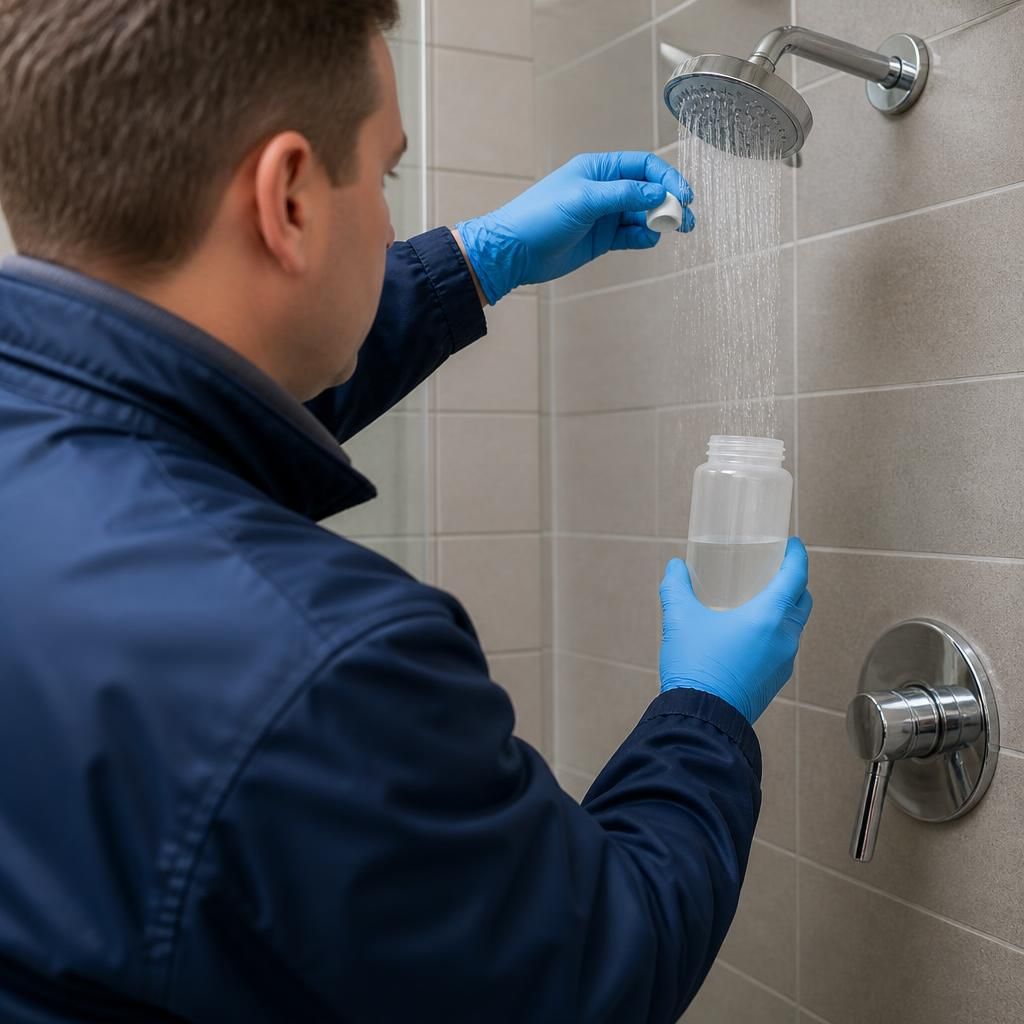
A positive legionella test is not resolved simply by obtaining a later negative sample. For compliance purposes, the responsible person must be able to show that the result was considered, the relevant controls were checked, and any necessary corrective action was completed. The evidence should connect the laboratory finding with the decisions taken for the particular water system.
This means retaining the laboratory report with the associated sampling details, investigation findings, maintenance or disinfection records, and confirmation that required controls are working. Where the result exposes a weakness in the existing arrangements, the risk assessment and written control scheme should reflect the change rather than treating the follow-up test as a standalone pass or fail. This provides a clearer basis for demonstrating ongoing control during an audit, inspection or internal review.
Discuss your positive legionella test
Discuss your positive legionella test with Blue Fish Water Management Ltd for practical guidance on interpreting the result, investigating the system and deciding on proportionate corrective action.