
How often should legionella water testing be carried out?
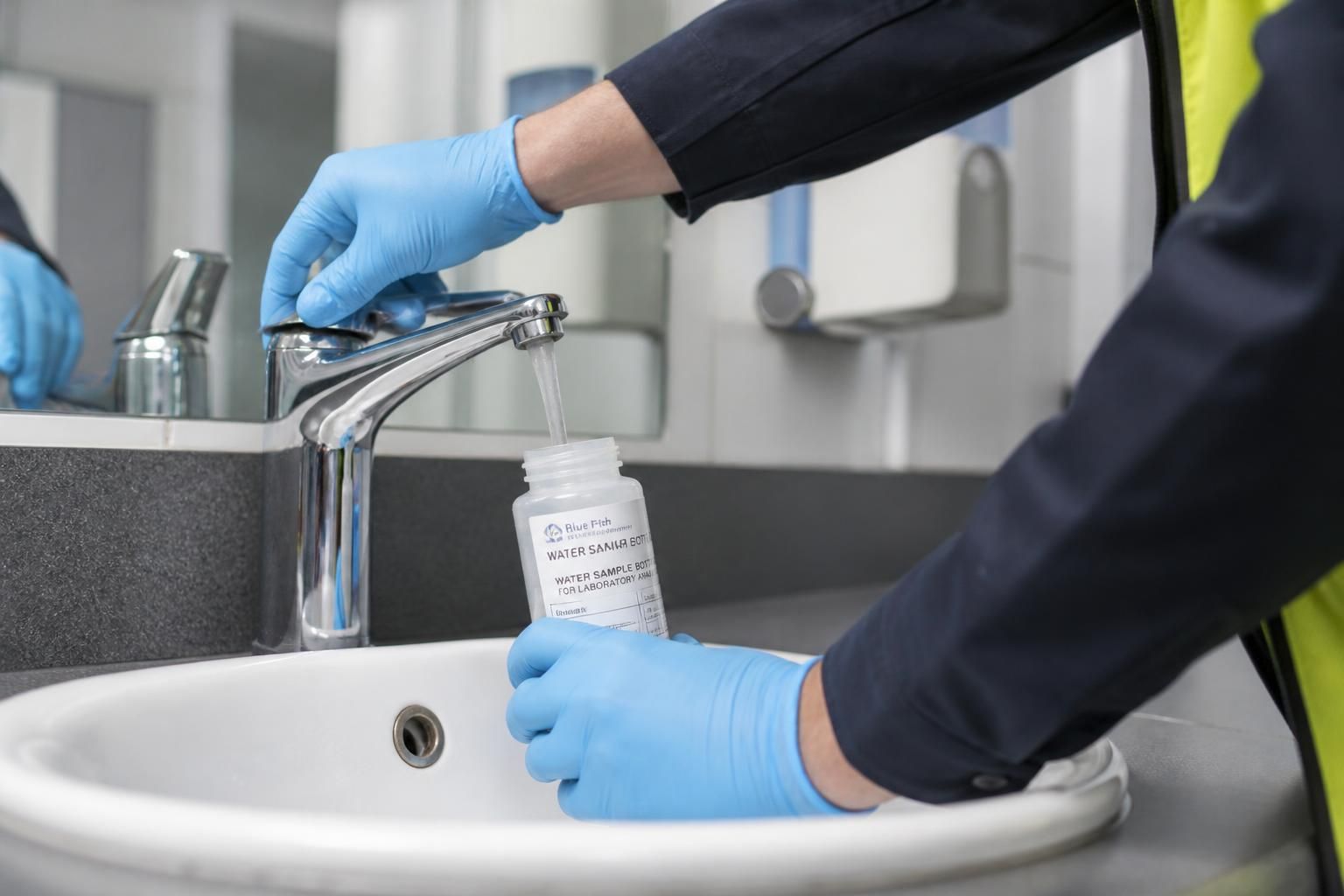
Legionella water testing should be carried out at a frequency established by a competent risk assessment, rather than to one universal timetable. In a lower-risk hot and cold water system, routine laboratory testing may not be necessary if control measures are working and there are no relevant risk factors. Higher-risk systems may require regular sampling, often monthly or quarterly, but the appropriate interval depends on the system design, its use, the people exposed and the quality of ongoing control.
UK guidance and risk-based testing
The Health and Safety Executive’s Approved Code of Practice L8 and HSG274 guidance require dutyholders to assess and control legionella risks. They do not set one testing interval that applies to every workplace or water system. A risk assessment should explain whether microbiological sampling is needed, which outlets or parts of the system should be sampled, and how often the samples should be taken.
Testing is one part of a wider control programme. Temperature checks, inspection of storage tanks, monitoring of disinfection systems, flushing of infrequently used outlets and maintenance of equipment can provide important evidence that a system remains under control. A negative laboratory result does not remove the need for these measures, because legionella levels can change after the sample has been taken.
When more frequent testing may be appropriate
A shorter interval may be justified where there is a greater likelihood of legionella growth or a greater risk of serious illness following exposure. Relevant factors include:
- healthcare premises, care homes and other settings occupied by people who may be particularly vulnerable;
- large, complex or poorly understood hot and cold water systems;
- cooling towers, evaporative condensers or other systems that can release contaminated aerosols;
- spa pools and similar facilities;
- low-use outlets, redundant pipework, storage tanks or areas where water can stagnate;
- evidence of inadequate temperatures, poor circulation, scale, corrosion or biofilm;
- previous positive or unsatisfactory test results; and
- significant changes to the system, occupancy, building use or control arrangements.
Where risk is elevated, sampling may be scheduled monthly, quarterly or at another interval specified by the risk assessment. The interval should be reviewed if results show a trend, control checks deteriorate or the system changes.
What should happen after a positive result?
A positive result should prompt an investigation rather than an automatic reliance on a routine retest. The dutyholder should consider the result alongside the sampling location, the condition of the system, temperature and other monitoring records, recent maintenance, and the vulnerability of people using the premises.
Actions may include reviewing the risk assessment, checking the accuracy of sampling and records, investigating areas of stagnation, carrying out remedial cleaning or disinfection where necessary, and increasing sampling until effective control has been demonstrated. The laboratory result and any corrective action should be documented. Where there is a potential risk of exposure, competent health and safety advice should be obtained without delay.
How sampling should be planned
Samples should be taken by a competent person using a method suitable for the system and submitted to a suitably accredited laboratory. Sampling points should represent the areas and outlets that present the relevant risk; testing a single convenient tap may not reflect conditions elsewhere in a complex installation. A programme may include sentinel outlets, storage tanks, return points and other locations identified by the risk assessment.
Samples should be collected consistently so that results can be compared over time. Records should identify the date, location, sample type, test result and any related control readings or remedial work. This makes it easier to distinguish an isolated result from a recurring problem.
When should the frequency be reviewed?
The testing schedule should be reconsidered after a positive result, an outbreak or suspected case linked to the premises, a major alteration, a change in building use, a prolonged period of closure, a failure of temperature or disinfection controls, or the introduction of a more vulnerable population. It should also be reviewed as part of the wider periodic review of the legionella risk assessment.
For commercial premises, the most defensible answer is therefore the interval recorded in the current risk assessment and water safety plan. If that document gives no clear rationale for the testing schedule, or if it relies on a fixed frequency without considering the system’s actual risk, it should be reviewed by a competent water hygiene professional. UKAS-accredited legionella testing can then support the assessment with documented laboratory results, but it should sit alongside—not replace—effective day-to-day control.
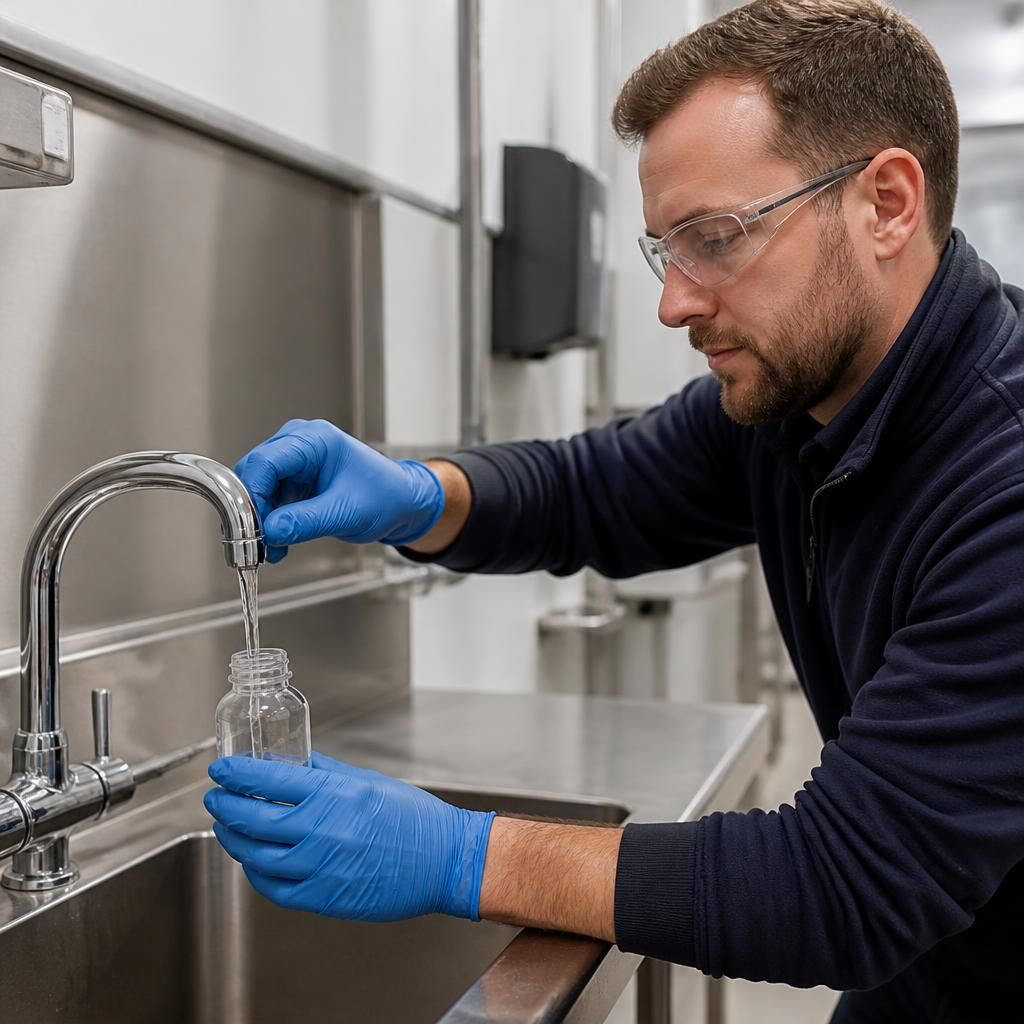
Legionella water testing should have a defined purpose, rather than being arranged automatically after every maintenance visit. Routine sampling may establish a baseline, identify a developing trend or verify that a corrective measure has been effective. The risk assessment should state which of these purposes applies and how the result will influence the control programme.
This distinction helps prevent testing from becoming a box-ticking exercise. A laboratory sample provides information about the water at particular locations and times; it does not by itself demonstrate that the whole system is safe. The most useful testing schedule is therefore one that links each sample to the system’s risk profile, monitoring records and documented decisions.
Review your legionella water testing frequency
Arrange a review of your legionella water testing schedule to confirm that it reflects your current system, occupancy and control measures. Blue Fish Water Management Ltd can provide practical guidance on appropriate sampling arrangements and documented compliance.